How to Stop the Pacifier Without the Bedtime Battles (6 Gentle Steps)

It's 9 PM. The paci fell behind the crib again, and you're on your knees with a phone flashlight. Your toddler is crying, and you're wondering how to stop the pacifier without weeks of tears.
Here's what most parents miss: the paci isn't just a habit, it's how your toddler calms down. Take it away suddenly and they lose their "off switch". Replace it slowly with new ways to calm down, and the goodbye gets much easier.
That's what these 6 steps do. Start with the 2-minute check below to see if now is the right time, then work through the steps at your child's pace.
Giving up the pacifier is one of the first big-kid milestones. You'll find more gear and guides for this stage in our Baby Essentials hub, and the start-here picker on our homepage sorts every guide by age.
Quick answer
- Pick a calm week with no big changes.
- Talk about it first, with a picture book.
- Cut daytime use, then use a sticker chart.
- Let the "Paci Fairy" trade it for a small toy.
This post contains affiliate links. As an Amazon Associate I earn from qualifying purchases.
A quick note: this is one family's experience, not medical advice. Ask your pediatrician or pediatric dentist about the right timing for your child.
Is your toddler ready to say goodbye?
Tap everything that's true right now.
Read the steps now and come back to this check in a few weeks. Every child is different.
Go to step 1 ↓Pick a calm week to stop the pacifier
Avoid weeks with big changes, like a new sibling, a move or starting daycare. A quiet week at home makes everything easier. Pacifier weaning goes best when the rest of life feels predictable, so skip holidays and trips too. Tell grandparents and sitters the plan as well, so nobody hands the paci back by mistake.
Tip: Put it on the calendar and tell your partner, so you both stick to the same plan.
Talk about it early
A few days before, start talking about how big kids say goodbye to their paci. A simple picture book makes the idea feel normal and even exciting. Read it at the same time each day, so the goodbye becomes part of the routine instead of a surprise.
Tip: Let your toddler "read" the story to a stuffed animal. It helps them own the idea.
Use a sticker chart
Toddlers love seeing progress. Give a sticker for every paci-free time, and celebrate when the row is full. A full row can earn something small, like choosing the bedtime story. Put the chart up the day before you start, and add the first sticker together so it feels like a game, not a rule.
Tip: Keep the chart at your child’s eye level, on the fridge or their bedroom door.
Cut daytime use first
Keep the pacifier for naps and bedtime only. During the day, it lives in a special basket by the bed. Many toddlers handle this step better than parents expect, because the paci is still there at night. Give it a week before you move on.
Tip: Offer a hug, a song or a drink of water when they ask for it during the day.
Let the "Paci Fairy" trade
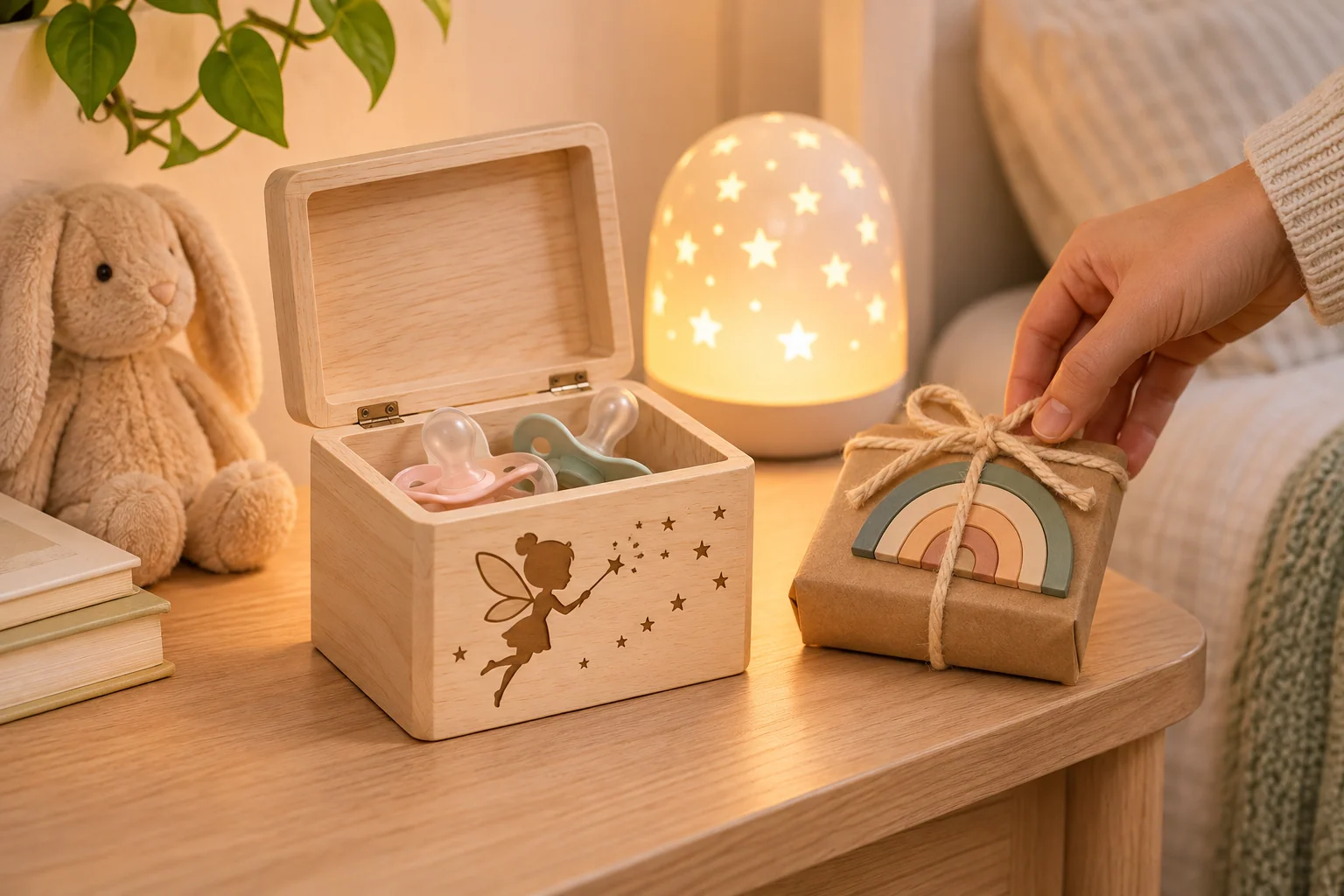
Together, put all the pacifiers in a box for the Paci Fairy, who "takes them to new babies". In the morning, a small gift is waiting. Choose something they can play with right away, like one of the simple wooden toys from our Montessori list.
Tip: Let your child choose the box and decorate it. Ownership means fewer tears.
Help the first few nights
The first nights are usually the hardest. Add extra cuddles and a longer bedtime story, and stay calm and consistent. If you want to check on them without walking in, a monitor that works without WiFi lets you watch from the hallway. Giving up the pacifier gets easier each night you stay consistent.
Tip: Say the same short sentence each time: "The paci went to the babies. You are a big kid now."
Get the free "Bye-Bye Paci" printable pack
A 7-day sticker chart, a Paci Fairy letter and a "Big Kid" certificate, ready to print.
Tools that help you stop the pacifier
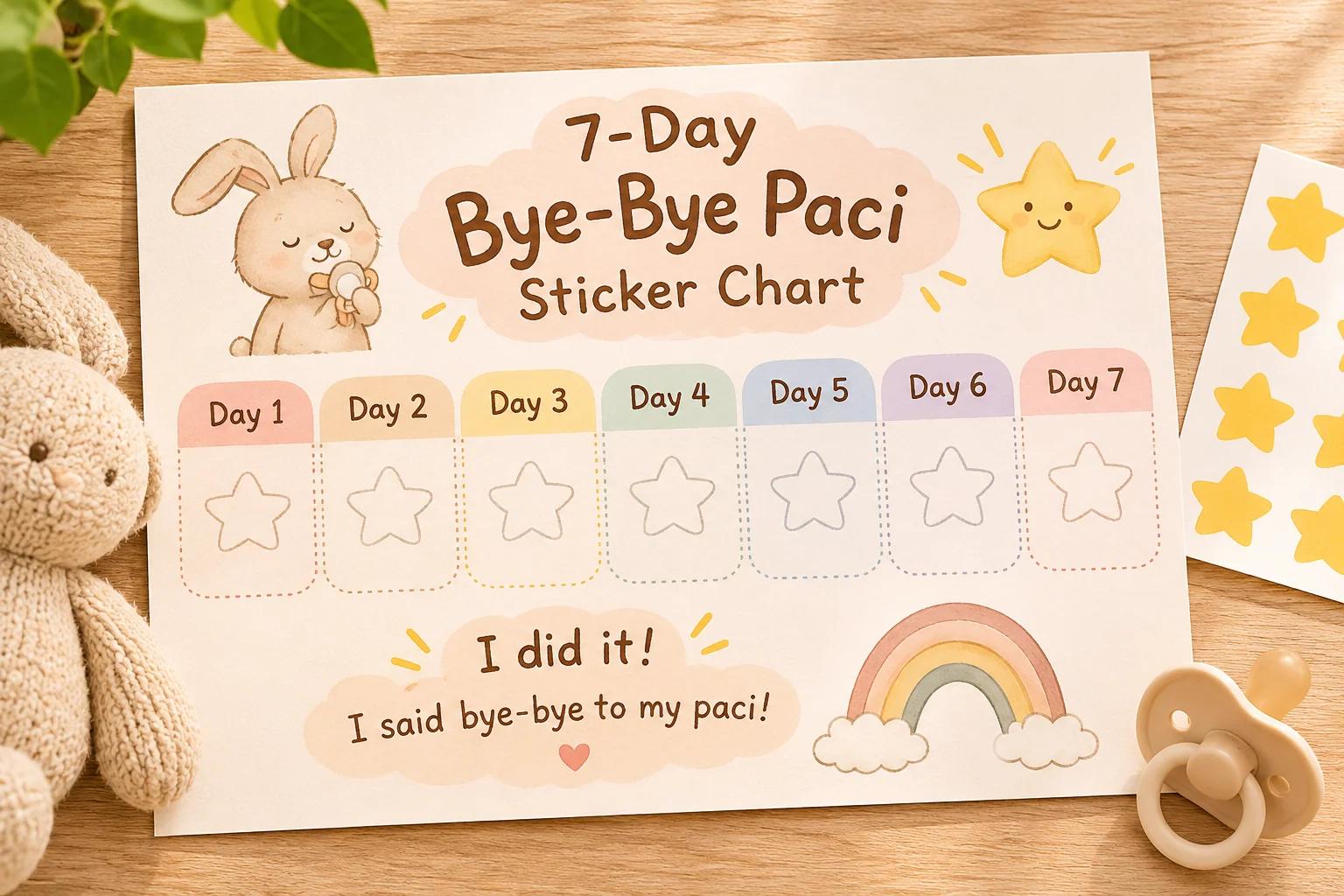
7-Day "Bye-Bye Paci" Sticker Chart
One sticker for every paci-free nap or night. Print it free, or grab a reusable chart.
Download free chartDownload →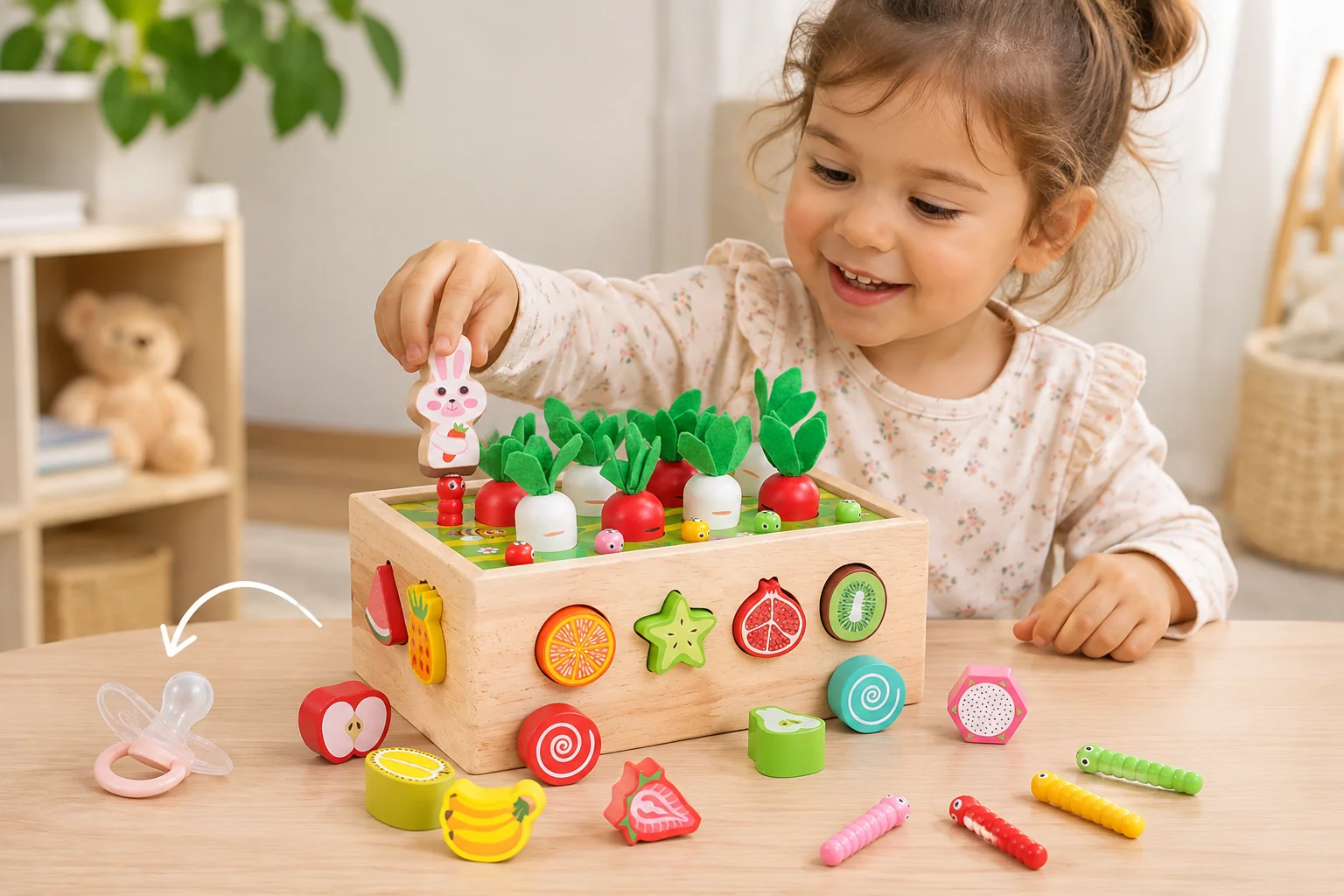
KMTJT Wooden Carrot Harvest and Shape Sorting Toy
A real "big kid" gift for the Paci Fairy to leave: carrots to pull, fruit shapes to sort and worms to feed, so the first morning without the paci starts with something to do.
Check price on AmazonCheck price →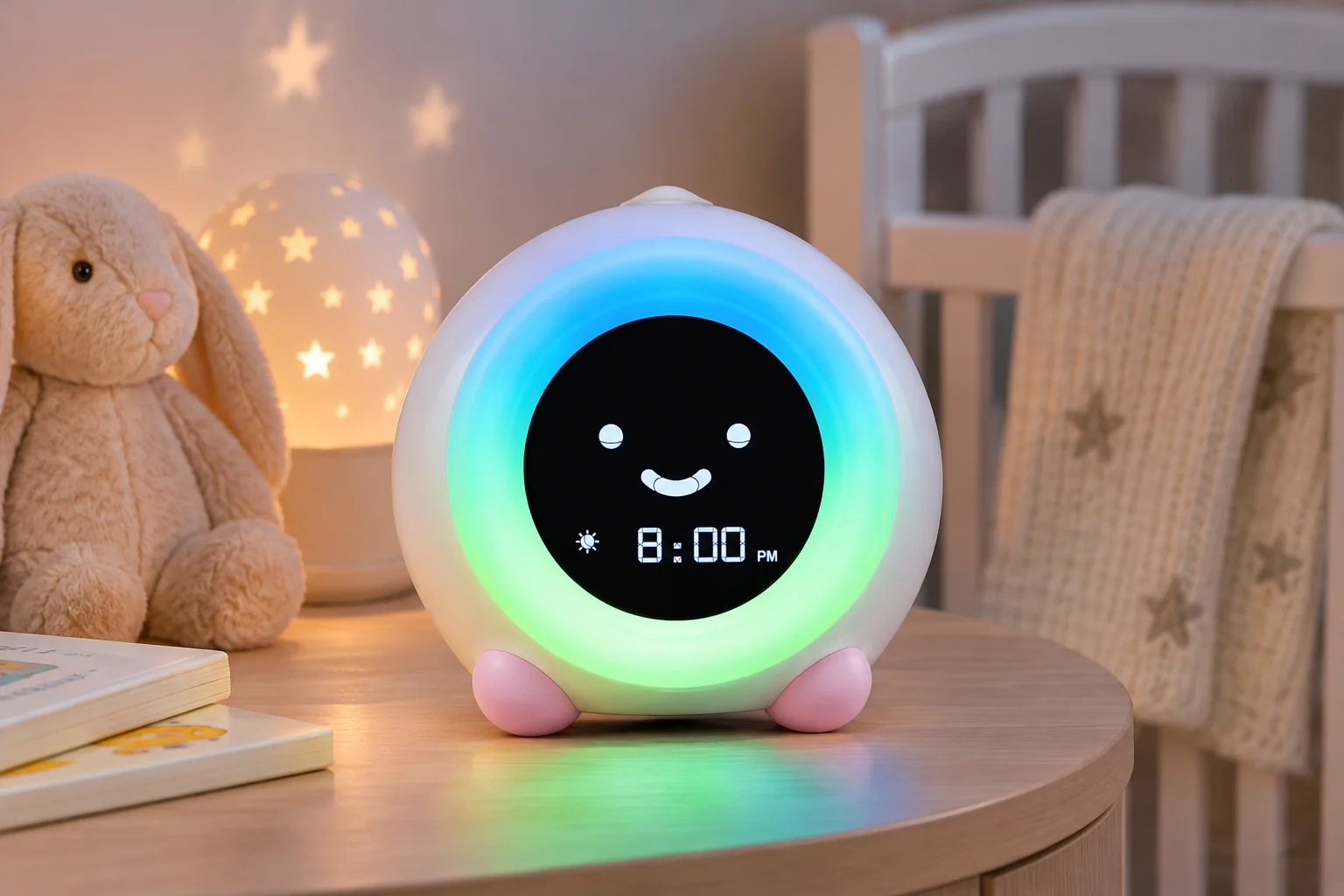
LittleHippo Mella Ready to Rise Sleep Trainer Clock
A friendly face and a colour change tell an early waker when it is OK to get up, so mornings start with a rule they can see instead of a negotiation.
Check price on AmazonCheck price →Questions moms ask
When should my child stop using a pacifier?
There is no single right age, and many families stop somewhere between 2 and 4. The AAP's guide to pacifiers and thumb sucking explains how long-term use can affect the mouth. Your pediatrician or pediatric dentist can help you choose the right time for your child.
Should you stop the pacifier cold turkey or slowly?
Both can work. Cutting daytime use first, then nights, usually means fewer tears. Cold turkey can be faster for some kids. Pick the one you can stick to.
What if my toddler cries at night?
Expect a few rough nights. Offer comfort, keep the routine the same, and don’t give the paci back, so the change sticks. Look after yourself too: a short break while your partner takes bedtime helps, and our Mom Life section is for you, not the kids.
Should I cut the tip off the pacifier?
We don’t recommend cutting or damaging pacifiers, because damaged pieces can break off. Ask your pediatrician about safe ways to wean. Saying goodbye in one go, with the Paci Fairy, is a gentler way to make it final.
Can a pacifier affect my child's teeth?
It can, especially with long-term use. The ADA's Mouth Healthy page on thumbsucking and pacifiers explains what to watch for. Ask your pediatric dentist at your child's next checkup.
Know a mom stuck in the paci battle?
Send her this plan. A calmer bedtime might be one message away.
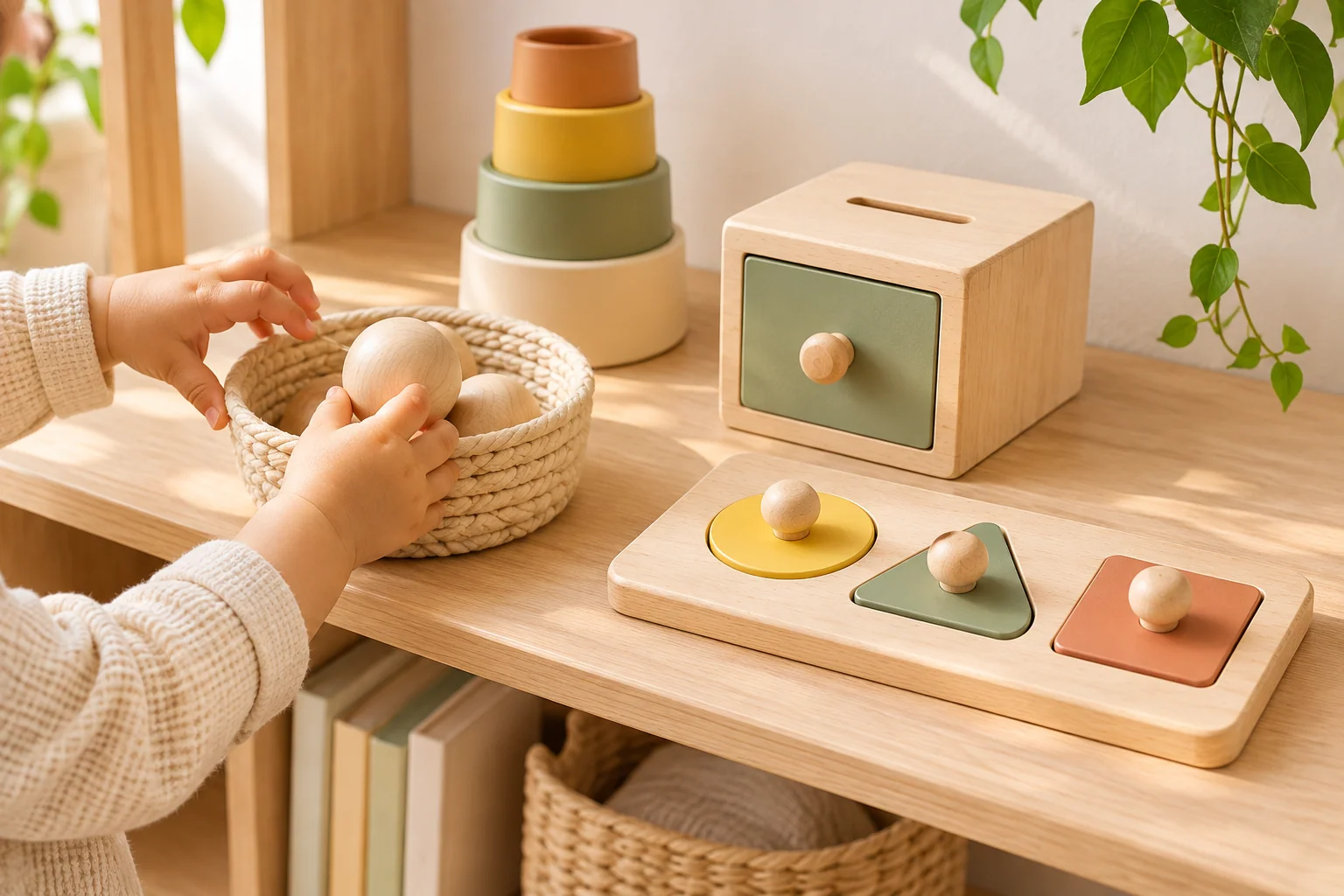
The 7 Best Montessori Toys for 1-Year-Olds
Seven simple toys a 1-year-old will actually play with, each with an honest con, plus a 60-second quiz.
Keep reading →