Sticker Charts That Actually Work (Without the Nagging)

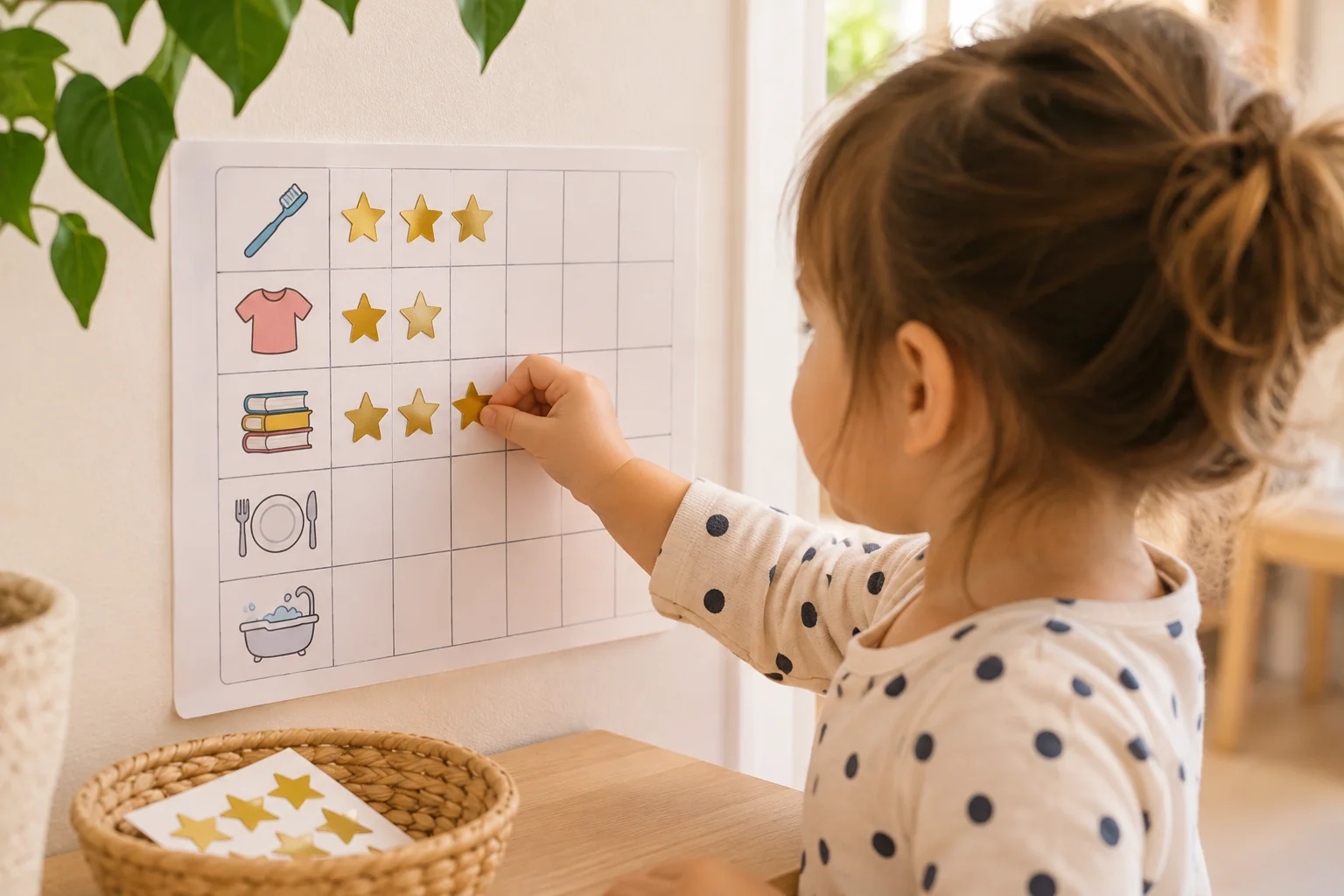
A sticker chart works when it's small, simple and about one thing. One goal, a few boxes, a sticker right away, and a reward your child actually wants.
Most reward charts fail for the opposite reasons. There are six goals, the boxes go on for a month, and the sticker comes hours later, when nobody remembers what it was for. Then the sticker chart turns into one more thing to nag about.
The steps below follow the advice from the CDC and the American Academy of Pediatrics, in plain words. They work for potty training, bedtime, brushing teeth or giving up the paci. More everyday guides live in our baby essentials hub.
Quick answer
- Pick one goal: say it as what to do, like "stay in bed", not what not to do.
- Keep it short: a toddler sticker chart needs 3 to 7 boxes, with a sticker right after the behavior.
- Never take stickers back: once earned, a sticker stays, even on a hard day.
- Fade it out: when your child forgets to ask for stickers, the habit has stuck.
This post contains affiliate links. As an Amazon Associate I earn from qualifying purchases.
A quick note: These are general parenting tips, not medical advice. If a sleep, potty or behavior problem worries you, or a chart isn't helping, ask your pediatrician. The AAP's page on positive reinforcement through rewards explains how reward charts work at different ages.
Pick One Goal for the Sticker Chart
Choose one behavior, not five. Then say it as something to do: "Stay in bed until morning" or "Sit on the potty after breakfast". "No hitting" is hard to reward, because nothing visible happens.
Pick something your child can already do some of the time. A goal they've never reached feels impossible, and the chart stays empty.
Tip: Write the goal in five words or fewer at the top of the chart.
Make a Simple Reward Chart Together
To make a reward chart, draw a row of boxes on paper, one for each day or each try. For a two-year-old, 3 to 5 boxes is plenty. Add a small picture of the goal, like a bed or a potty, so a child who can't read still knows what it's for.
The CDC suggests pictures and simple words, and a spot where your child can see it. The fridge door at their eye level works well.
Tip: Let your child pick the stickers. They care more about a chart they helped make.
Choose Small Rewards Your Child Wants
A full chart needs a prize at the end, but it doesn't need to cost much. Ask your child to choose from two or three ideas: a trip to the park, picking dinner, an extra bedtime story.
Keep the prize small and quick to give. A reward a month away means nothing to a three-year-old. For bigger goals, plan a small prize halfway and one at the end.
Tip: Write or draw the prize at the end of the row.
Give the Sticker Right Away
Hand over the sticker as soon as the behavior happens, and say exactly what they did: "You stayed in bed all night. That's a sticker!" Specific praise tells your child what to repeat.
If you wait until the evening, the link is lost. So keep the stickers near the chart, not in a drawer upstairs.
Tip: Let your child press the sticker on themselves.
Never Take a Sticker Back
Once a sticker is earned, it stays. Even after a meltdown. Even on the worst day.
Taking stickers away turns a sticker chart into a punishment board, and kids stop caring. Handle the hard moment separately, and let the chart keep counting what went right.
Tip: Skip sad faces and crosses on the chart. Empty boxes are enough.
Use a Sticker Chart for Bedtime and Early Mornings
Bedtime charts are hard because the goal happens while you sleep. An OK-to-wake clock helps: the light changes color at the wake time you set, so your child can see when morning starts. Stayed in bed until it changed? That's the sticker.
There's no age on the listing. The con: it's a cue, not magic, so it only works once you teach the routine.
Tip: Set the wake time a little earlier at first so early wins come easily.
Plan a Finish Line for the Reward Chart
A reward chart with an end feels doable. Seven boxes for seven paci-free nights, then a big kid reward. You could put a new toy in the last box, like a wooden carrot harvest sorter, labeled 1 to 3 years.
The con: it has many small pieces, so count them back into the box and keep them away from younger siblings. Not every chart needs a toy, though. A special outing works just as well.
Tip: Count down the empty boxes together each night.
Fade It Out When the Habit Sticks
When your child forgets to ask for a sticker, the habit has stuck. Then switch to a sticker every other day, then once a week, and then just praise.
If you want a new goal, start a new sticker chart. But give the family a break between charts, so it doesn't feel like life is one long test.
Tip: Keep the finished chart. Kids love to look back at a full one.
Fix a Sticker Chart That Isn't Working
If the sticker chart stalls, check three things. Is the goal too hard for this age? Is the behavior clear to your child? And is the reward still something they want?
Usually one of those needs a tweak. Make the goal smaller, show it with a picture, or let your child pick a new prize. Then try again for a week.
Tip: A chart that goes unused for three days is a sign to change it.
Helpers for a Sticker Chart That Sticks
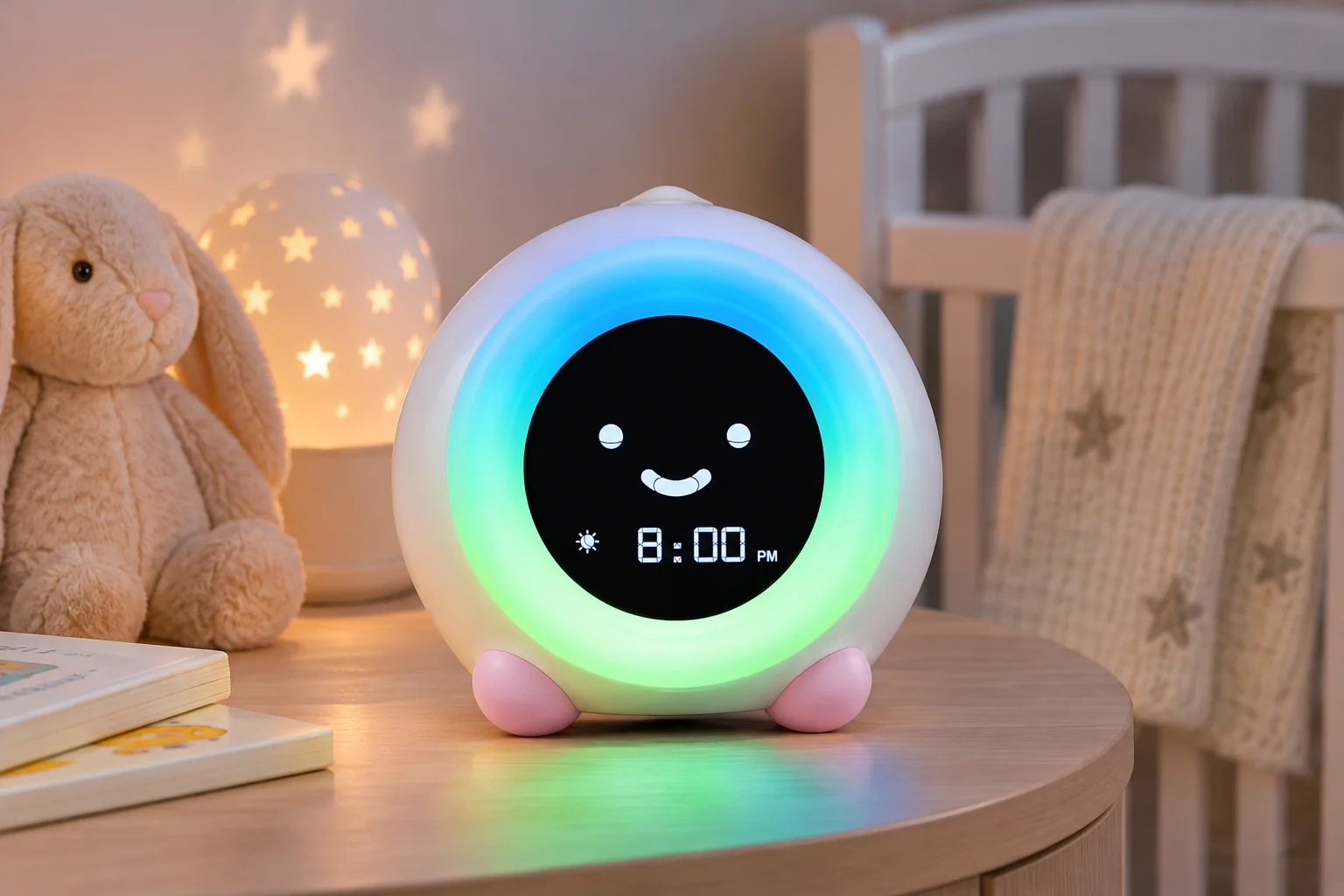
LittleHippo Mella Ready to Rise Sleep Trainer Clock
A friendly face and a colour change tell an early waker when it is OK to get up, so mornings start with a rule they can see instead of a negotiation.
Check price on AmazonCheck price →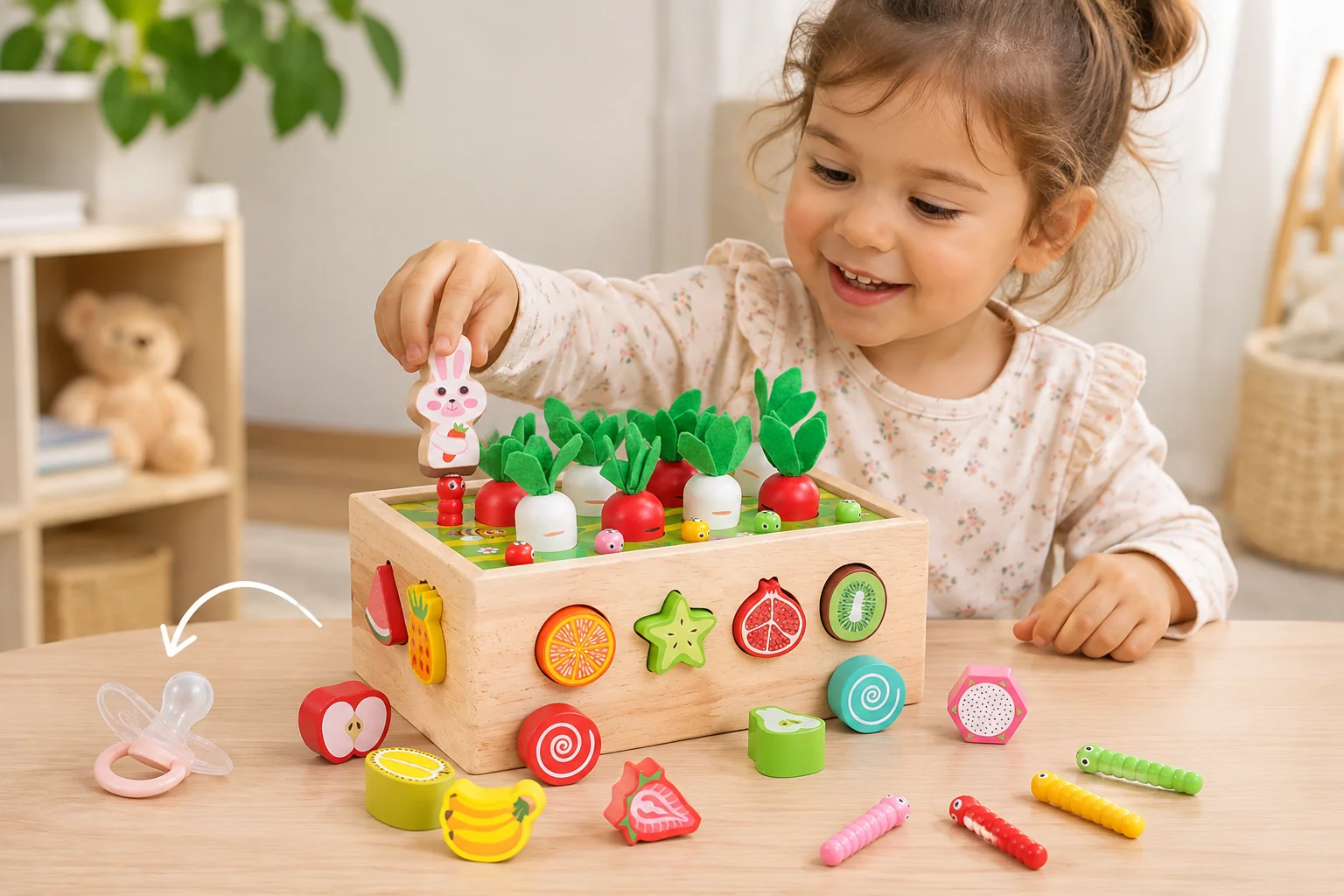
KMTJT Wooden Carrot Harvest and Shape Sorting Toy
A real "big kid" gift for the Paci Fairy to leave: carrots to pull, fruit shapes to sort and worms to feed, so the first morning without the paci starts with something to do.
Check price on AmazonCheck price →Questions moms ask
What age is right for a sticker chart?
You can try one around 2 or 3, once a child can link a sticker to what they just did. The AAP notes that tokens like paper stars tend to work better for early school-age kids, so with a toddler, keep the chart very short and the reward fast.
Do reward charts work for potty training?
They can help, as long as the chart rewards trying, like sitting on the potty, not only success. Accidents are normal, so don't mark them on the chart. If you're unsure your child is ready, ask your pediatrician.
Should I take away a sticker for bad behavior?
No. The CDC's tips for using praise and rewards say an earned reward stays earned. Deal with the bad moment on its own, and keep the chart about what went right.
How long should we use a sticker chart?
Until the habit runs on its own. That might be a week for a small goal, or a few weeks for something bigger. When your child stops asking about stickers, start giving them less often.
Can a sticker chart help with the pacifier?
Yes. One sticker for each paci-free nap or night gives your child something to aim for. Our guide to saying goodbye to the pacifier shows how to pair the chart with a readiness check and a plan.
Know a mom whose fridge is full of half-finished charts?
Send her this. One goal and seven boxes can do more than a chart with ten rules.
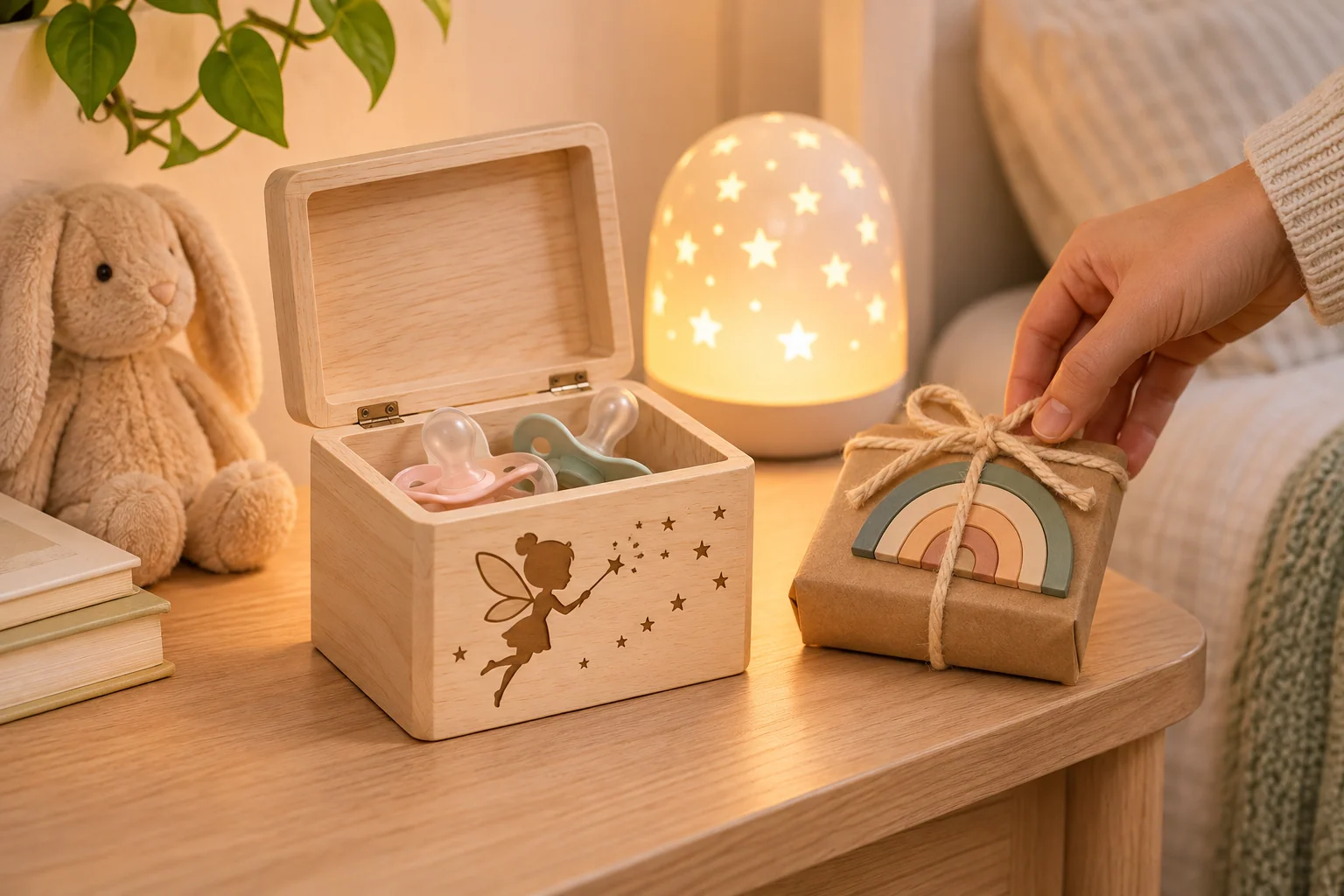
How to Stop the Pacifier Without the Bedtime Battles
Six gentle steps to stop the pacifier, a 2-minute readiness check and a free printable sticker chart pack.
Keep reading →