How to Start Potty Training (A Calm, Step-by-Step Plan)

Potty training goes best when your child is ready and you are calm. Both matter more than any method, chart or gadget.
There's no perfect age. The AAP says most kids in the US start between 2 and 3, and most finish by 4. So this plan doesn't race the clock. It starts with readiness, builds a simple routine, adds a sticker chart for the first week and ends with a small celebration. Nights come later, and that's normal. For more milestone help, our baby essentials hub has checklists and guides.
Quick answer
- When: when your child shows readiness signs, often between 2 and 3. Ask your pediatrician if you're unsure.
- How: a child-sized potty, a few set potty times a day and lots of calm praise.
- First week: a simple sticker chart, then a small big-kid celebration at the end.
- Nights: leave them for later. Night dryness often comes months or years after days.
This post contains affiliate links. As an Amazon Associate I earn from qualifying purchases.
A quick note: This is a general plan, not medical advice. Ask your pediatrician about readiness, and call them about pain, constipation, blood in the stool or a sudden step backward. The AAP's page on the right age to potty train lists the readiness signs.
Is your toddler ready?
Tap everything that's true right now.
That's fine. Waiting a little often makes training faster and calmer.
Go to step 1 ↓Look for Potty Training Readiness Signs
Readiness is the biggest piece of any potty training plan. Signs include staying dry for a couple of hours, showing cues before going and following simple instructions.
Also watch for interest. Some kids ask about the toilet, want to watch, or tell you their diaper is wet. If you see most of these signs, you're probably close. If not, wait a few weeks and check again.
Tip: Write down the signs you notice for a week. It's easier to see a pattern on paper.
Pick a Calm Week to Start
Big changes and potty training don't mix well. The AAP suggests waiting if there's a move, a new baby, an illness or a family crisis on the way.
So pick a quiet week at home, with no trips and few plans. A long weekend works well, because you can stay close to the bathroom. It's also why we suggest you don't mix this with other big changes, like the day you stop the pacifier.
Tip: Clear your calendar for the first three days. Errands can wait.
Set Up the Potty and Practice Sitting
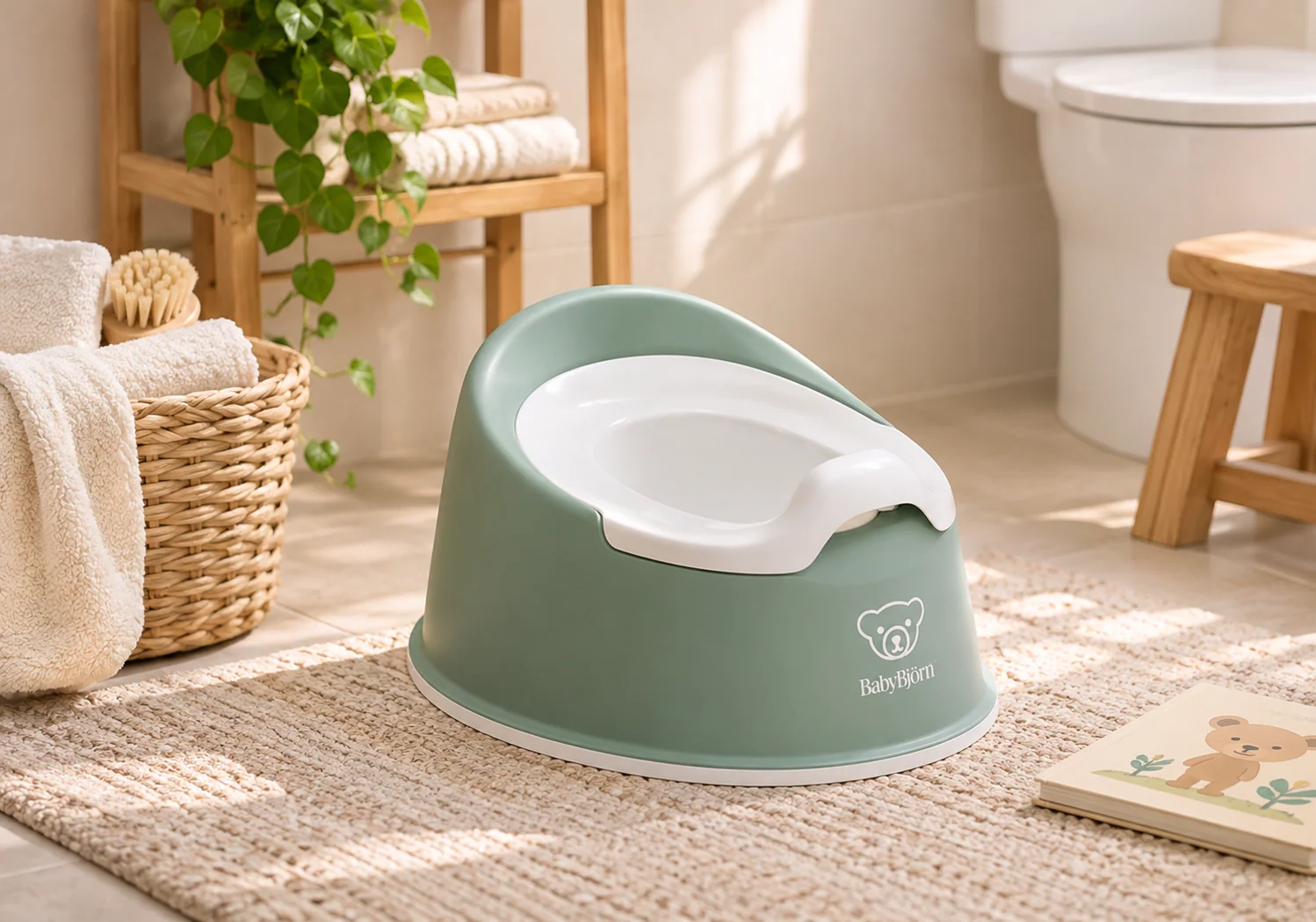
A child-sized potty is often easiest to start with. Your child's feet should reach the floor, which helps them relax and push. If you use a seat on the big toilet, add a sturdy step.
At first, let your child sit fully dressed, maybe with a book. There's no goal yet. You just want the potty to feel normal and safe.
Tip: Keep a small basket of board books next to the potty.
Build a Simple Potty Routine
A steady potty routine takes the arguing out of it. Offer the potty at the same times each day: right after waking, after meals, before naps and before bath.
The morning sit is the easiest to stick to. An OK-to-wake clock can help here. When the light changes color, your child knows it's time to get up, and the first stop is the potty. Later, the same clock helps with bedtime and nights. The one we'd pick also works as a night light and sound machine, per the listing.
The honest cons: it's a cue, not magic, so you still need to teach the routine. It also costs more than a basic night light, and there's no age on the listing. Keep the cord out of reach of the bed.
Tip: Say "potty time" as a plain fact, not a question. "Do you need to go?" usually gets a no.
Teach the Words and Show the Steps
Toilet training starts with words. Kids need simple ones for pee, poop and wiping. Pick yours and use them every time.
Then walk through each part: pants down, sit, go, wipe, flush, pants up, wash hands. Many kids learn by watching a parent or sibling. Potty books help too, because they show the same steps again and again.
Tip: Let your child flush. For a lot of toddlers, it's the best part.
Track the First Week with a Sticker Chart
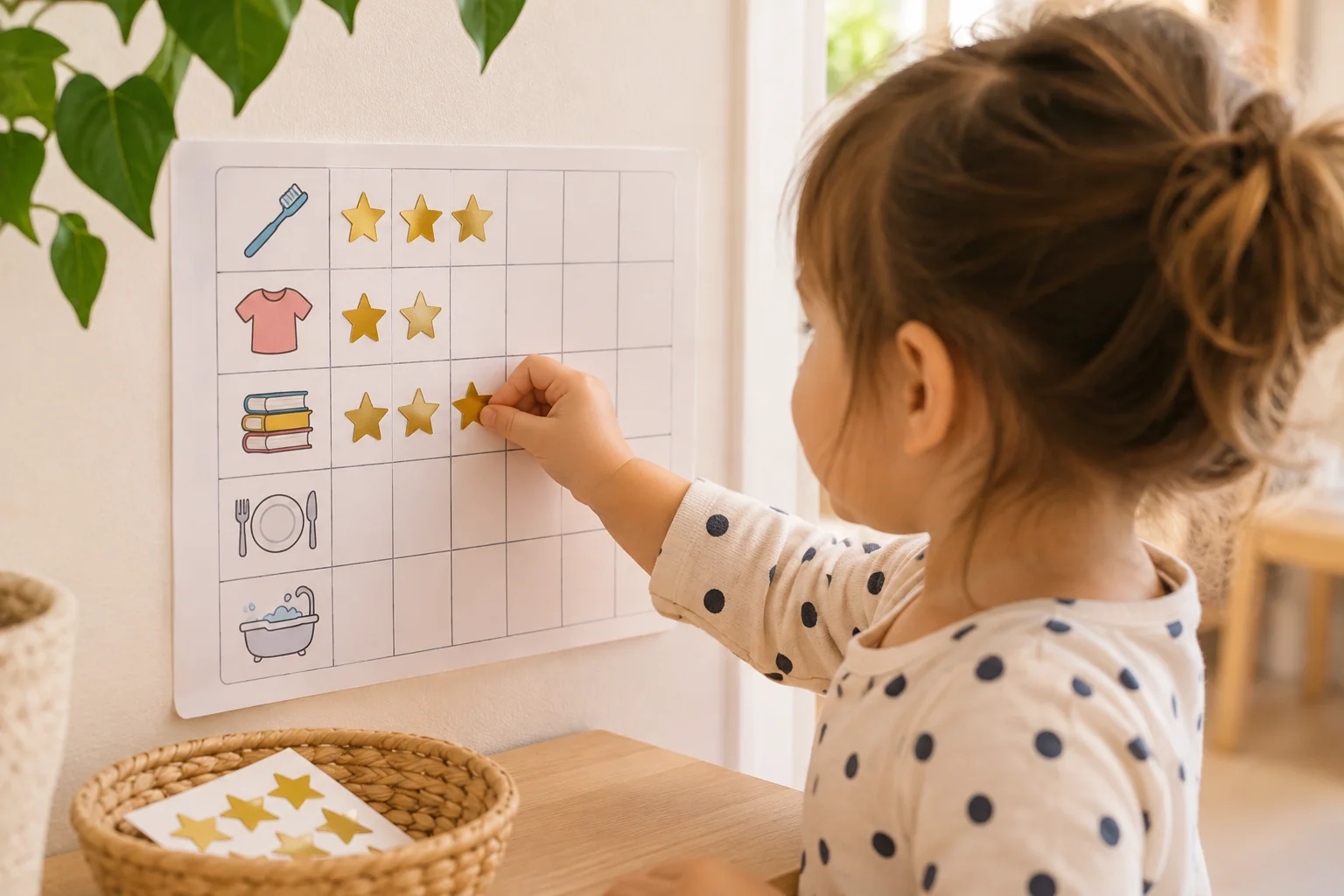
A chart turns each try into something your child can see. Give a sticker for sitting, not just for success. That keeps it about effort, so a dry potty never feels like failure.
Keep it short: one goal and seven days. Our guide to sticker charts that work shows how to set one up so it motivates instead of nags.
Tip: Hang the chart at your child's eye level, near the potty.
Celebrate the Potty Week with a Big-Kid Toy
When the chart is full, mark the end of the first week with a small celebration. A new toy can feel like a real "big kid" moment.
The AAP cautions that rewards and pressure can get in the way of toilet training. So keep it low-key. Treat it as a celebration of the week, not a deal for perfect days, and give it even if there were accidents.
The toy we'd pick is a wooden carrot harvest and shape sorting set. It's labeled for 1 to 3 years, so check it fits your child's age. The cons: it has many small pieces, and painted wood can chip if it hits a hard floor.
Tip: Wrap it simply and leave it by the potty on the last morning.
Handle Accidents and Regression Calmly
Accidents are a normal part of potty training. Clean up without fuss, say "pee goes in the potty," and move on. Shame and punishment tend to make things worse.
If your child goes backward after doing well, look for a change, like a new sibling or a new daycare. The AAP's page on potty training regression notes that constipation and other physical causes can play a part, so ask your pediatrician first.
Tip: Pack a spare outfit and a wet bag every time you leave the house.
Leave Nighttime for Later
Daytime and nighttime dryness are different skills. The AAP's guide to the stages of toilet training says night control often comes months or years after days. So use night diapers or pull-ups for now, without guilt.
A steady bedtime helps everyone. If evenings feel chaotic, our 10-minute evening reset can make bedtime calmer for you too.
Tip: Put a towel and spare pajamas by the bed for quick night changes.
Potty Training Helpers We'd Pick
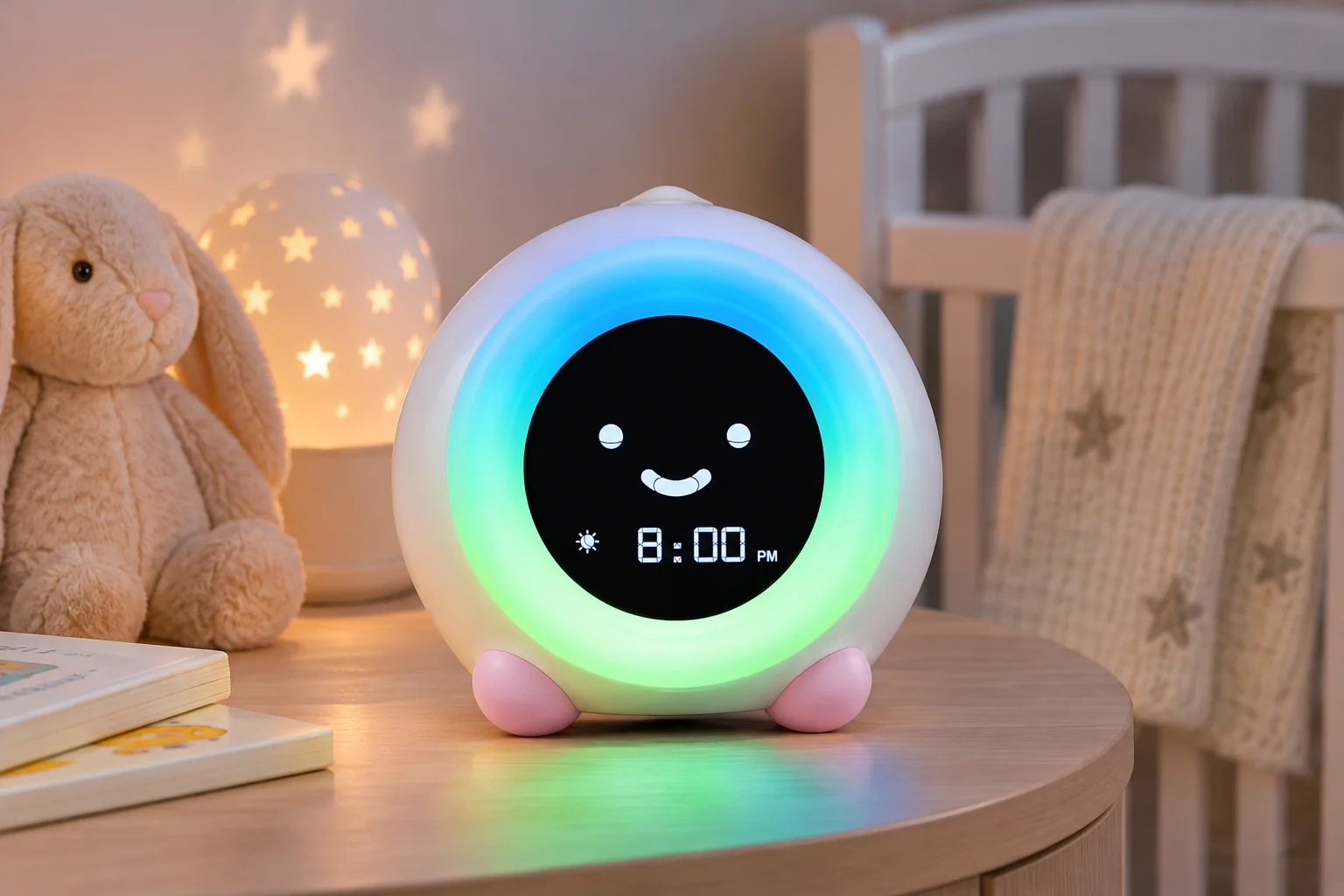
LittleHippo Mella Ready to Rise Sleep Trainer Clock
A friendly face and a colour change tell an early waker when it is OK to get up, so mornings start with a rule they can see instead of a negotiation.
Check price on AmazonCheck price →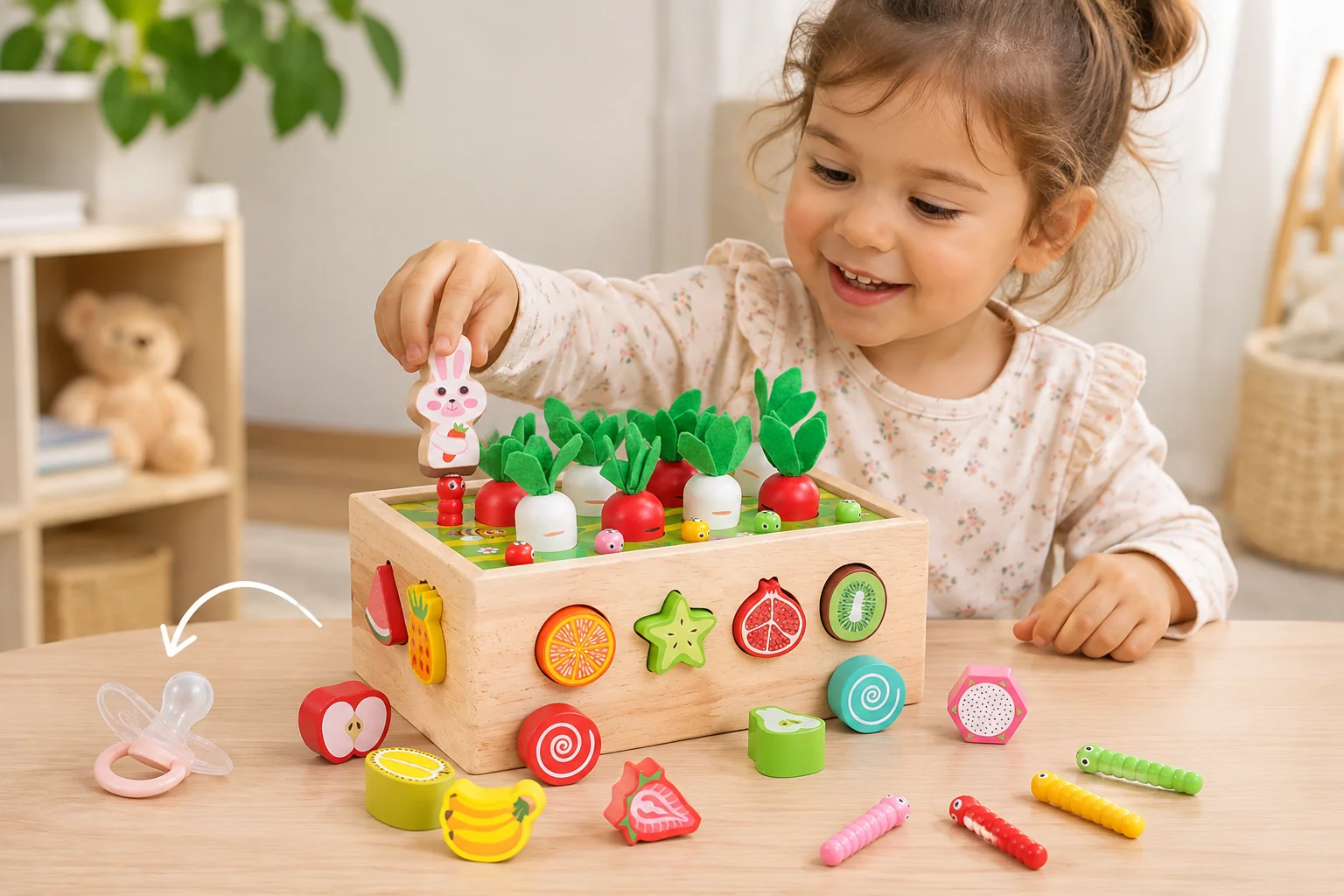
KMTJT Wooden Carrot Harvest and Shape Sorting Toy
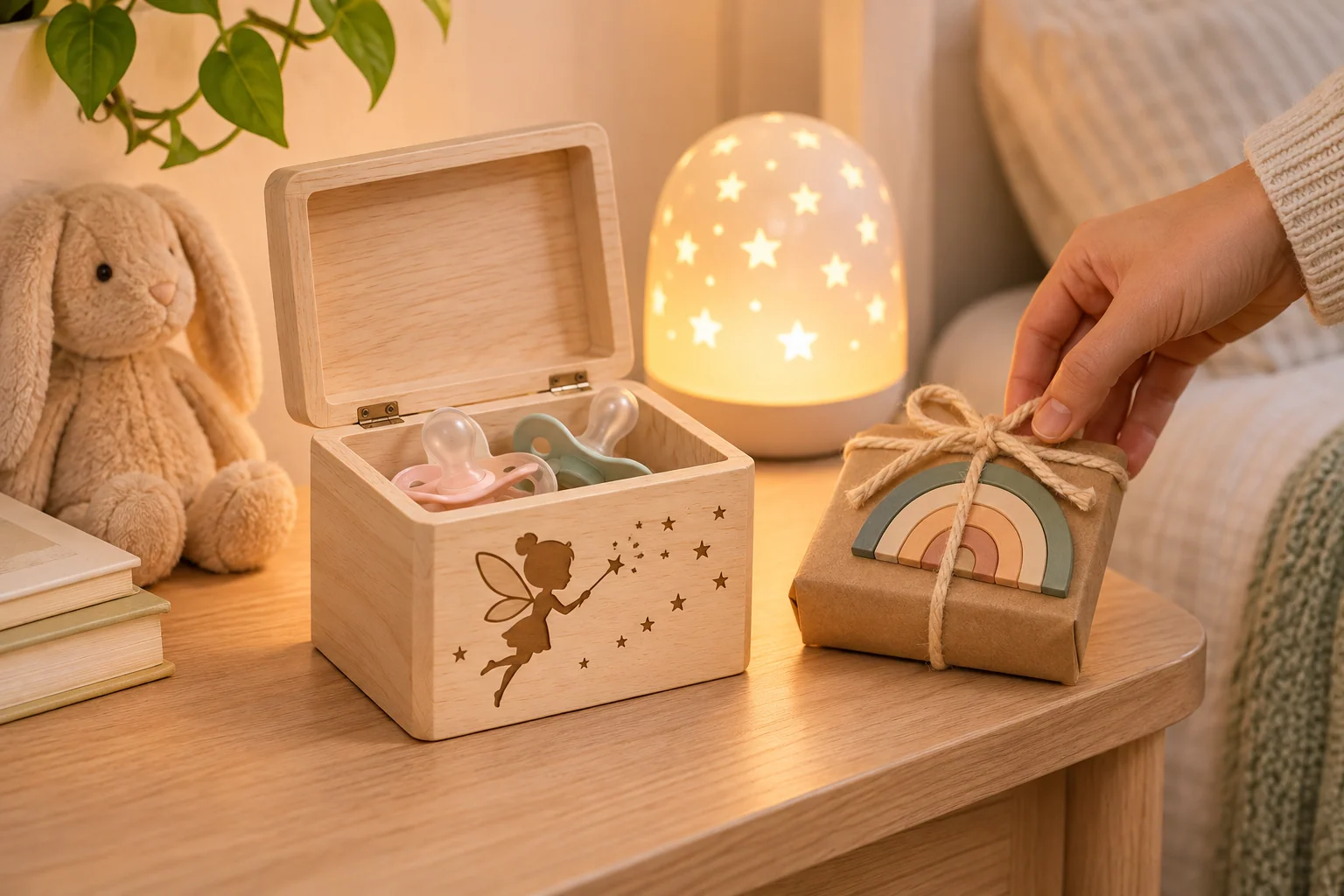
A real "big kid" gift for the Paci Fairy to leave: carrots to pull, fruit shapes to sort and worms to feed, so the first morning without the paci starts with something to do.
Check price on AmazonCheck price →Questions moms ask
What age should you start potty training?
Readiness matters more than age. The AAP says most US children start between 2 and 3 years old, and some show signs earlier. Ask your pediatrician if you're not sure your child is ready.
How long does potty training take?
It varies a lot. Some kids get the idea in days, and others need weeks or months. Daytime and nighttime are separate skills, so expect nights to take longer.
What if my child refuses the potty?
Take a break. Put the potty away for a couple of weeks, keep it light, and try again. Power struggles tend to make refusal last longer.
Should I wake my child at night to pee?
Most families simply wait. The AAP suggests keeping night training low-key in the toddler and preschool years, and using night diapers or pull-ups if accidents are frequent. Ask your pediatrician about bedwetting worries.
What do I need to start toilet training?
Less than the stores suggest: a child-sized potty or a seat with a step, some easy-off pants and a few books. A chart and a small celebration can help with motivation. Not sure what else fits your child's age? The start-here picker on our homepage sorts our guides by age.
Know a mom staring at a brand-new potty?
Send her this. A calm plan beats a weekend of panic.
Sticker Charts That Actually Work
How to set up a sticker chart that motivates instead of nags: one goal, a few boxes, small rewards and a clear finish line.
Keep reading →