The best baby bottles are the ones your baby will drink from and you can clean at 3 a.m. without losing a part. For most families, that means a slow-flow nipple, few pieces and a shape that fits your hand.
There's no single winner for every baby. Some babies take any bottle. Others turn their head away from three brands before they settle on a fourth. So buy one or two bottles of a kind first, and stock up once your baby is happy with it.
We picked five that parents buy again and again: a vented bottle, a glass bottle, two with wide nipples for babies who also breastfeed, and a small newborn bottle. Every card has a real con, and none of it is feeding advice. For questions about how much or how often your baby drinks, ask your pediatrician.
This post contains affiliate links. As an Amazon Associate I earn from qualifying purchases.
Our top picks
Best Overall
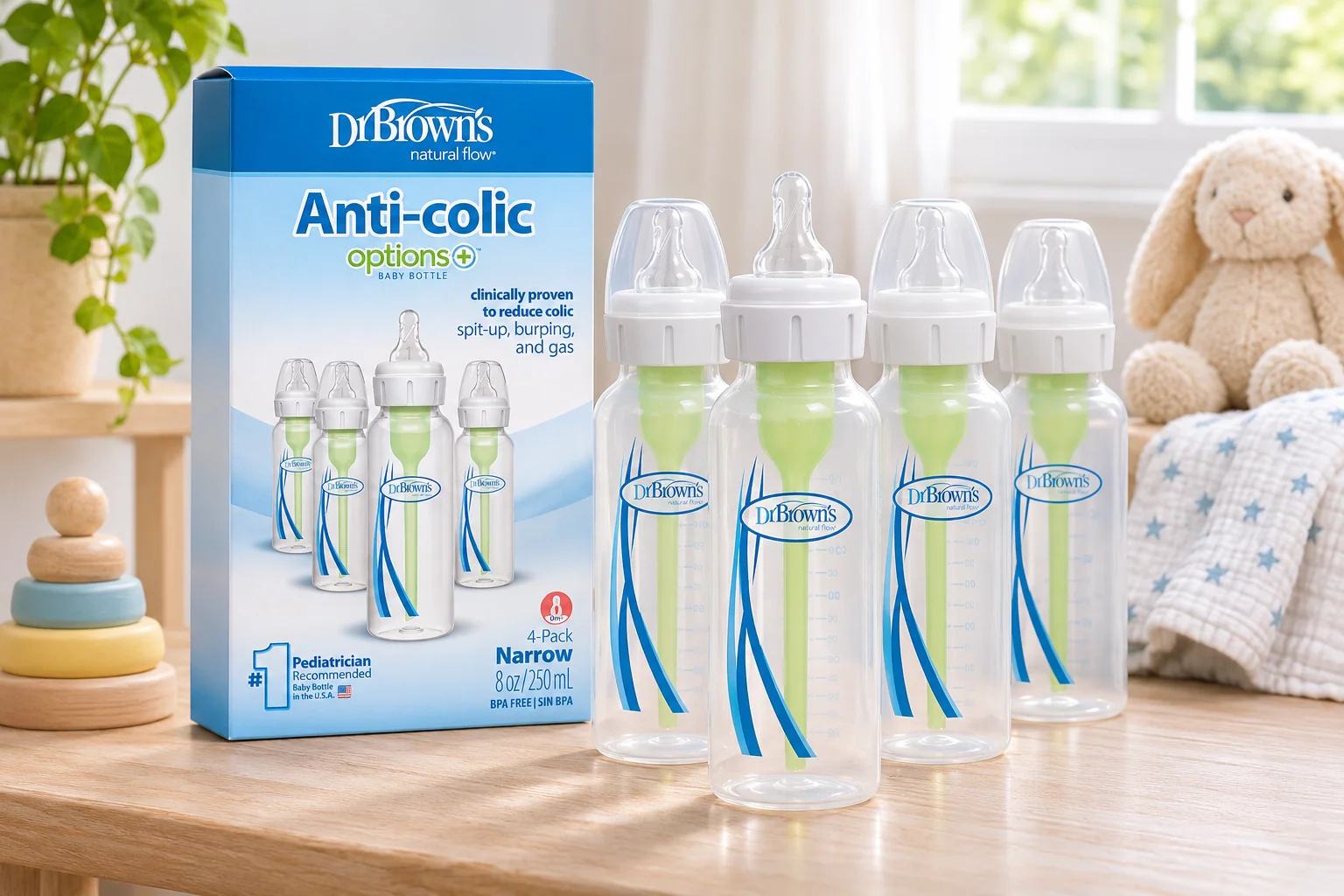
Dr. Brown's Anti-Colic Options+ Narrow Baby Bottle, 8 oz, 4-Pack
Dr. Brown's Anti-Colic Options+ Narrow Baby Bottle, 8 oz, 4-Pack
The best-known vented bottle. The maker designed the internal vent to cut down on air in the milk, and you can remove it once your baby feeds well without it. Nipples and spare parts are easy to find almost anywhere.
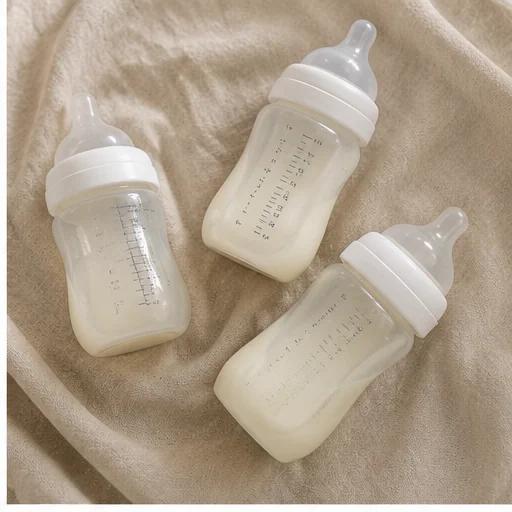
Philips Avent Natural bottles in glass, 4 oz each. Glass doesn't hold smells or stains, and you can see at a glance when it's clean. The maker says the Natural Response nipple lets milk flow when your baby sucks.
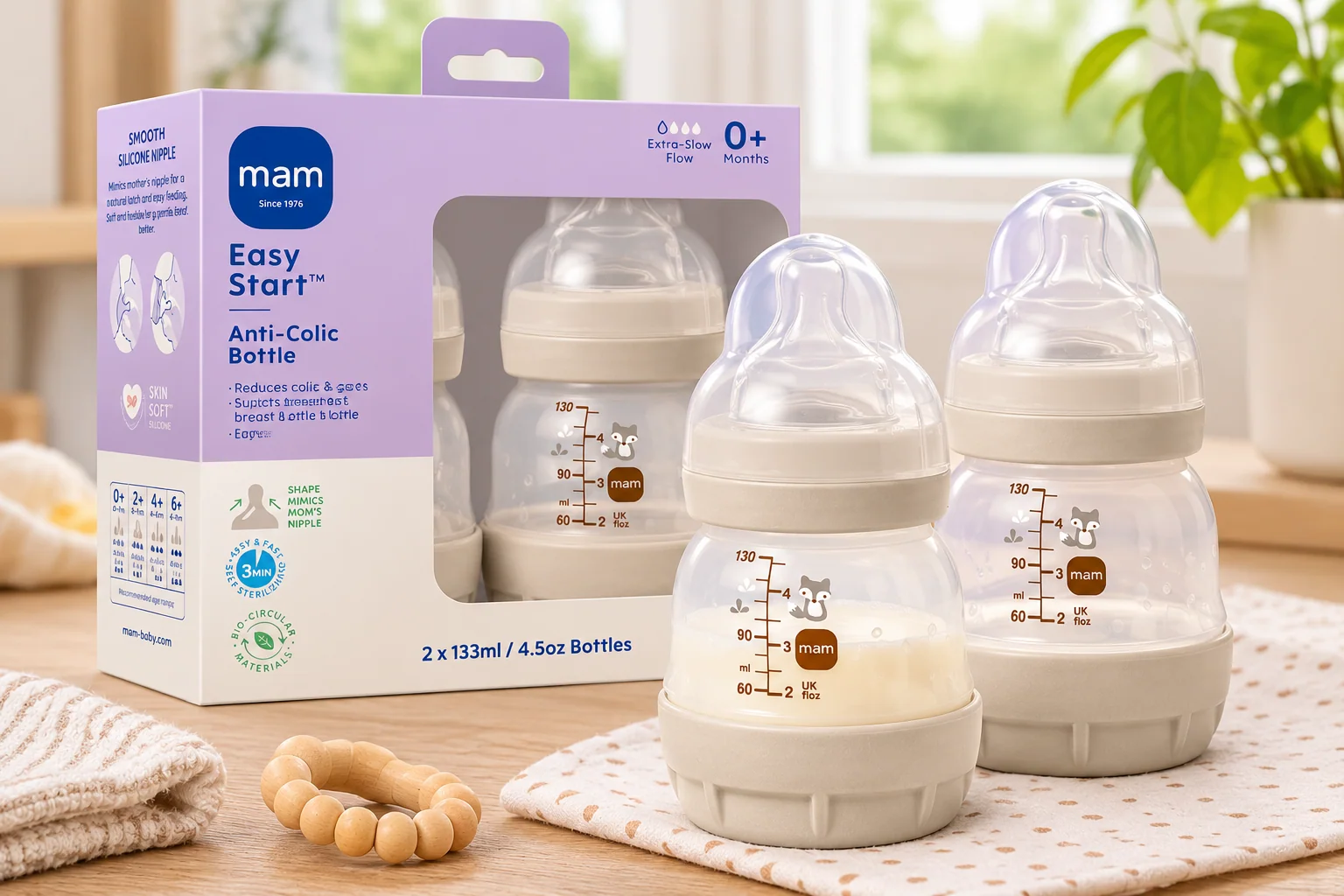
MAM Easy Start Anti-Colic Baby Bottles, 5 oz, Slow Flow
A small 5 oz bottle with a slow-flow silicone nipple and a vented base. The listing says it can self-sterilize in the microwave, and the bottom opens for cleaning.
Slow-flow nipple and a 0–3 months label
Self-sterilizes in the microwave (per listing)
Bottom opens for easy cleaning
Can leak if the vented base isn't screwed on snugly
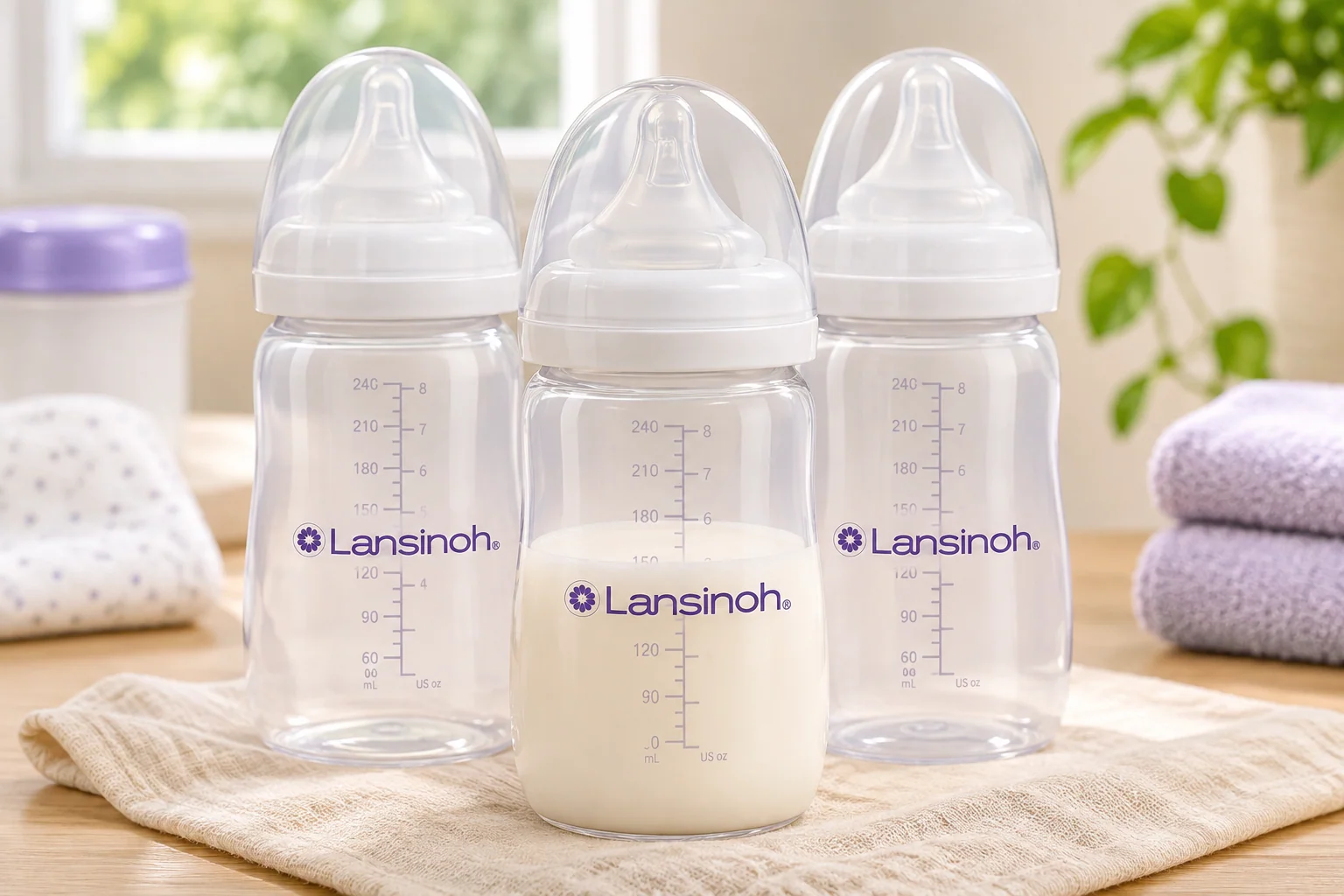
Wide-neck bottles with a NaturalWave nipple and an air vent in the nipple, made for babies who also breastfeed (per listing). Few parts, and a fair price per bottle.
Simple, with few parts
Dishwasher safe (per listing)
Good value per bottle
Comes with medium-flow nipples, so buy slow-flow ones for a newborn
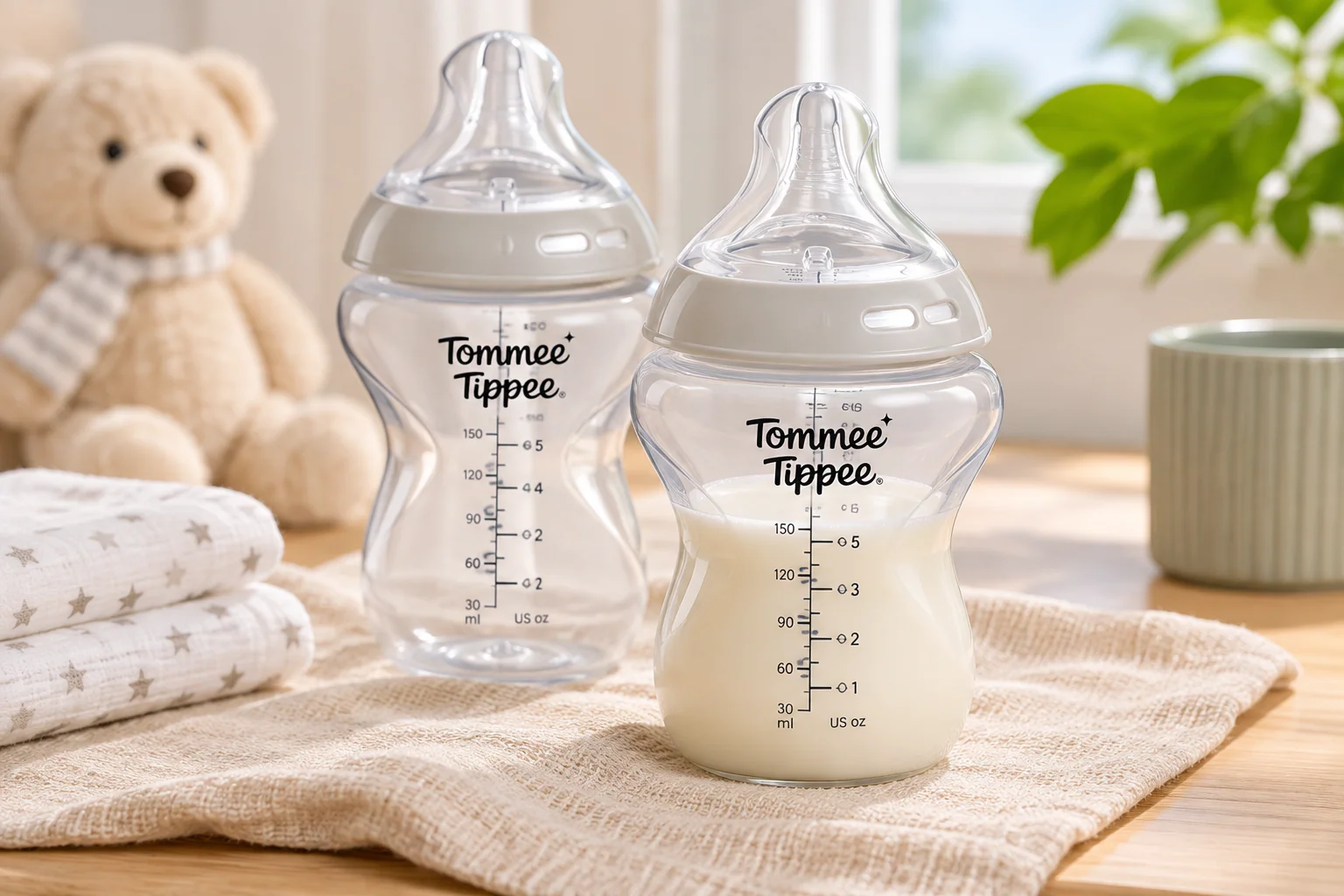
Now sold as Tommee Tippee Natural Start. It has a wide, breast-shaped silicone nipple with a valve the maker designed to let air out. Easy to find in most big stores.
We didn't test these bottles at home. Instead, we read each listing, the nipple flow and the age on the pack. Then we read the most common buyer complaints, so every card has a real con. Leaks came up most. We also looked at which bottles parents buy again and again on Amazon. You can read how we pick products, and no brand paid to be here.
We looked for: - A slow-flow nipple in the box, or easy to buy - Few parts to wash and put back together - Nipples and spare parts that are easy to find - No pattern of safety complaints in the reviews
We left out claims we can't check. When a maker says a bottle helps with colic, we call it the maker's claim.
Buying guide
Start with a slow-flow nipple
On any baby bottle, the nipple matters more than the bottle itself. Most newborns start on the slowest flow. Some bottles come with a medium nipple in the box, so read the pack before the first feed.
If your baby coughs, sputters or spills milk from the corners of the mouth, the flow may be too fast. If feeds drag on and your baby seems cross, it may be too slow. Either way, ask your pediatrician.
Vented, anti-colic or plain baby bottles
Vented bottles use a tube or a valve to let air out of the bottle. Makers call them anti-colic bottles. That's a claim, not a promise, and fussiness has lots of causes. Still, some parents like a vent for babies who gulp.
The trade-off is parts. A vent is one more piece to wash, dry and put back. If the vent goes in wrong, the bottle can leak.
Glass or plastic?
Glass baby bottles are heavy, last for years and never smells of last week's milk. Plastic is light, cheap and fine to drop. So many families keep glass at home and plastic in the diaper bag.
If you buy plastic, check the pack says BPA-free. Then replace any bottle or nipple that cracks, clouds or tears.
How many baby bottles you need
Fewer than the registry says, at least at first. Buy two of one kind and see if your baby takes to it. Once they do, a few more covers a day of feeds with one wash in the middle.
Take every part apart after each feed. The CDC suggests a wash basin and brush you use only for baby things. Let the parts air-dry on a clean towel, and don't rub them dry with a dish towel.
You don't need a special machine. The AAP's page on sterilizing bottles says a hot dishwasher cycle or hot, soapy water does the job for most families. Ask your pediatrician if your baby was born early.
Later on, when bottles share the counter with first foods, our feeding guides pick up from here. The steamer-blender guide shows how to make a week of purées in one nap.
FAQ
Which baby bottle is best for a newborn?
A small bottle with a slow-flow nipple. On this list, the MAM Easy Start comes with a slow-flow nipple and a 0–3 months label, and the Dr. Brown's comes with a Level 1 nipple. Your pediatrician can tell you how much and how often your newborn should drink.
Do anti-colic bottles work?
Makers design anti-colic bottles to let air out through a vent or valve, so less of it ends up in the milk. That's the claim, and some parents like how they feel. But a vent can't promise a calmer baby, and long crying spells are worth a call to your pediatrician.
Are glass baby bottles better than plastic?
Neither is better for every family. Glass has no plastic, doesn't hold smells and lasts a long time. It's also heavier, and it can break. Plastic is light and fine for a diaper bag. Many parents use glass at home and plastic on the go.
How often should I sterilize bottles?
Wash every part after every feed. The CDC's guide to cleaning infant feeding items says to sanitize at least once a day if your baby is under 2 months, was born early or has a weak immune system. Ask your pediatrician what fits your baby.
When should I move up a nipple size?
Go by your baby, not the calendar. If feeds start taking a very long time, or your baby gets frustrated and sucks hard, ask your pediatrician whether a faster flow makes sense. If milk spills from the corners of the mouth, the flow may be too fast.
Know a mom about to start bottles?
Send her this. Five baby bottles, the honest cons, and the tip to buy two before buying ten.