7 Reasons a Steamer-Blender Makes Homemade Baby Food Easy (Even If You Hate Cooking)

You know the moment. Baby finally naps. You have maybe 40 minutes to make baby food, and no baby food maker to do the slow part for you.
One pot is boiling carrots. The blender is out. There's a colander in the sink and orange splashes on the counter.
By the time it's all washed, baby is awake, and you made exactly one jar.
The slow part was never the blending. It's cooking food soft enough, then moving it between three different things. A steamer-blender does both in one jar. Here's why parents love it, and how it fits with the rest of our feeding guides.
Quick answer
- What: one machine that steams food soft, then blends it in the same jar.
- Why: fewer pots, faster batches, easy texture control.
- Our pick: Grownsy Baby Food Maker (steamer + blender).
This post contains affiliate links. As an Amazon Associate I earn from qualifying purchases.
A Baby Food Maker Steams and Blends in One Jar (No Extra Pots to Wash)
Normally you cook in one pot, drain in a colander, then scoop into a blender.
That's three things to wash for one small jar of food.
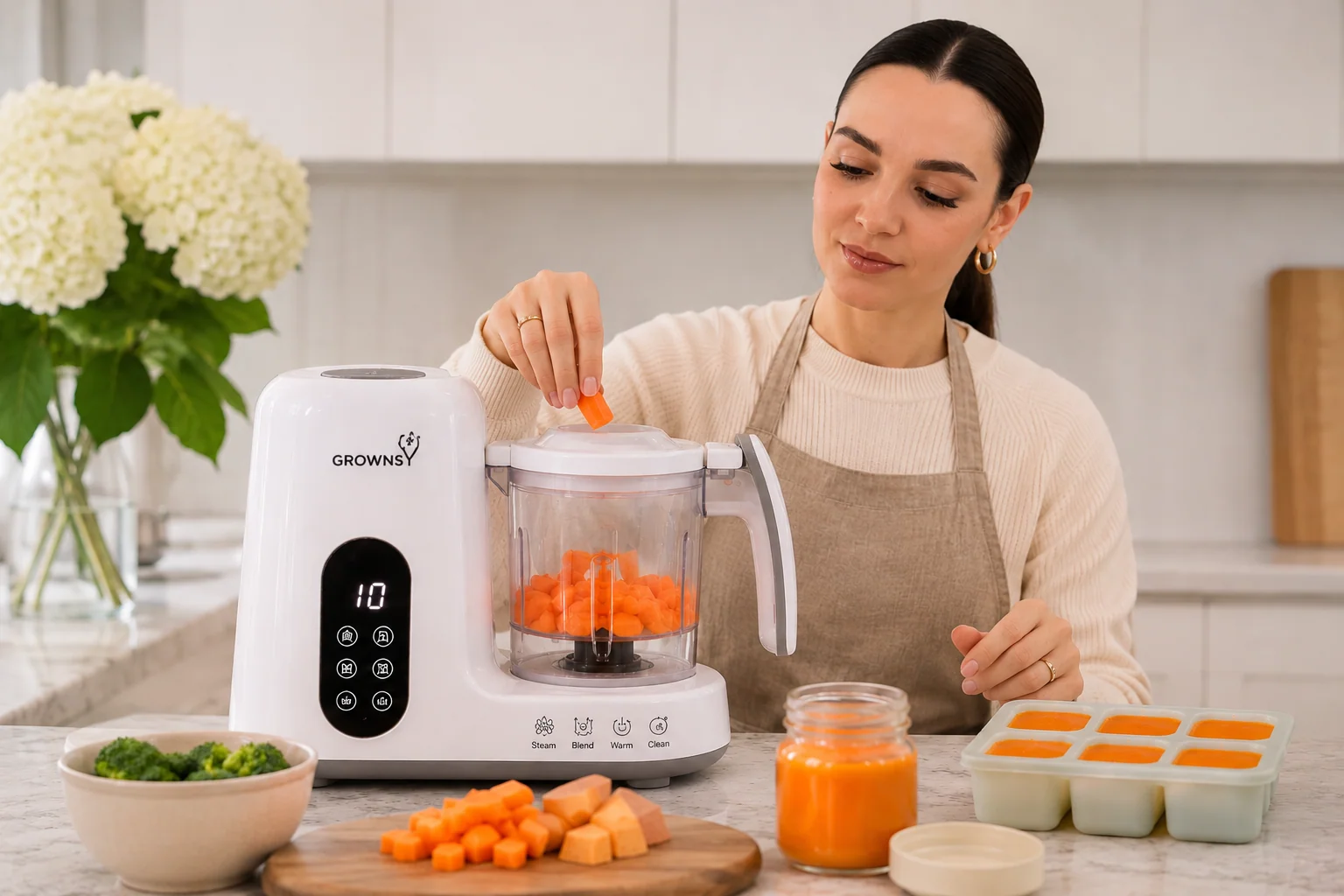
In a baby food maker, the food steams in a basket inside the jar. When it's soft, you blend it right there. One jar, one rinse, and the counter stays dry.
The Steamer-Blender Cooks While You Walk Away (Press Start and Go)
Boiling means checking the pot, stirring and draining at the right moment.
With steam, you add water, press start and the machine stops on its own. So you can fold laundry, or sit down, while it works.
That's why parents say they finally stopped "babysitting the pot" during nap time.
A Week of Purées in One Nap Time (Hello, Freezer Stash)
Run two or three quick rounds: carrots, then peas, then apples.
Pour each batch into an ice-cube tray and freeze. Label the bag with the food and the date, because every cube looks the same a week later.
Now every meal is "grab two cubes and warm them up". Later on, the same freezer habit works for the toddler recipes we batch-cook on Sundays.
One Food Maker, Every Texture (It Grows With Your Baby)
Early on, blend longer for a smooth purée.
Later, blend for a few seconds to keep it lumpy and practice chewing. Before you go chunky, check the CDC's choking hazards list, and ask your pediatrician if you're unsure.
Same machine from first spoonfuls to mashed family food.
The Steamer-Blender Is Easy to Clean (Fewer Parts Than You Think)
Jar, blade and basket. That's most of it.
Rinse right after blending, before food dries on. A soft brush gets under the blade in a few seconds.
Check the manual for which parts can go in the dishwasher, and let the water tank dry open between uses.
You Know Exactly What's Inside (Just the Food You Picked)
Homemade means you choose the ingredients, and nothing is added that you didn't put in.
It's also an easy way to use the same vegetables the rest of the family eats tonight: steam a handful of the carrots before you season the rest.
We only recommend gear we'd buy again. You can read how we test and pick products if you're curious.
One Baby Food Maker, Not Two Machines (Saves Counter Space)
A separate steamer and blender take up a lot of room.
One compact base fits next to the kettle and is ready when you are. It also means one cord, one manual and one thing to find a cupboard for when the purée stage is over.
How much time could you get back?
How many batches of baby food do you make in a week?
Our estimate: about 15 minutes saved per batch (no separate pot, colander and blender to wash). Your time may vary.
This isn't really about purée. It's about getting nap time back.
When a whole week of baby food takes one nap time, you get the other naps for yourself: a coffee while it's hot, a shower, or just sitting down. If naps themselves are the hard part, our monitor that works without WiFi is on the same shelf.
What a baby food maker really gives you
Steam + blend
One jar, from raw to purée.
Hands-off cooking
Press start, it stops itself.
Texture control
Smooth now, chunky later.
Small footprint
Fits a busy counter.
What to expect with a steamer-blender
- First useAbout 20 minutesPeel, cube, steam, blend. Your first jar is done before nap ends.
- Week 1Freezer tray stockedTwo or three batches give you a week of easy meals, and the second week is faster than the first.
- Month 2New flavorsMix and match cubes, like carrot with apple or pea with pear.
- LaterChunkier texturesShorter blending for mashed, lumpier food as chewing improves.
How to use a baby food maker in 3 steps
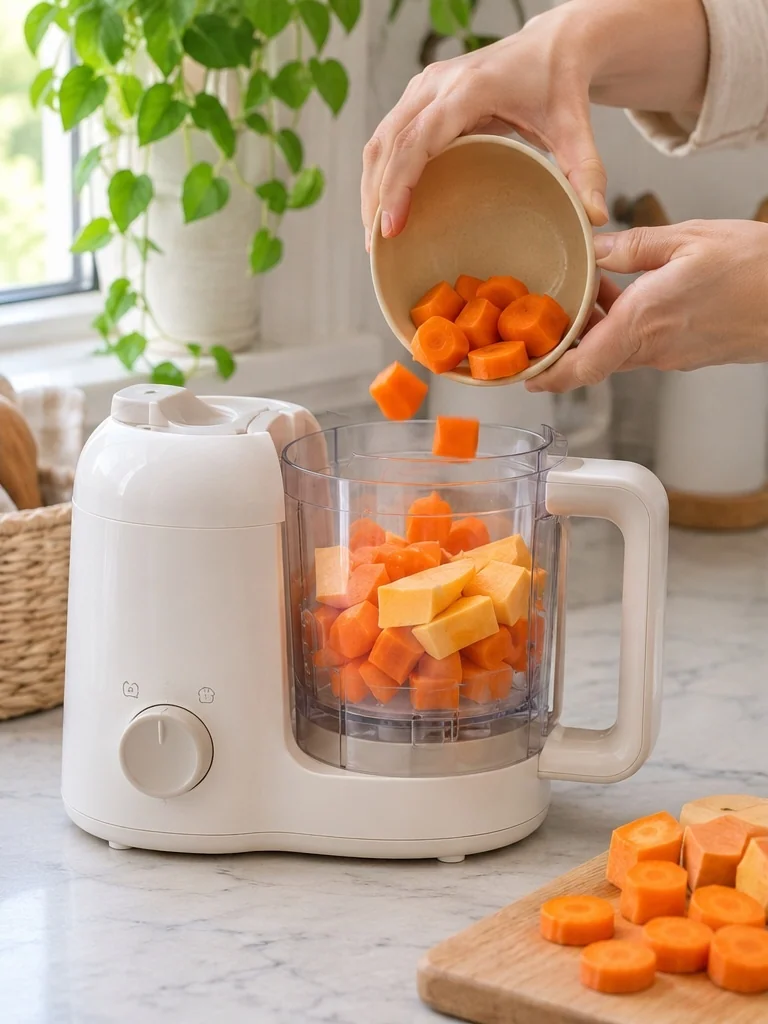
Add water and food
Water in the tank, cubed food in the basket. Cut everything about the same size so it cooks evenly.
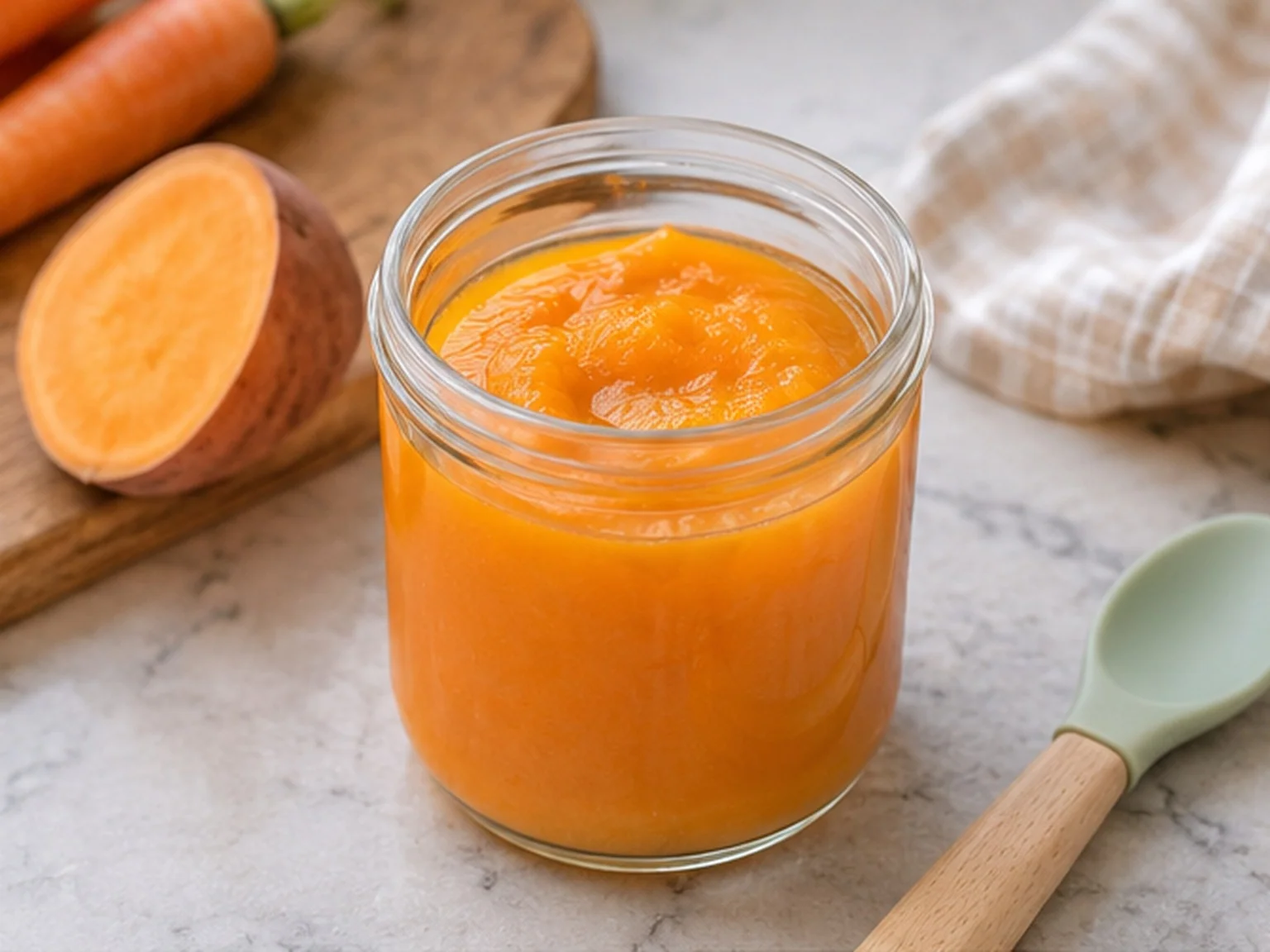
Steam
Press start. It stops when done, usually 10 to 20 minutes depending on the food.
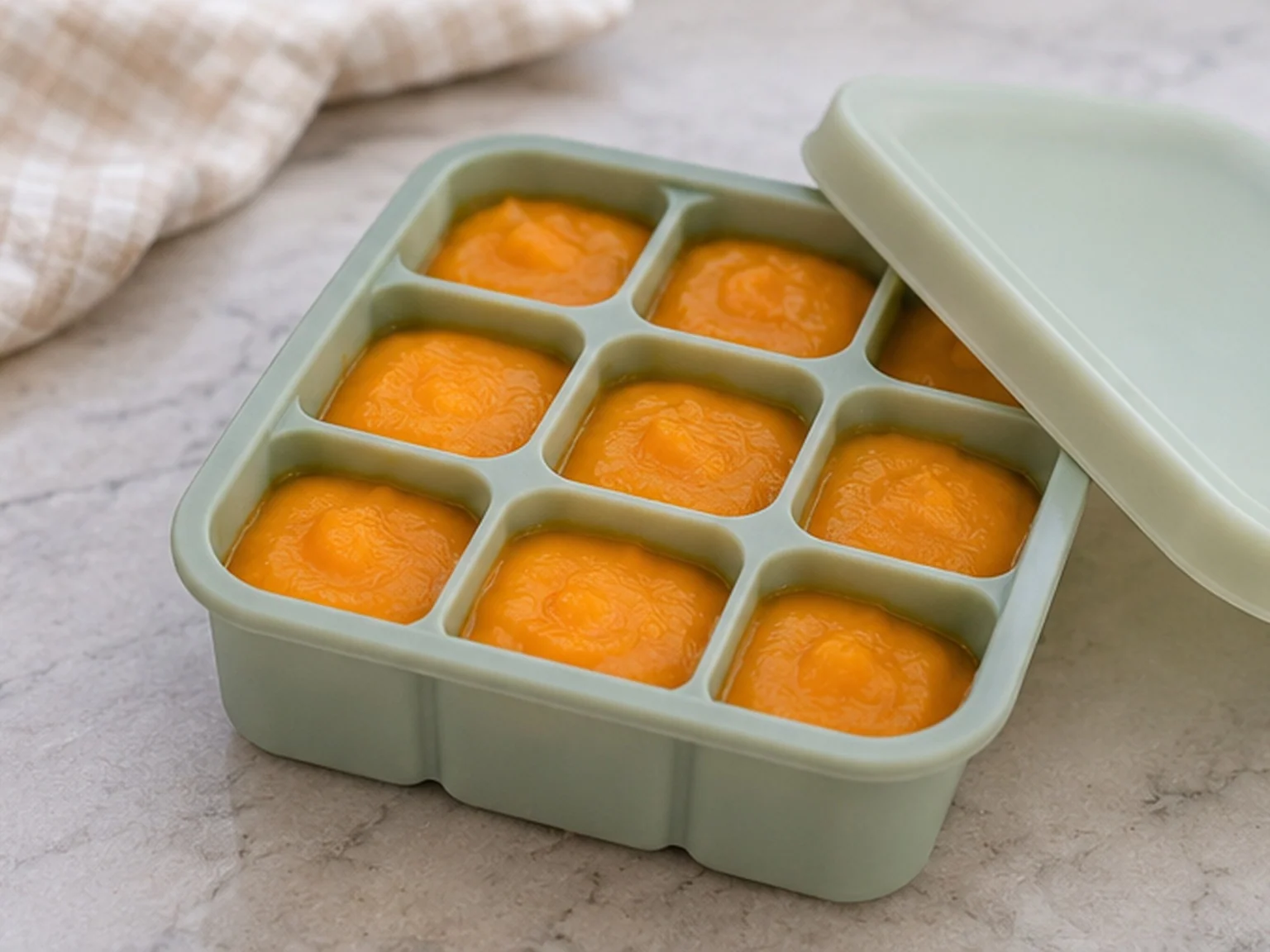
Blend
Flip or switch to blend. Pulse for chunky, run longer for smooth, and add a splash of the steaming water if it's too thick.
Great for
- Parents who want to make baby food at home
- Batch-cooking for the freezer
- Small kitchens with little counter space
Skip it if
- You mostly buy ready-made pouches
- You already own a steamer and a good blender
- You're going straight to finger foods
Grownsy Baby Food Maker, Steamer & Blender
One machine that steams food soft, then blends it in the same jar.
- Steams and blends in one jar
- Raised steam basket, BPA-free materials (per listing)
- Smooth or chunky, you choose
- Small jar, so big batches take a few rounds
Best for: nap-time batch cooking
See today's price on AmazonPrice and returns are set by Amazon. Check the listing for the current return window.
A quick note: ask your pediatrician when and how to start solids. Follow the manual for safe use and cleaning.
FAQ
Is a baby food maker worth it?
If you plan to make purées at home more than once a week, it saves real time and dishes. If you mostly buy pouches, skip it and put the money toward a good high chair. Not sure what to tackle first? The start-here picker on our homepage sorts our guides by age.
Can I use a regular blender instead of a baby food maker?
Yes. A steamer-blender just saves the separate cooking and draining step. If you already own a steamer basket and a blender you like, you get the same result with one more pot to wash.
How much does a baby food maker make per batch?
The jar is small, so plan on a few rounds for a big freezer batch. Check the listing for the exact capacity, and remember that an ice-cube tray holds about 12 to 16 portions.
When can my baby start purées?
Ask your pediatrician. The AAP's guide to starting solids lists the readiness signs, and the CDC's page on introducing solids suggests one new food at a time. The listing says the maker is for babies 6 months and up.
How do I clean a steamer-blender?
Rinse the jar, blade and basket right after use, then wash them in warm soapy water. Descale the water tank of the baby food maker now and then (the manual says how), and store it with the lid off so it dries fully.
Know a mom about to start solids?
Send her this. A week of purées in one nap time is a gift she'll thank you for.
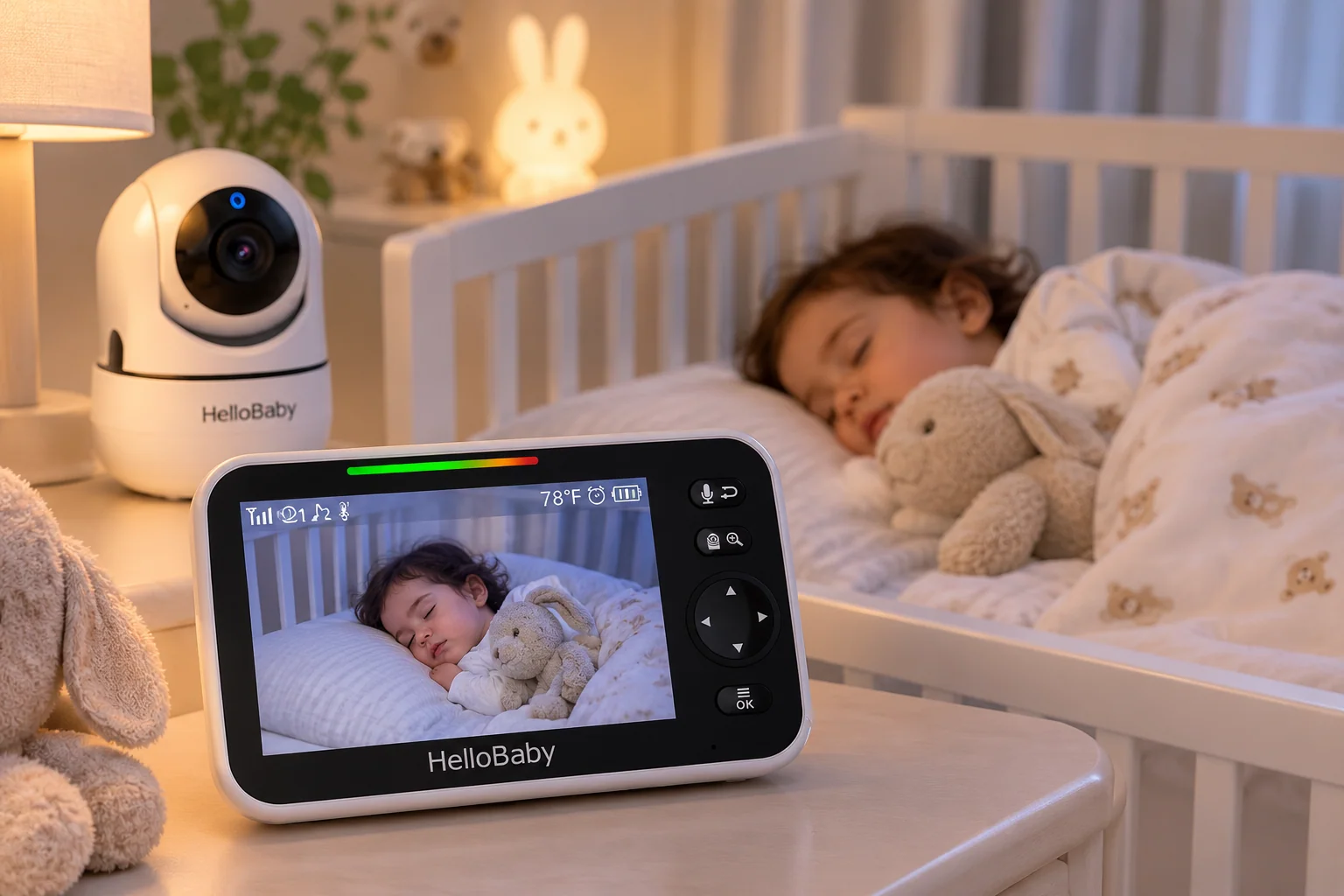
Why a No-WiFi Baby Monitor Is a Smart Idea
No app, no account, nothing online: why a no-WiFi baby monitor suits many parents, plus a 3-question quiz.
Keep reading →