How to Choose a Toddler Plate (7 Checks Before You Buy)

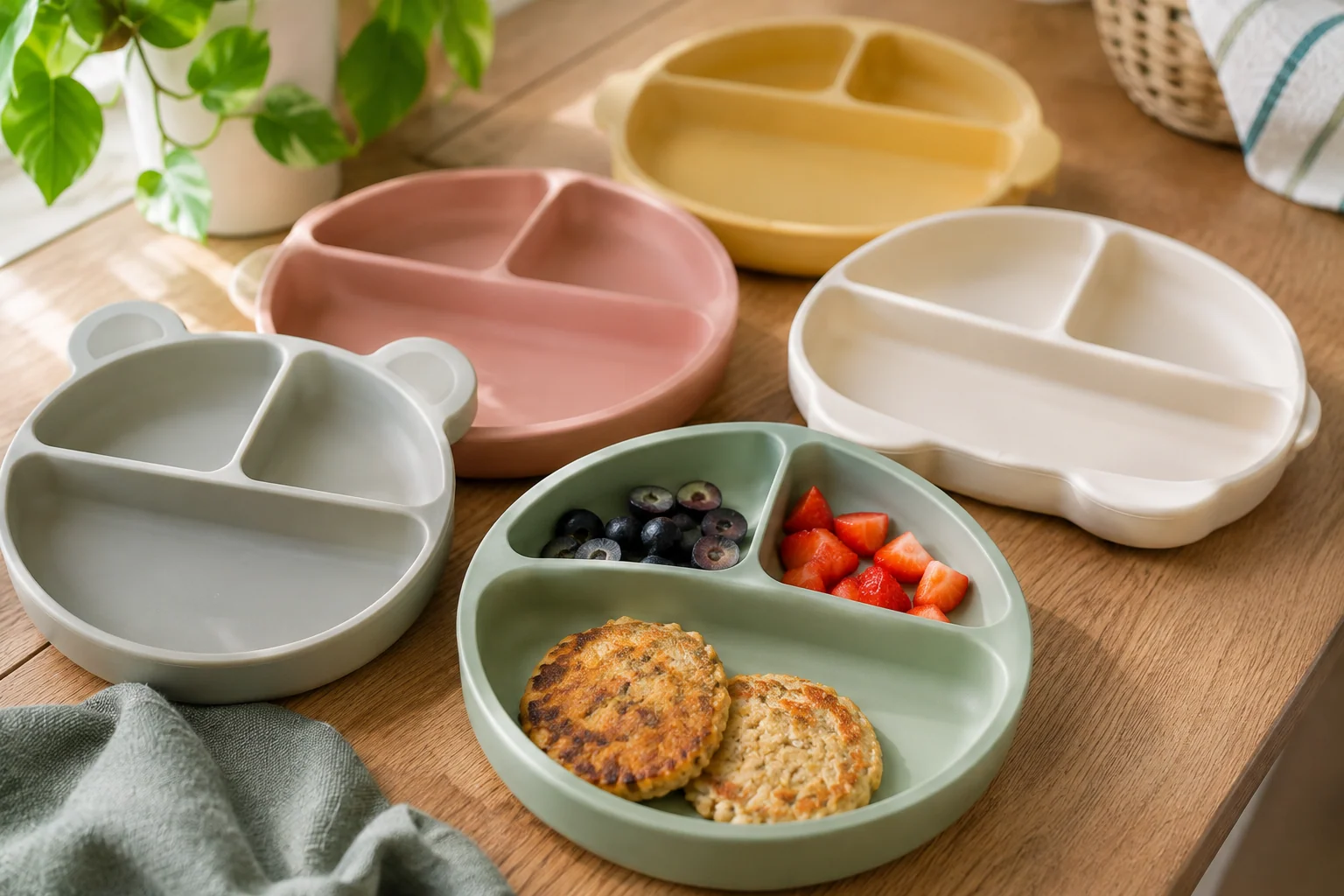
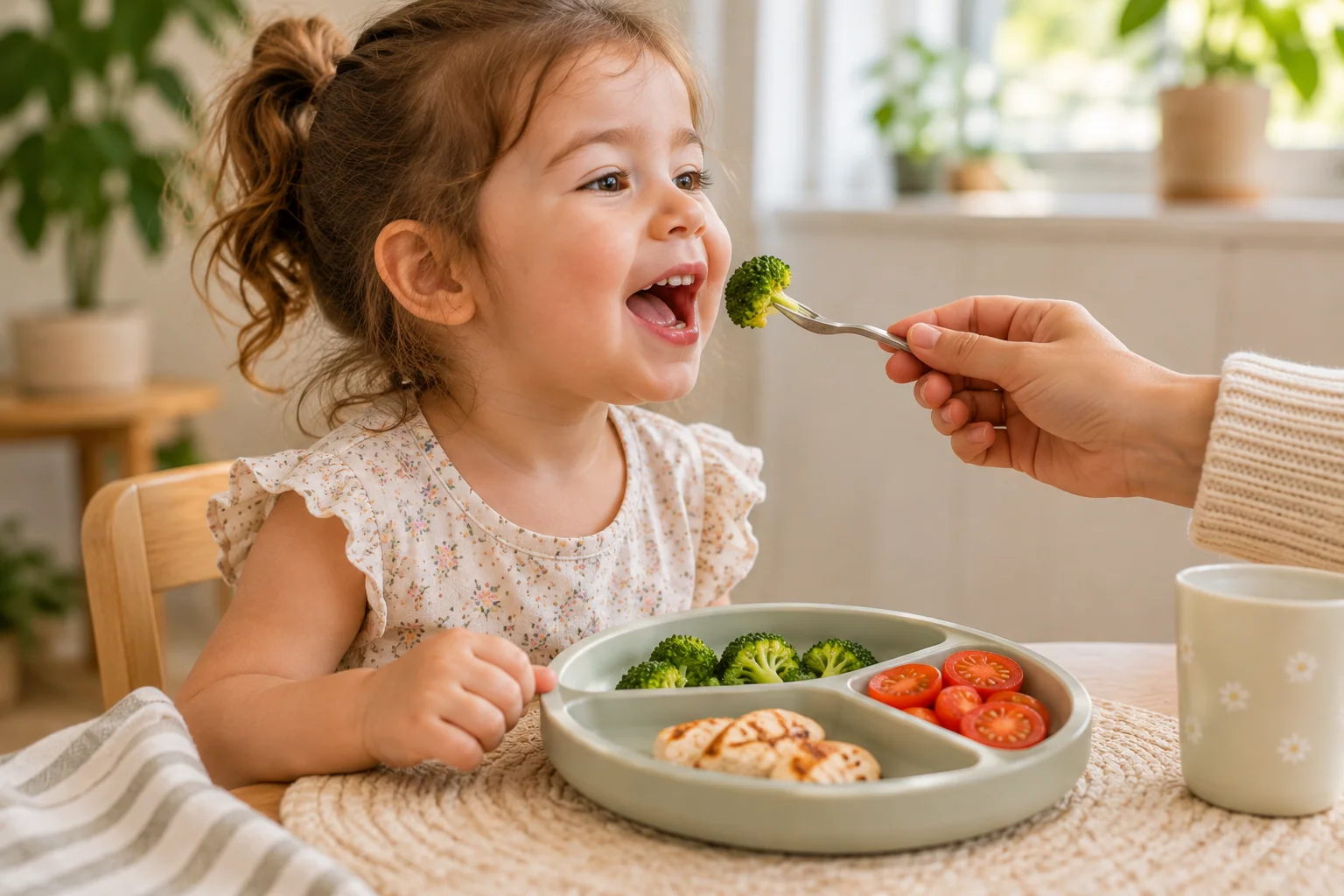
If dinner keeps landing on the floor, the plate is often the problem. Good toddler plates do two jobs: they stay on the tray, and they keep foods apart. Everything else is a nice extra.
So before you buy a cute set in six colors, check a few plain things. Does it stick? Can it go in the dishwasher? Is it the right size for small arms? This guide walks through each one in order, then points you to the plate we'd pick. For meal ideas to put on it, our feeding hub and lunch tool has plenty.
Quick answer
- Most important: a suction base that grips a smooth tray, and 3 or 4 sections.
- Best material for most homes: food-grade silicone. It bends, it grips, and it handles heat.
- Skip: heating food in plastic, and plates too wide for the high chair tray.
- Our pick: a silicone suction divided plate, budget priced and dishwasher-safe per the listing.
This post contains affiliate links. As an Amazon Associate I earn from qualifying purchases.
A quick note: These are general tips, not medical advice. Ask your pediatrician about textures, portions and any feeding worries. The CDC's list of choking hazards shows which foods to cut small, cook soft or skip, whatever plate you use.
Pick a Suction Plate That Holds
A toddler plate goes flying for one reason: it's fun. So suction is the first thing to check. A good base sticks when you press the middle down, and it lets go when you lift the tab on the edge.
But suction only works on a smooth, clean, dry surface. A glossy high chair tray is perfect. A wooden table or a textured tray often isn't. Wipe the tray first, then press down from the center out.
The plate we'd pick is a simple silicone suction divided plate. It's budget priced and stays put on the high chair. The honest con: no suction plate holds on every surface, and a strong toddler can still peel up an edge.
Tip: A drop of water under the base can help it seal on a slightly dull tray.
Choose Divided Toddler Plates for Picky Eaters
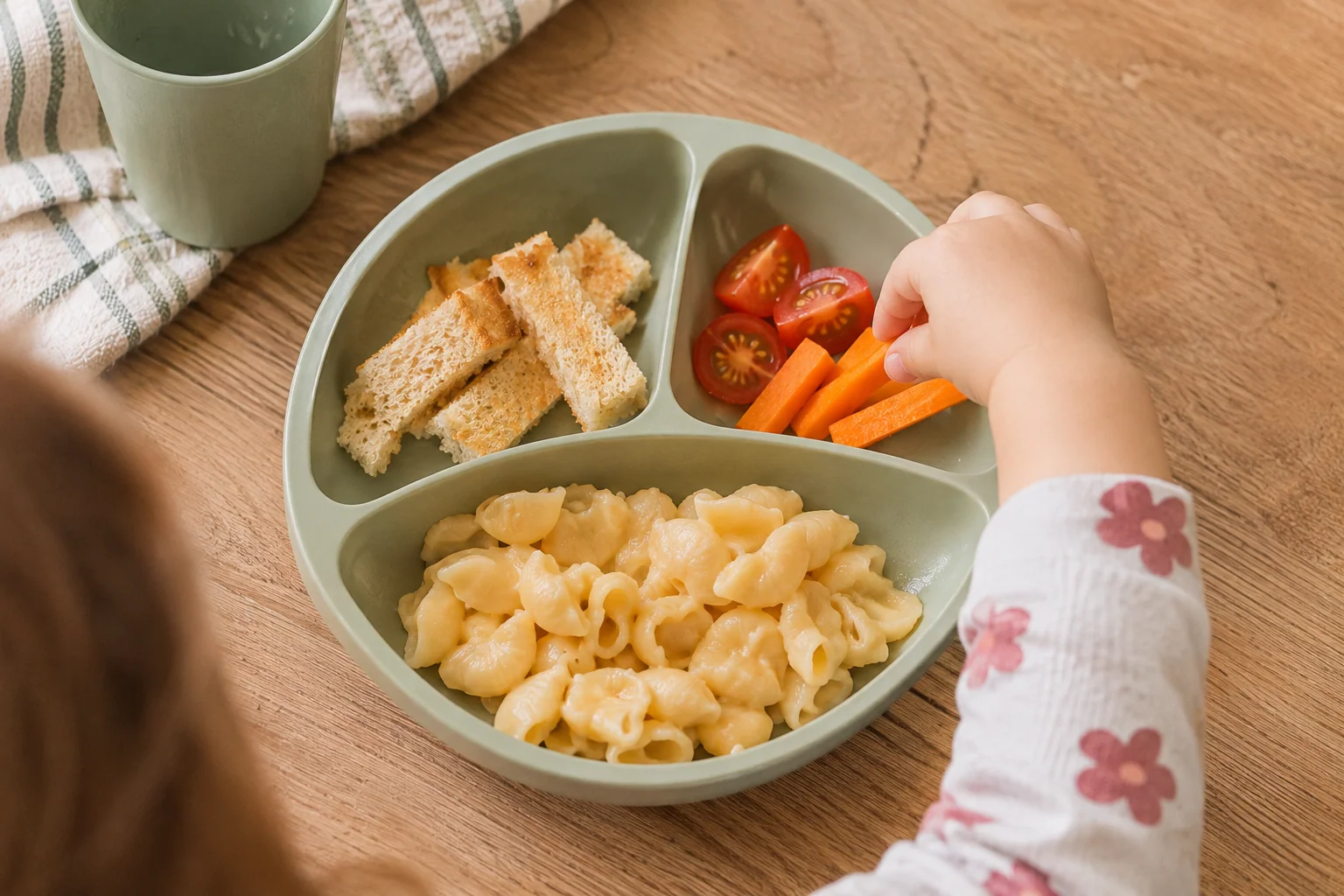
Lots of toddlers hate foods that touch. Sauce on the rice can end a meal. Sections fix that without a fight, and they make each food easy to see.
Dividers also help you serve a safe food next to a new one. Put a favorite in the big section and one bite of something new in a small one. That small, calm habit sits at the heart of our one-bite rule. If your child only eats crackers and pasta right now, our guide to picky eaters and beige food has more ideas.
Three or four sections is the sweet spot. More than that and each one holds about two peas.
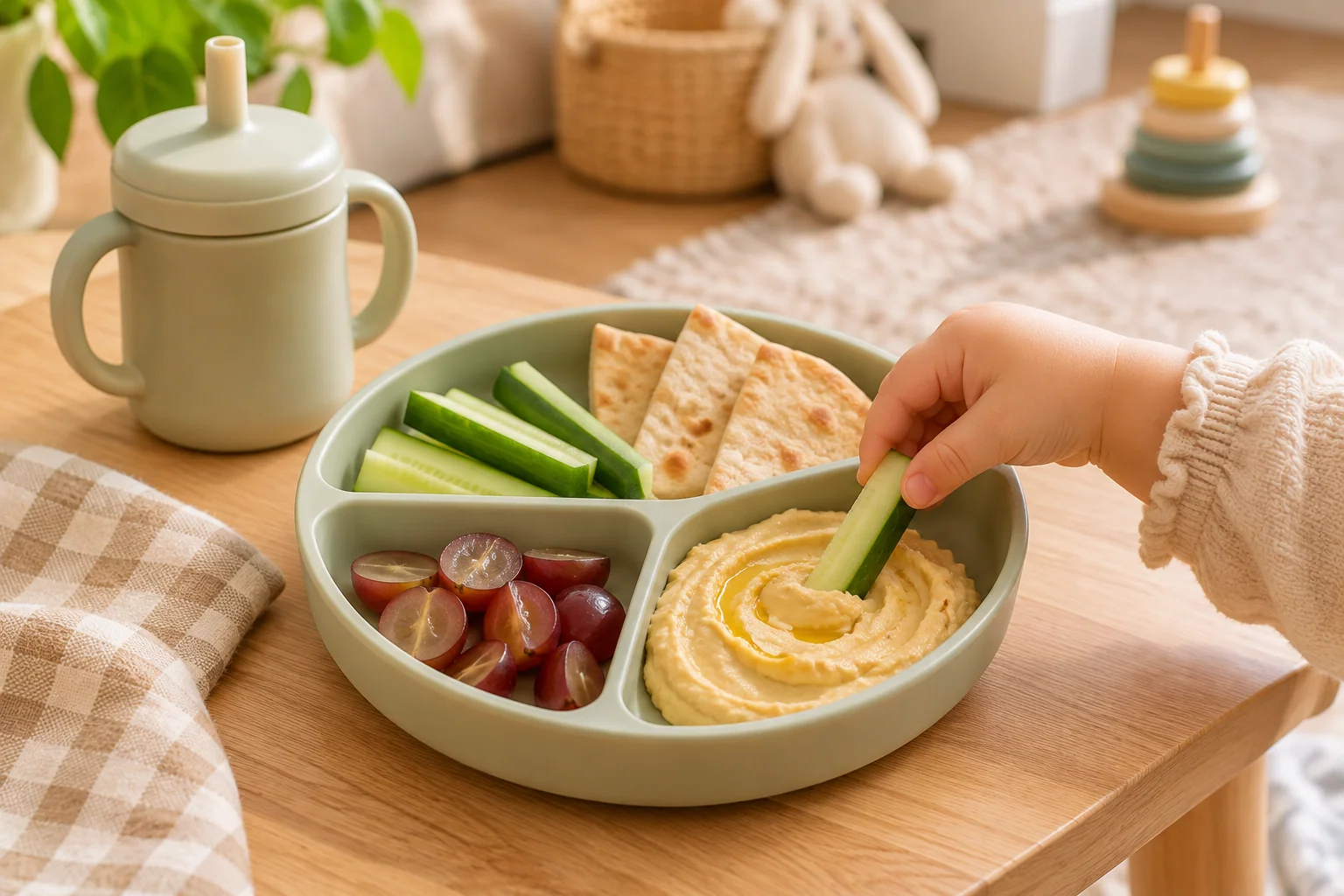
Tip: Keep one section for a dip. Kids often eat more veggies when they can dunk them.
Pick the Material: Silicone, Bamboo, Stainless or Plastic
Each material has a trade-off, so here's the short version.
Silicone bends, grips and won't shatter. It can hold on to oily smells, though, and lint sticks to it.
Bamboo looks lovely, but most bamboo plates need hand washing. Many can't go in the microwave either. Read the care label before you buy.
Stainless steel lasts for years and goes in the dishwasher. It can't go in the microwave, and it's noisy when it lands on the floor.
Plastic is light and cheap. Still, the AAP's page on food additives suggests you wash plastic by hand and avoid heating food in it.
Tip: Check the recycling code on plastic dishes. The AAP suggests avoiding codes 3, 6 and 7.
Check the Dishwasher and Microwave Labels
You'll wash these toddler plates three times a day, so care rules matter more than color. Look for the words "dishwasher-safe" on the listing, and check if it means top rack only.
Microwave rules vary even more. Some silicone is fine, while bamboo and steel usually aren't. The easy habit: warm food in a glass or ceramic bowl, stir it, test it, then spoon it onto the plate.
Tip: Stir warmed food well. Microwaves can leave hot spots in the middle.
Size the Toddler Plate to Your Child's Age
At 1, your child eats on a high chair tray. So the plate has to fit the tray with room to spare, or the suction base hangs over the edge and pops off.
By 2 or 3, most kids move to the table. Then a slightly larger plate with higher walls helps them scoop food onto a spoon. Toddler portions stay small either way. Our toddler breakfast ideas show how little food a toddler serving can be.
Tip: Measure the high chair tray before you order anything.
Make Cleaning Fast
Smooth inside corners clean in seconds. Sharp corners and deep grooves trap yogurt, then grow things you'd rather not see.
Also look under the plate. Some suction bases come off for washing, and some are one piece. One piece is simpler to clean, but you can't scrub under the rim as well. Either way, rinse soon after meals, because dried oatmeal sets like glue.
Tip: If silicone starts to smell, a soak in hot water and baking soda usually helps.
Know When to Retire the Suction
Around age 3, many kids eat calmly enough for a plain plate. That's a nice step, because a plain plate is easier to carry, stack and pack. Some kids still want sections at 4 or 5, and that's fine.
Keep one divided plate for packed lunches, though. Sections work just as well in a cold lunch, like our five-minute hummus plate.
Tip: Let your child choose the color of their first plain plate. It makes the switch feel like a promotion.
Our Toddler Plate Pick
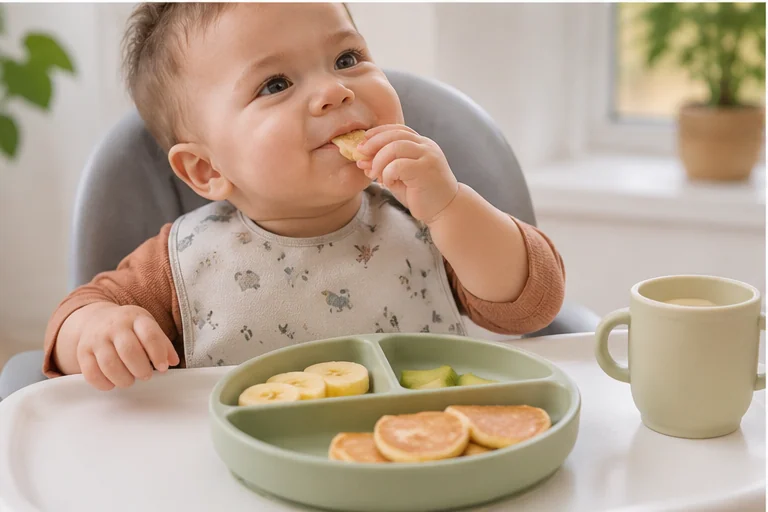
Silicone Suction Divided Plate
Stays put on the high chair and goes straight in the dishwasher.
Check price on AmazonCheck price →Questions moms ask
Are silicone toddler plates safe?
Food-grade silicone is a common choice because it handles heat and doesn't break. Look for "food-grade" on the listing, and follow the maker's care steps. If you have a specific worry about materials, ask your pediatrician.
Do toddlers need suction plates?
Not forever. A suction plate helps most between about 1 and 2, when plates get tossed for fun. Once your child eats calmly at the table, a regular plate is fine. Many kids still like sections, though.
What size plate does a toddler need?
Smaller than you think. A toddler plate about 7 to 8 inches across fits most high chair trays and small portions. Big plates make small portions look tiny, and they leave more room for flinging.
Can I microwave a plastic plate?
The AAP suggests you avoid heating food in plastic when you can, and wash plastic dishes by hand. Warm food in a glass or ceramic dish, then move it to the plate.
How many toddler plates do I need?
Two or three is plenty for most families. One in use, one in the dishwasher, and a spare for daycare or grandma's house. Not sure what else your child needs at this age? The start-here picker on our homepage sorts our guides by age.
Know a mom whose plates keep hitting the floor?
Send her this. Two minutes of reading can save a lot of peas.
What to Feed a Toddler Who Only Eats Beige Food
Toddler living on pasta and toast? What to serve during the beige food phase, and 7 calm ways to bring color back.
Keep reading →