The "One Bite" Rule That Actually Works (Without the Dinner Battle)

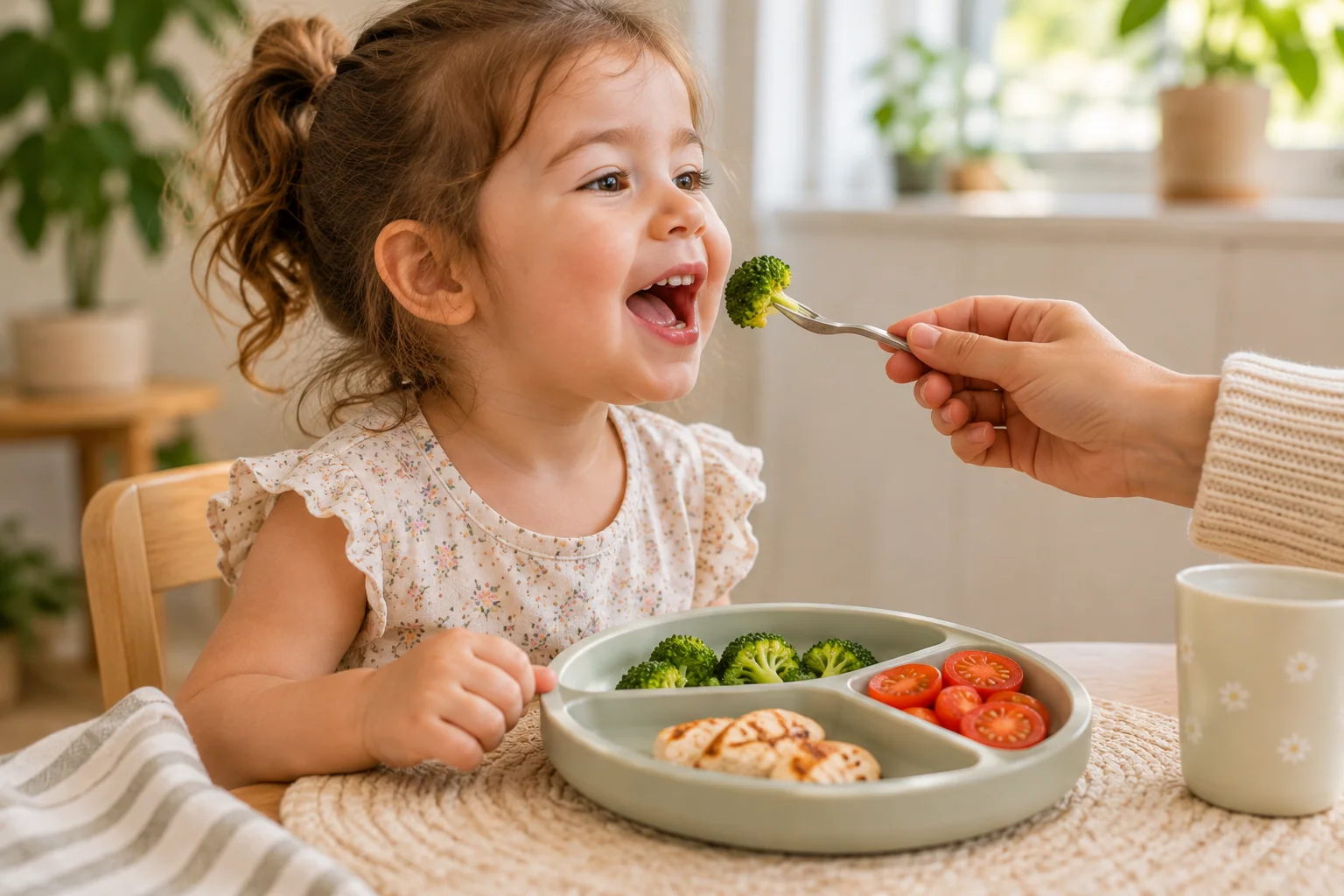
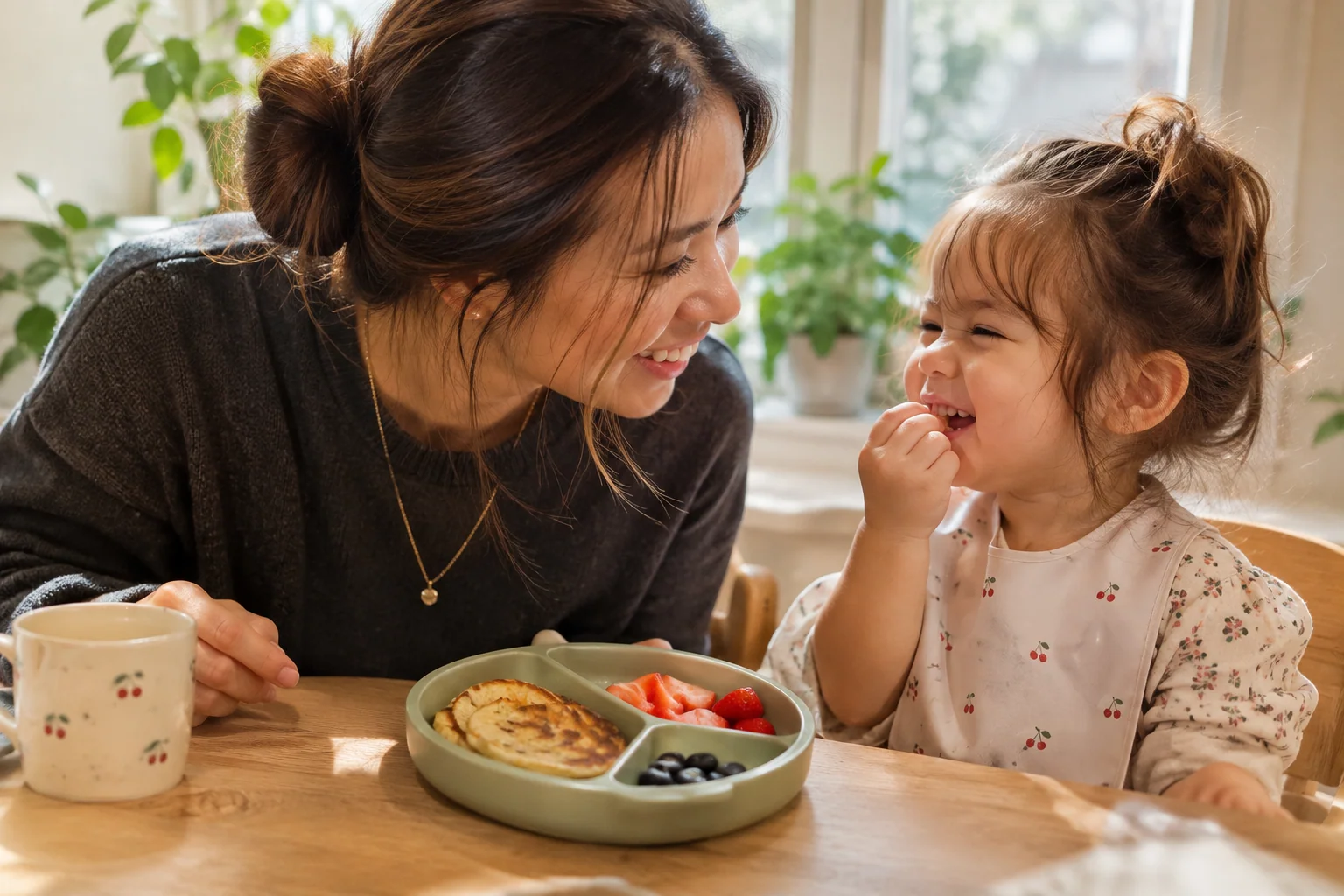
The one bite rule works when the bite is an invitation, not a deal. "Try one bite and then you can have dessert" turns dinner into a contest. "Here's a tiny piece, you can taste it or not" keeps the door open.
Most toddlers are wary of new food. That's normal, and it's not your cooking. They need to see, smell and touch a food many times before they eat it. So the goal of each meal isn't a clean plate. It's one more calm meeting with that food. Our feeding guides cover the rest of the picky stage.
Quick answer
- The idea: offer one small bite of a new food, and let your child choose to taste it or not.
- What makes it work: no bribes, no praise for eating, and a safe food on the plate every time.
- Expect: many tries before a new food sticks, so think in weeks, not meals.
- Safety first: cut food small and soft for your child's age, and ask your pediatrician about any worries.
This post contains affiliate links. As an Amazon Associate I earn from qualifying purchases.
A quick note: These are general tips, not medical advice. Ask your pediatrician about textures, allergens and any worries about growth. The CDC's list of choking hazards shows which foods to cut small, cook soft or skip for young kids.
Make the One Bite Really Small
Put one pea-sized piece of the new food on the plate. That's it. A big pile of broccoli looks like a job. One small floret looks like something you could ignore, or poke, or maybe lick.
Cut it to suit your child's age. Round foods like grapes and cherry tomatoes get quartered lengthwise, and hard veggies get cooked until you can squash them with a fork.
Tip: Use the smallest spoon you own to serve it. Small tools make small portions feel normal.
A Safe Food Makes the One Bite Rule Easier
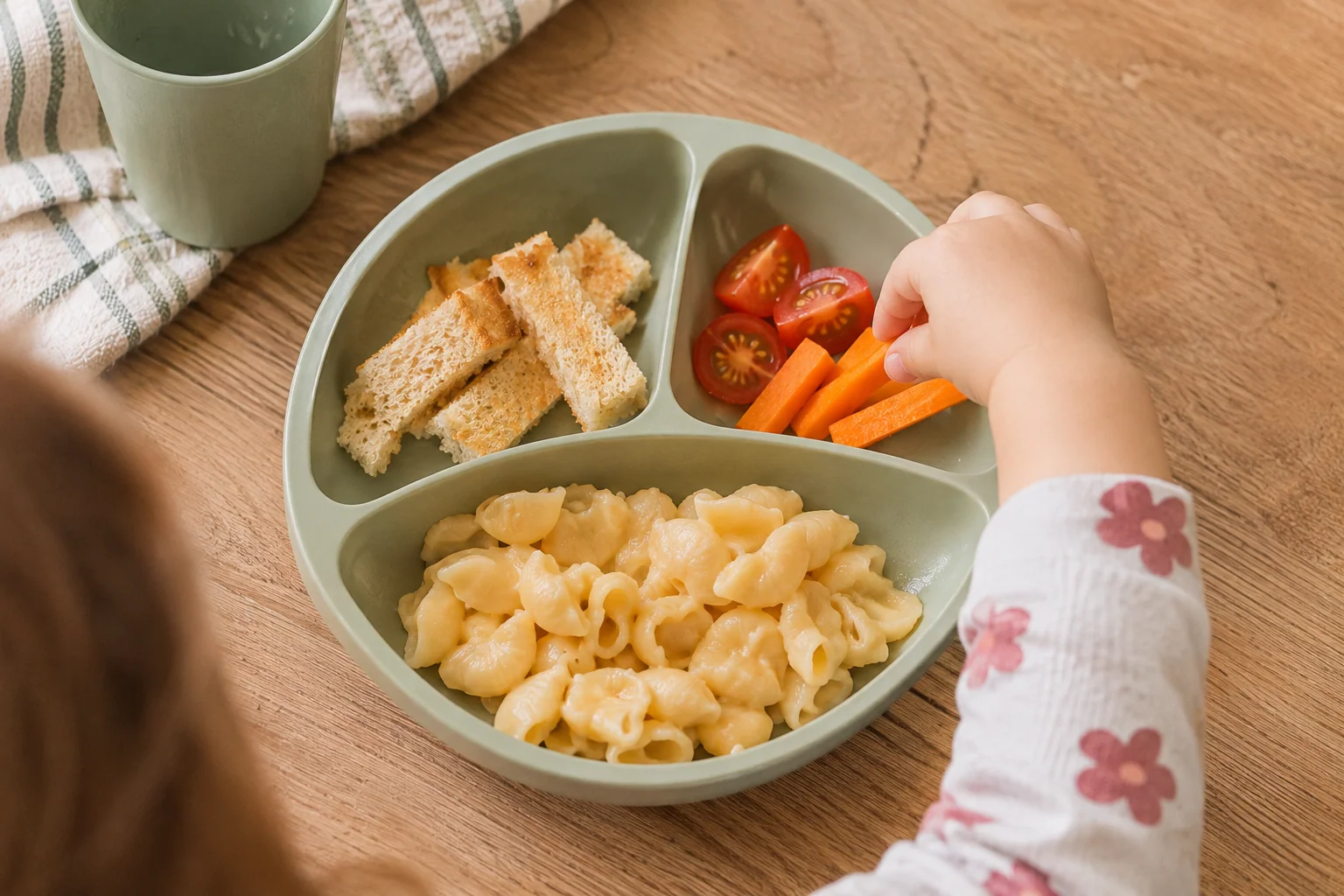
Every plate gets one food your child already eats, like pasta, rice, toast or banana. Then the one bite rule feels fair, because the new food sits beside something familiar. Your toddler knows they won't go hungry, so the new thing feels less risky.
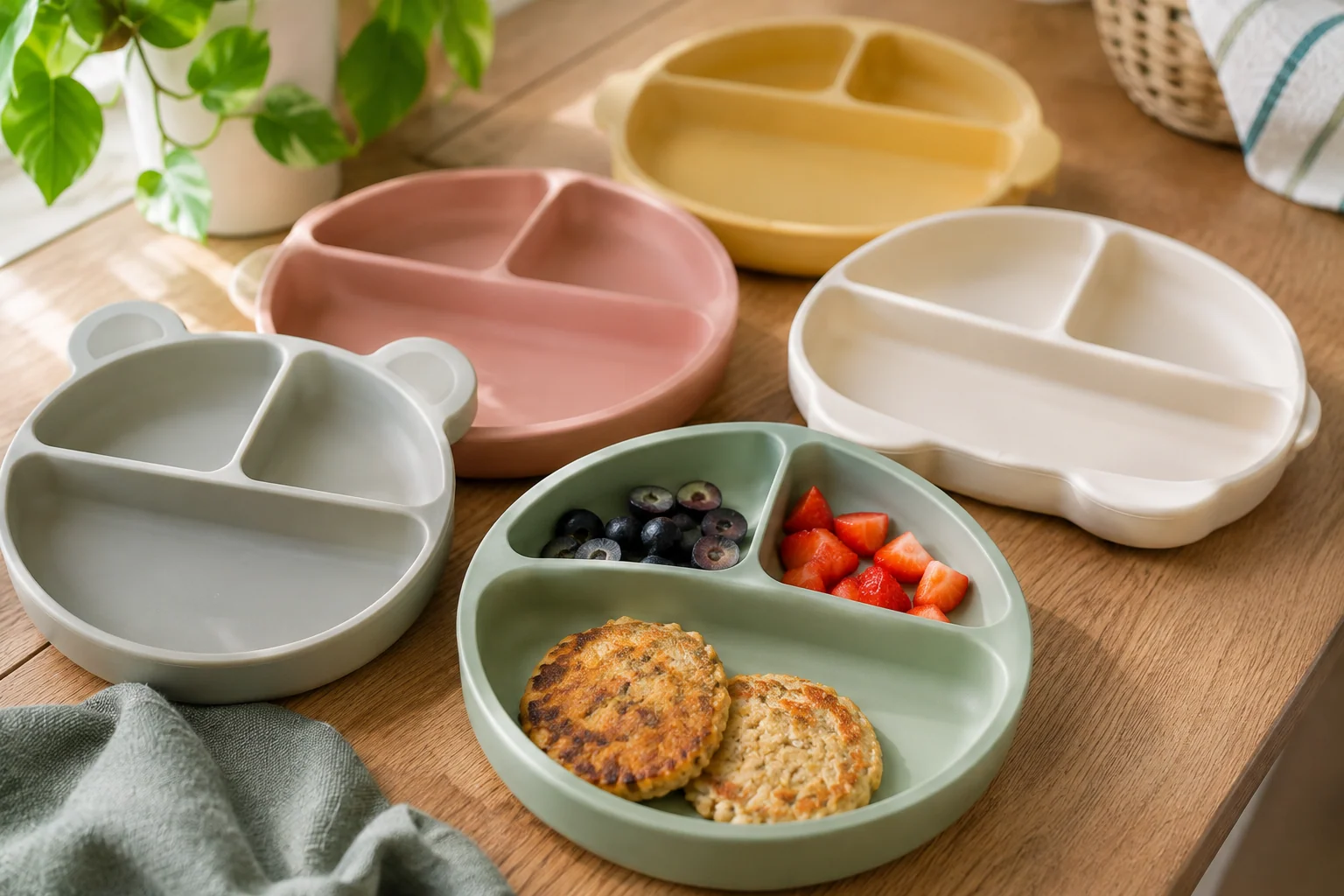
A divided plate helps here, because lots of toddlers hate foods touching. The new bite gets its own little section and can't spread to the safe food.
Tip: Keep the safe food plain. Sauce on everything makes the whole plate feel new.
Use Words That Take the Pressure Off
Swap "just try one bite" for "you don't have to eat it." It sounds backwards. But when the pressure goes, curiosity often shows up.
Also skip "good job eating." Praise for eating can turn food into a performance. Instead, talk about the food itself: it's crunchy, it's cold, it's the same color as your shirt.
Tip: Describe, don't judge. "This one is crunchy" beats "this one is yummy."
Allow a No Thank You Bite
Put a small "no thank you" bowl or napkin by the plate. If the bite feels wrong, your toddler can take it out and put it there. That's the no thank you bite, and it's a big deal.
Why? Because kids are far more likely to put something in their mouth if they know there's a way out. Then a taste becomes a safe test instead of a trap.
Tip: Show them how first by using the bowl yourself with a food you don't love.
Eat the Same Food in Front of Them
Put the new food on your own plate too, and eat it without comment. Toddlers watch you all day. Seeing you try one bite of a pepper strip does more than any speech about vitamins.
If you can, eat together at the table at least once a day. Even a 10-minute shared snack counts, and our toddler breakfast ideas make an easy start.
Tip: Sit down with them. Hovering by the counter feels like watching, not eating together.
Serve the Same Food a New Way
If roasted carrot sticks get ignored, try grated carrot in a muffin, then carrot coins next to a yogurt dip. It's still the same food, so every time they try one bite, it counts.
Soft cooked veggies are easier to accept, and safer for new eaters. If you steam a lot, a steamer-blender that cooks and purées in one jar saves a pot.
Tip: Dips help. Hummus, yogurt or ketchup make an odd food feel familiar.
Count the One Bite Rule in Weeks, Not Meals
Write the new food on a sticky note and serve it two or three times a week. Some weeks your child will only look at it. Then one day they'll pick it up, lick it and put it down. That's progress.
If your child refuses a food a dozen times, give it a rest for a month and bring it back. Tastes change, and toddlers change faster than anyone.
Tip: Keep a short list on the fridge so you remember which foods are "in rotation."
What Helps With the One Bite Rule
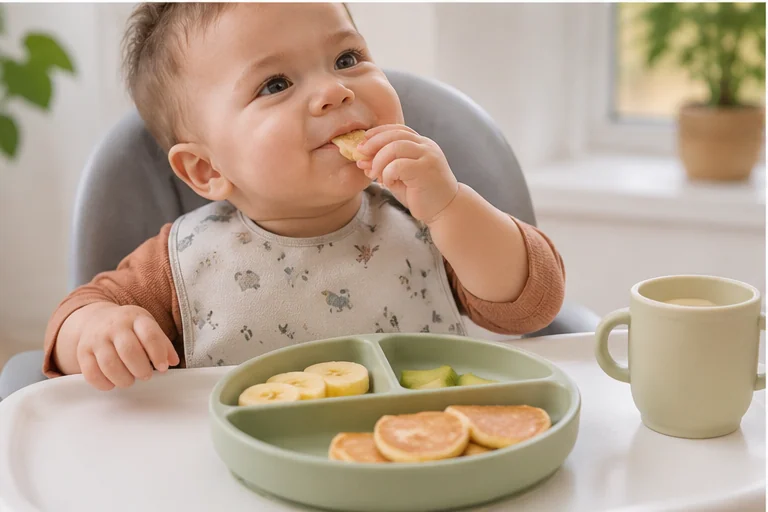
Silicone Suction Divided Plate
Stays put on the high chair and goes straight in the dishwasher.
Check price on AmazonCheck price →Questions moms ask
Is the one bite rule good or bad?
It depends on how you use it. A forced bite, or a bite traded for dessert, tends to make toddlers dig in. A small bite they're free to refuse keeps meals calm and keeps the food in front of them, which is what helps over time.
What if my toddler gags on the new food?
Gagging is common while kids learn new textures, but take it as a sign the piece may be too big or too firm. Cook it softer or cut it smaller next time. Choking is different and silent, so always watch your child eat, and ask your pediatrician what to do if your child chokes.
How many times should I try the one bite rule with a new food?
Keep going for weeks, not days. The AAP's tips for parents of picky eaters say it can take many tries before a toddler accepts a new food. Serve it in different ways, like roasted, mashed or in a dip, so it stays interesting.
Should I make a separate meal if they won't eat dinner?
Try not to. Instead, put one food you know they like on every plate, so they can always fill up. For easy safe foods to rotate, our toddler recipe collection has plenty.
When should I worry about picky eating?
Talk to your pediatrician if your child is losing weight, eats very few foods, has trouble chewing or swallowing, or meals cause real distress. Picky eating in toddlers is usually a normal stage, but your doctor can check growth and rule out other causes.
Know a mom stuck in the dinner standoff?
Send her this. One tiny bite, zero pressure, and a lot fewer tears at the table.
What to Feed a Toddler Who Only Eats Beige Food
Toddler living on pasta and toast? What to serve during the beige food phase, and 7 calm ways to bring color back.
Keep reading →