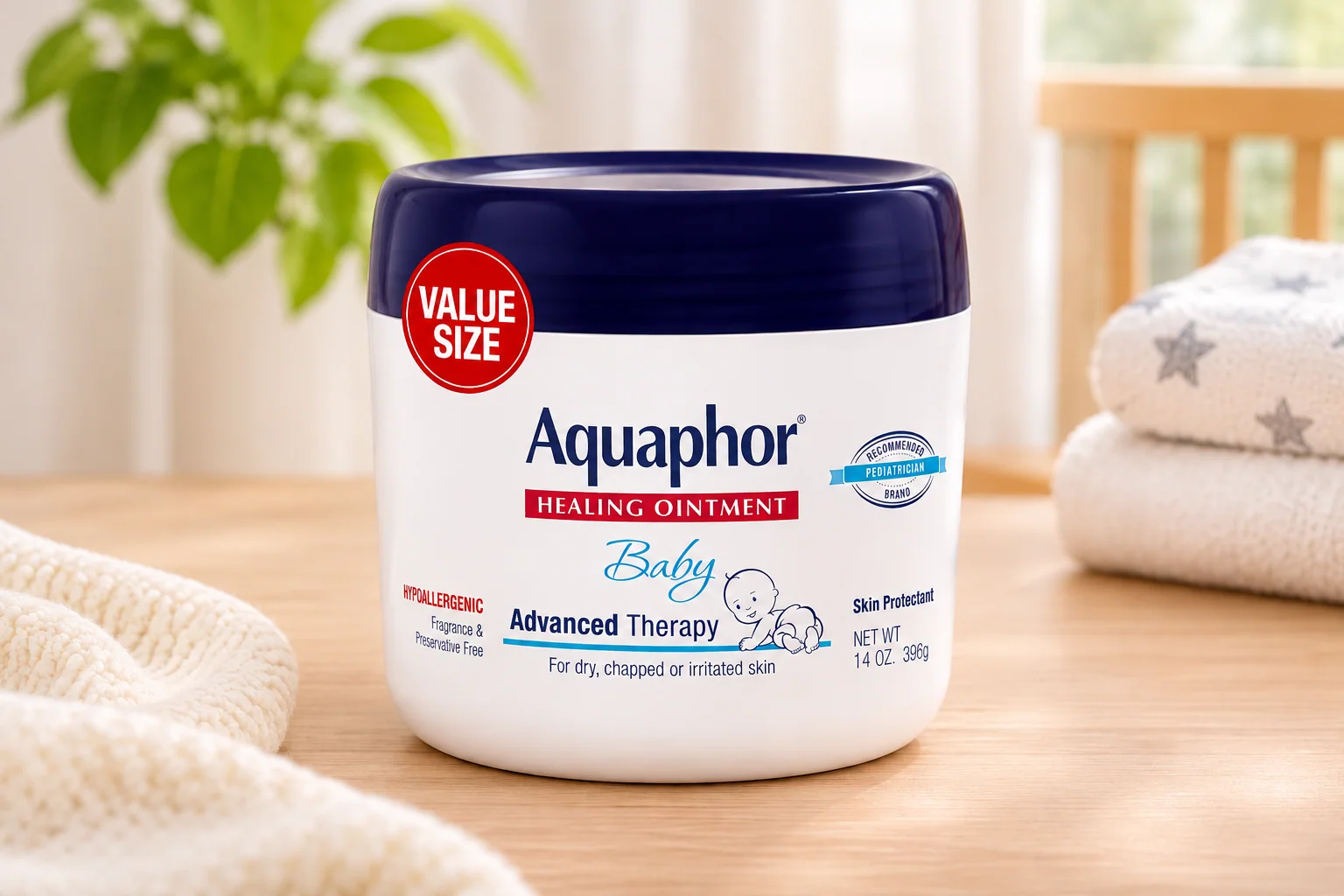
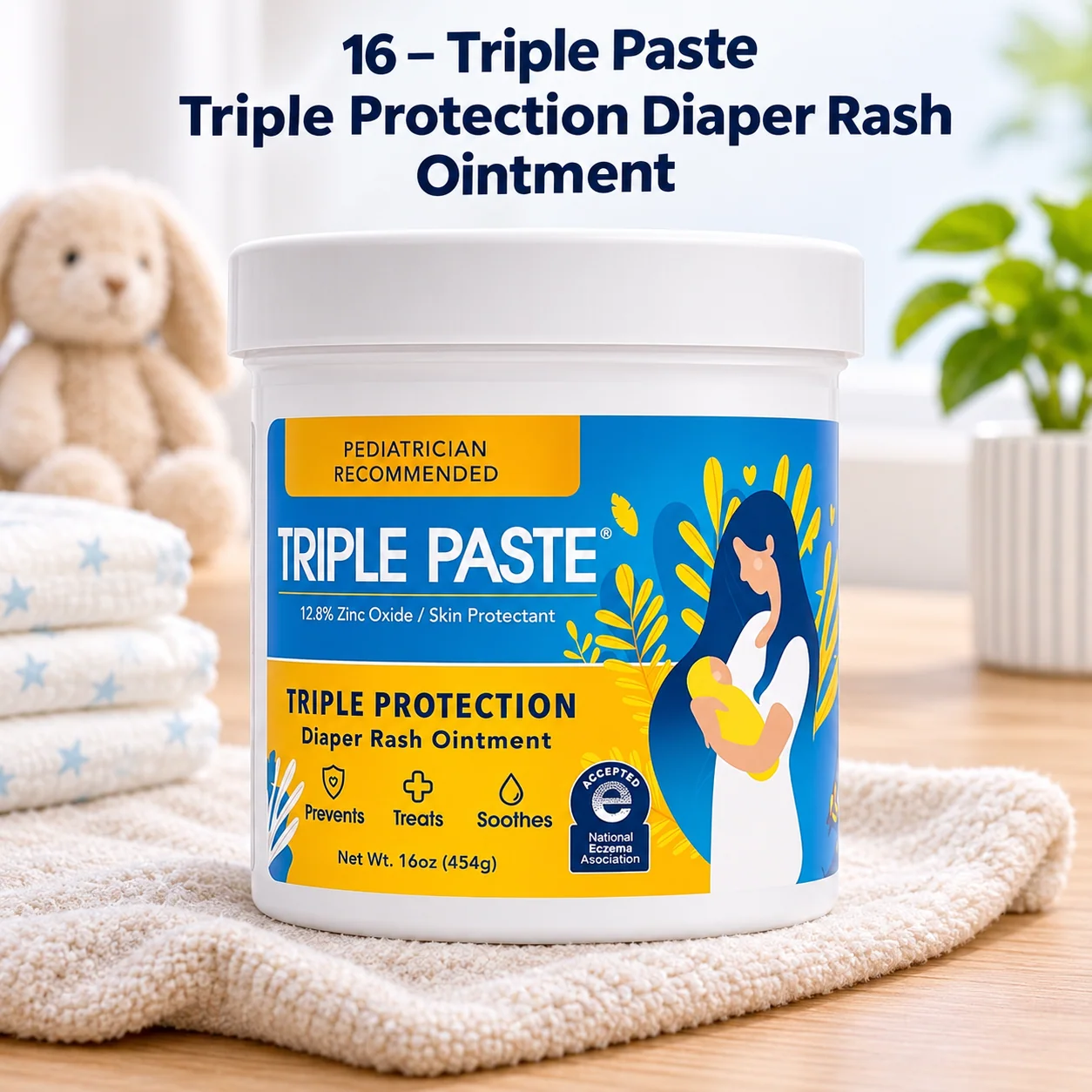
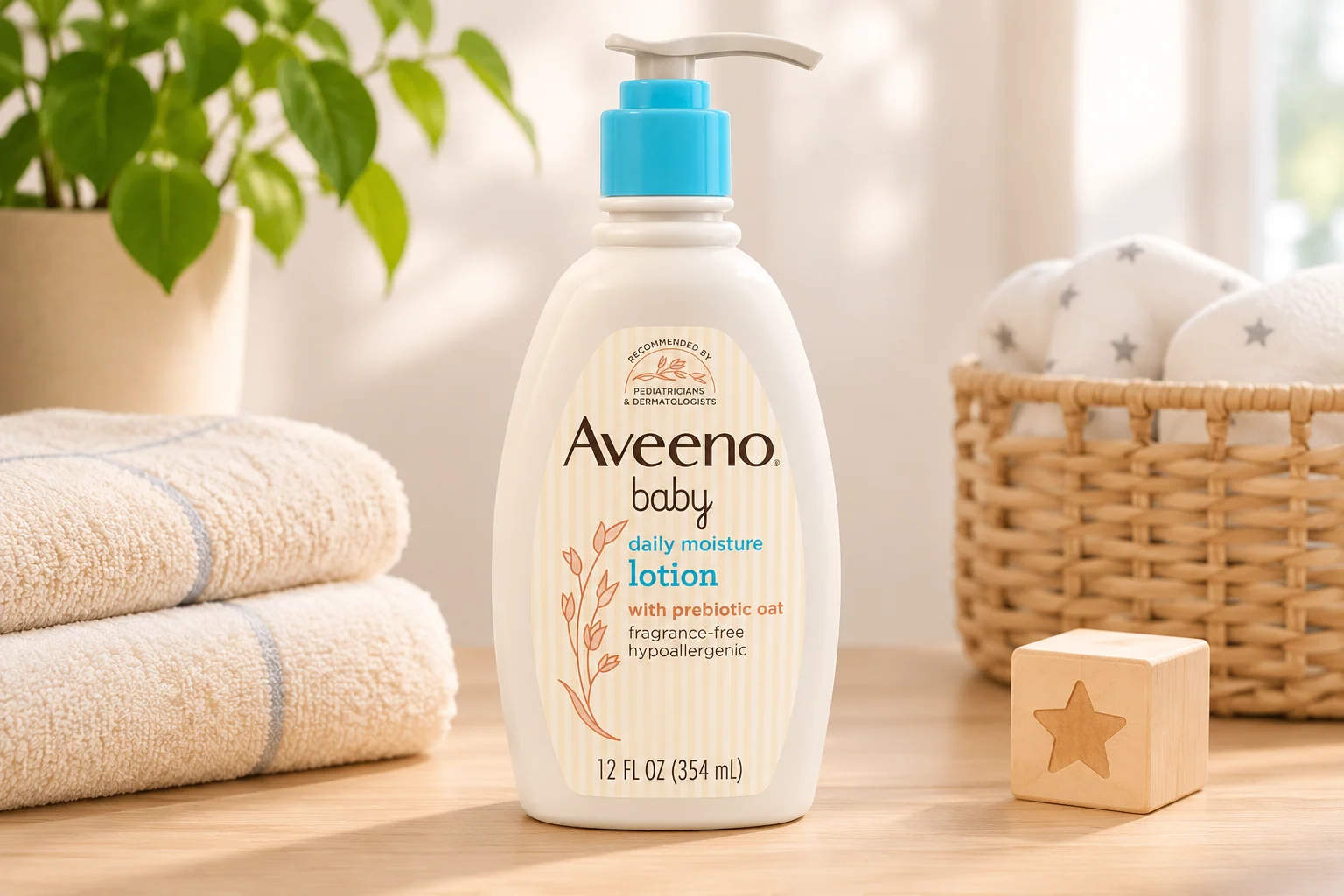
A gentle baby lotion, one ointment and one diaper cream. That's all most babies need on the changing table, and all three on this list are fragrance-free.
The skin care shelf in the baby aisle is long. Lotions that smell like lavender, oils, balms, washes that promise to calm, creams for every body part. You can skip almost all of it. New skin does best with less, so we picked three tubs that each do a different job, and we gave every one a real con.
None of this is medical advice. A product can make skin feel softer, but it can't fix a rash that keeps coming back. If you see a rash, dry patches that won't clear or something that looks like eczema, ask your pediatrician before you try another cream.
Setting up the changing table for the first time? The checklist on our baby essentials hub covers the rest of the basket.
This post contains affiliate links. As an Amazon Associate I earn from qualifying purchases.
A fragrance-free everyday lotion with colloidal oatmeal. The maker describes it as non-greasy and quick to soak in, and it comes in pump bottles that are easy to use with one hand.
Fragrance-free
Light, non-greasy feel (per listing)
Pump bottles for one-hand use
Contains oat, so skip it if your child has an oat allergy
We didn't test these at home. Instead, we read each listing and the ingredients on the label. Then we read the most common buyer complaints, so every card has a real con. We also looked at what parents buy again and again on Amazon. You can read how we pick products, and no brand paid to be here.
We looked for: - Fragrance-free on the label - One clear job per product - Easy to find in stores, not only online - No pattern of skin complaints in the reviews
We left out anything that claims to fix a skin problem. Those questions belong with your pediatrician, not a shopping list.
Buying guide
Lotion, cream or ointment?
They feel different because they hold different amounts of water. Lotion is the thinnest. It spreads fast and soaks in, so it's handy after every bath. Cream is thicker. Ointment has almost no water, so it sits on top of the skin as a greasy layer.
That's why you might want one of each. Use the baby lotion for every day, an ointment for a few rough spots, and a thick paste for the diaper area.
What makes a baby lotion gentle
Fewer extras. Look for fragrance-free on the front, not "unscented", which can still hide a masking scent. A short ingredient list is easier to check. And skip lotions with essential oils, dyes or glitter.
Gentle doesn't mean it suits every baby. Oat, lanolin and some preservatives bother a few kids. So read the label, and pick one new product at a time.
Patch test a new baby lotion
Before you use a new product all over, try a small dab on one spot, like the inside of the arm. Wait a day and look. If the skin turns red, bumpy or itchy, stop using it.
The same goes for wipes and detergents. The AAP's page on diaper rash notes that fragrances, dyes and preservatives in wipes, diapers or creams can bother some babies. Switching one thing at a time helps you find the cause.
Diaper changes need a different cream
A diaper cream isn't a lotion. It's a thick layer that sits between the skin and a wet diaper. Zinc oxide pastes and petrolatum ointments are the two common kinds. The AAP lists a thick barrier paste as part of everyday diaper care, along with frequent changes and gentle cleaning.
Put it on clean, dry skin. You don't need to scrub every bit off at the next change, since rubbing bothers skin more than leftover paste. Keep the tub in a caddy by the changing table, and our tips to organize the chaos help you set that up.
When to skip the baby creams and call
Some things need a doctor, not a new tub. Call your pediatrician if a rash doesn't get better in two or three days, has blisters, pus or crusting, comes with a fever, or seems to hurt your baby. The same goes for dry patches that keep coming back.
For everyday use, we'd pick a fragrance-free lotion like Aveeno Baby Daily Moisture. It's light, easy to find and fine after every bath. If your baby has an oat allergy, skip it and ask your pediatrician for another fragrance-free option.
Do newborns need baby lotion?
Many don't, and plenty of families never use baby lotions in the first month. Newborn skin often peels a little in the first weeks, and that's common. If the skin looks cracked, very dry or red, or the peeling doesn't stop, ask your pediatrician before you add a product.
Can I use Aquaphor on my baby's face?
Many parents use a thin layer on dry cheeks or a chapped chin. Keep it away from the eyes, and use a small amount, since it's greasy. If a patch gets red or spreads, stop and ask your pediatrician.
Is a baby lotion OK for eczema?
Ask your pediatrician first. Eczema needs a plan from your child's doctor, not a guess from the shelf. The AAP's page on eczema in babies explains what it looks like, and when to see the doctor, such as crusting, weepy skin or blisters.
How often should I use diaper cream?
Many parents put a thin layer on at every change once the skin looks pink, and some use it every time out of habit. Let the skin air-dry first. If a rash doesn't get better in two or three days, call your pediatrician.
Know a mom staring at the baby lotion aisle?
Send her this. Three fragrance-free tubs, and she can leave the rest on the shelf.