Learning Through Play for Preschoolers (Simple Ideas That Work)

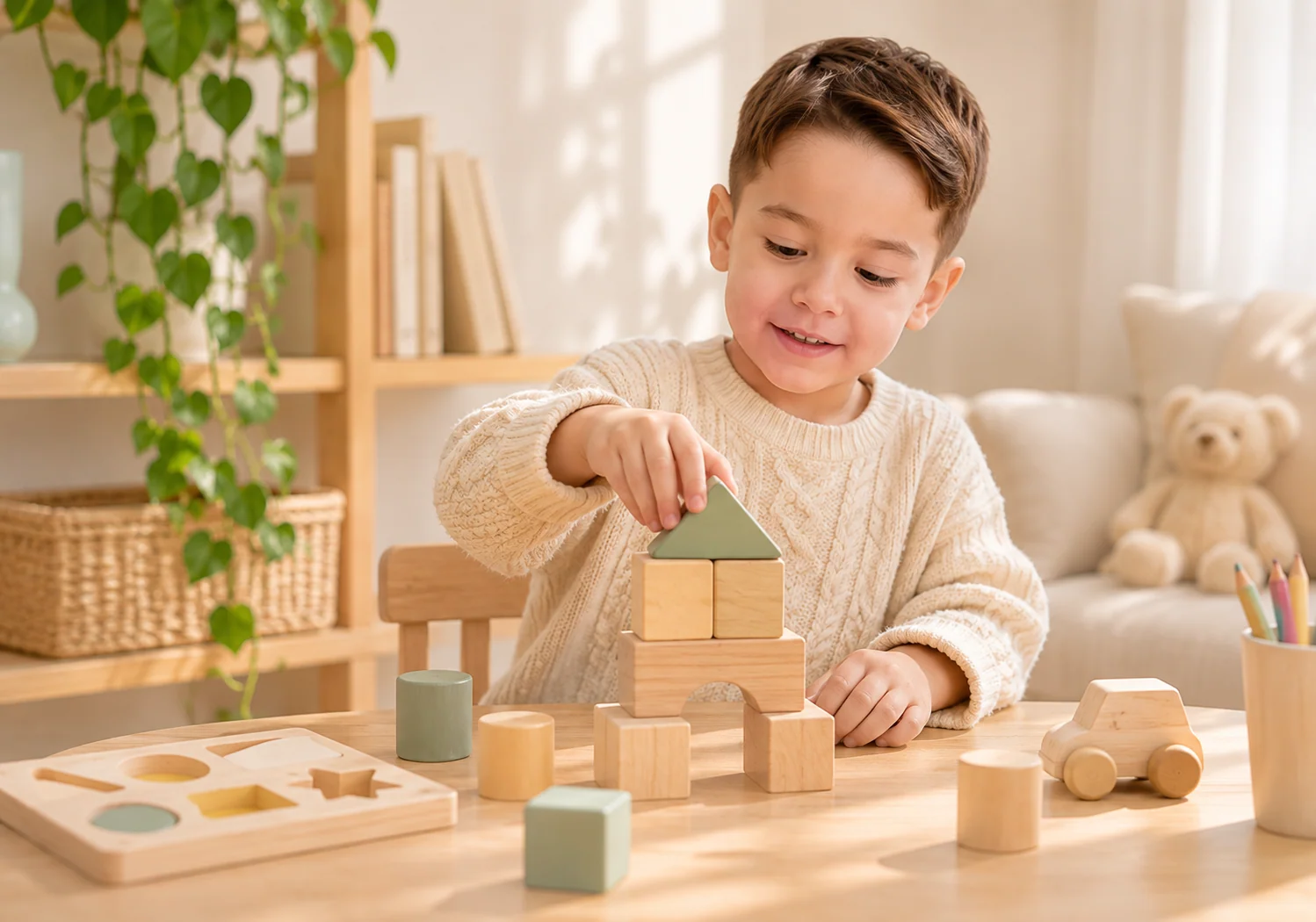
The best learning toys for preschoolers are often already in your kitchen: spoons, pasta, boxes and a muffin tin. What turns them into lessons is a small game and a few minutes of you.
Between 3 and 5, preschoolers learn by doing. They count snacks, spot shapes and climb anything with a step. So this guide gives you eight play ideas, each built around one skill. Two use a toy we like. The rest use household things. For more quick games by age, our play hub and activity tool is a good next stop.
Quick answer
- What works: short games around one skill, like counting, letters, shapes, building or movement.
- What you need: mostly household items. A muffin tin, pasta, boxes and tape go a long way.
- Toys worth buying: a coin box for counting and hand control, and a climbing triangle for movement.
- How long: 5 to 15 minutes. Stop while it's still fun.
This post contains affiliate links. As an Amazon Associate I earn from qualifying purchases.
A quick note: These are play ideas, not medical or developmental advice. Every child grows at their own pace. The CDC's milestones by 4 years list what most kids do at that age, and your pediatrician is the right person for any worries.
Count Everything at Snack Time
Snack time is the easiest math lesson of the day. Put 5 crackers on the plate and count them together. Then eat one and count again.
For older preschoolers, add a twist. Ask, "If you eat two, how many are left?" Use their fingers, the crackers or both. It's real adding and taking away, and the reward is edible.
Tip: Count out loud while you touch each piece. Touching one at a time is the real skill.
Post and Count Coins with a Coin Box
Posting a flat coin through a slot takes a careful turn of the wrist. That's the same hand control kids need for pencils and scissors later. Add counting, and one of the simplest learning toys covers two skills.
The wooden coin box we'd pick has a slot on top and a drawer to find the coins again. The listing labels it for 6 months to 6 years, so a preschooler can use it for a long time. Try games like "post 3 red coins" or "count them back out of the drawer."
The honest con: the coins are small and flat. Keep them away from babies and younger siblings, and supervise play.
Tip: Turn it into a shop. Your child posts a coin to "pay" for each snack.
Hunt for Shapes Around the House
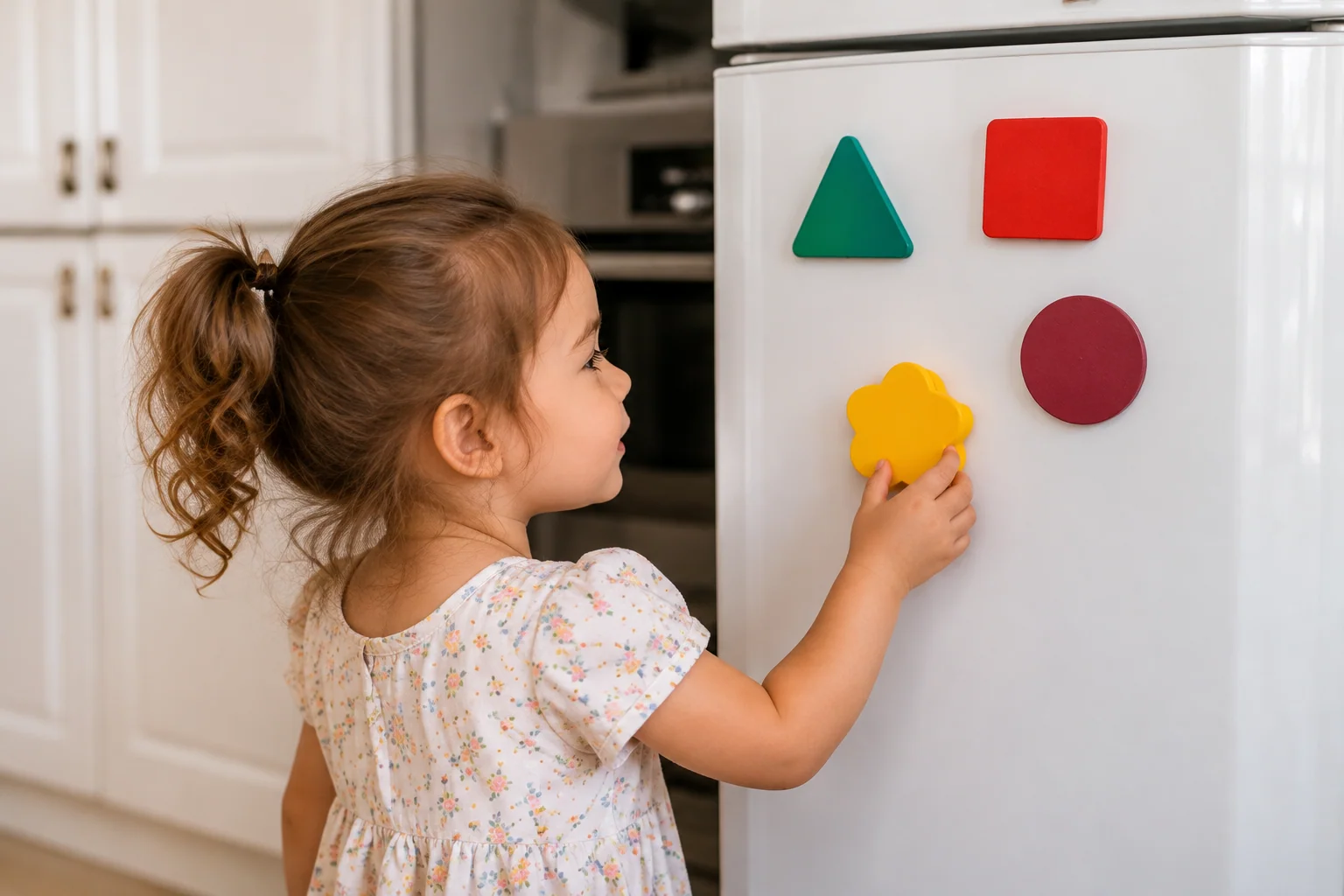
Circles, squares and triangles hide everywhere. The clock is a circle. A slice of toast is a square, and you can cut it into triangles.
Give your child one shape to find per room, and let them point, touch or bring it to you. Our kitchen shape hunt turns this into a ready-made game with clear steps.
Tip: Trace the shape in the air with one finger after each find.
Draw Letters in a Salt Tray
Pour a thin layer of salt, sugar or rice into a baking tray. Then write a letter on a card and let your child copy it with one finger. Shake the tray to erase, and go again.
Start with the letters in their own name. Those mean the most, so kids remember them first. Playdough works too: roll snakes and bend them into letters.
Tip: Say the letter's sound, not just its name. "Mmm" for M helps with reading later.
Build Towers and Bridges with Boxes
Cereal boxes, paper cups and toilet paper rolls make a free building set. Ask for the tallest tower, or a bridge a toy car can drive under.
Building teaches balance, size and cause and effect. It also teaches patience, because towers fall. Let them fall. Rebuilding is real preschool learning, and it's good practice for handling frustration.
Tip: Add masking tape. It lets kids build things that stand up longer.
Sort by Color, Size and Kind
Sorting is early math, and some of the best learning toys for preschoolers are just buttons in a tin. When your child puts all the red things together, they're thinking in groups and rules.
A muffin tin makes a perfect sorting tray. Use buttons, pasta shapes or toy cars. Our pom-pom color sorting activity comes with a free printable to start. Then make it harder: sort by size, or by "things that roll."
Tip: Let your child invent the rule sometimes, then you guess it.
Learning Through Play on a Climbing Triangle
Kids need to move to learn. Climbing builds balance and body awareness, and it burns off the energy that makes sitting still so hard.
A Pikler climbing triangle gives them a safe place to climb indoors. The one we'd pick lists an age range of 36 months to 6 years, which fits preschoolers well. Count the rungs on the way up and say "over" and "under" as they climb.
The honest cons: it's a big price and it takes floor space. Set it on a soft rug away from furniture, and stay close the first few times.
Tip: Add a cushion at the bottom and a rule: one climber at a time.
Open a Pretend Shop
Pretend play is learning through play at its best, since it mixes many skills at once. Kids count, take turns, use new words and solve small problems.
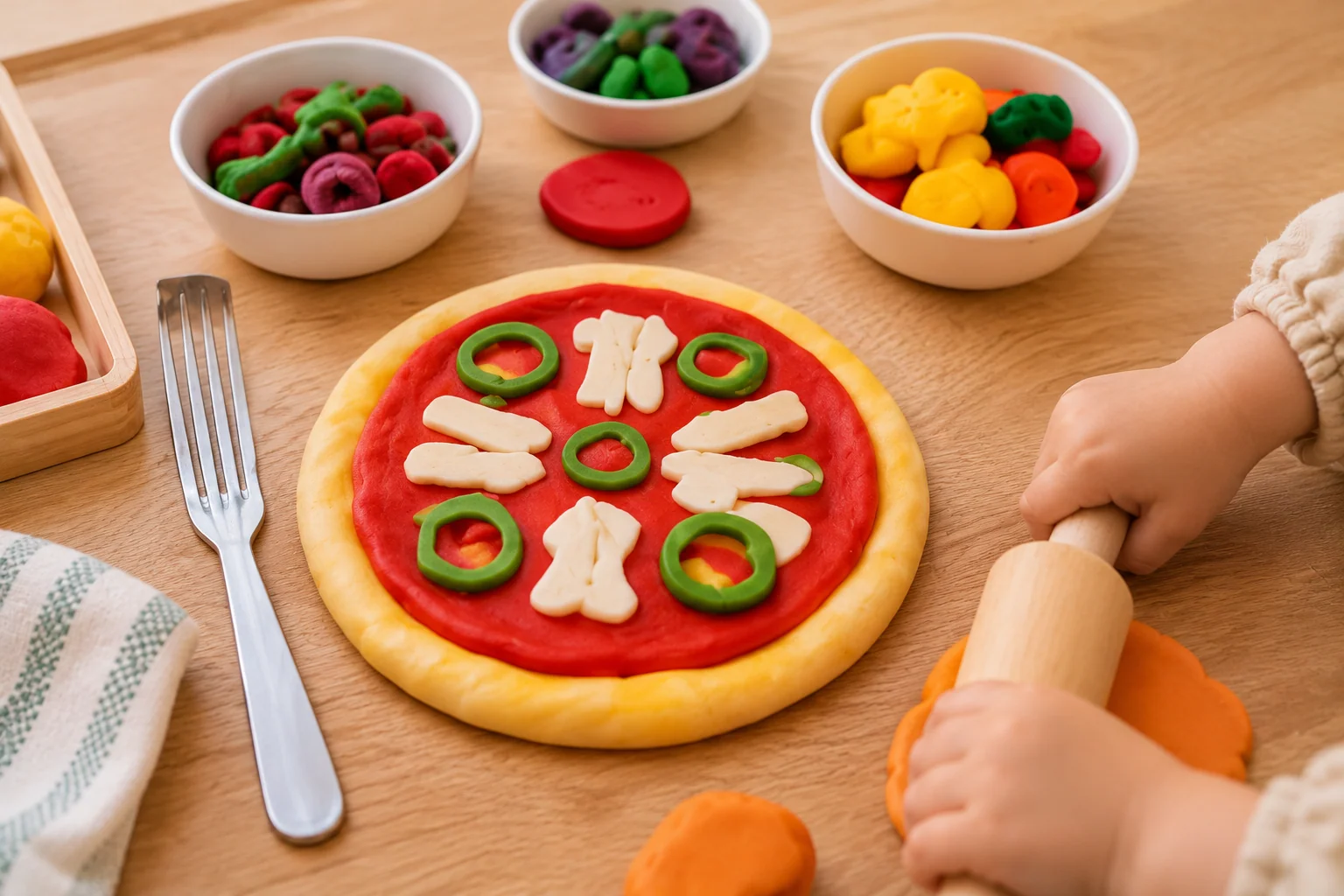
Set out a few cans, a toy till or a box, and paper money. Then take turns being the shopper. Our playdough pizza shop is a favorite version, since kids get to make the pizzas too.
Tip: Write simple price tags with numbers 1 to 5. Reading prices is real number practice.
Learning Toys We'd Pick
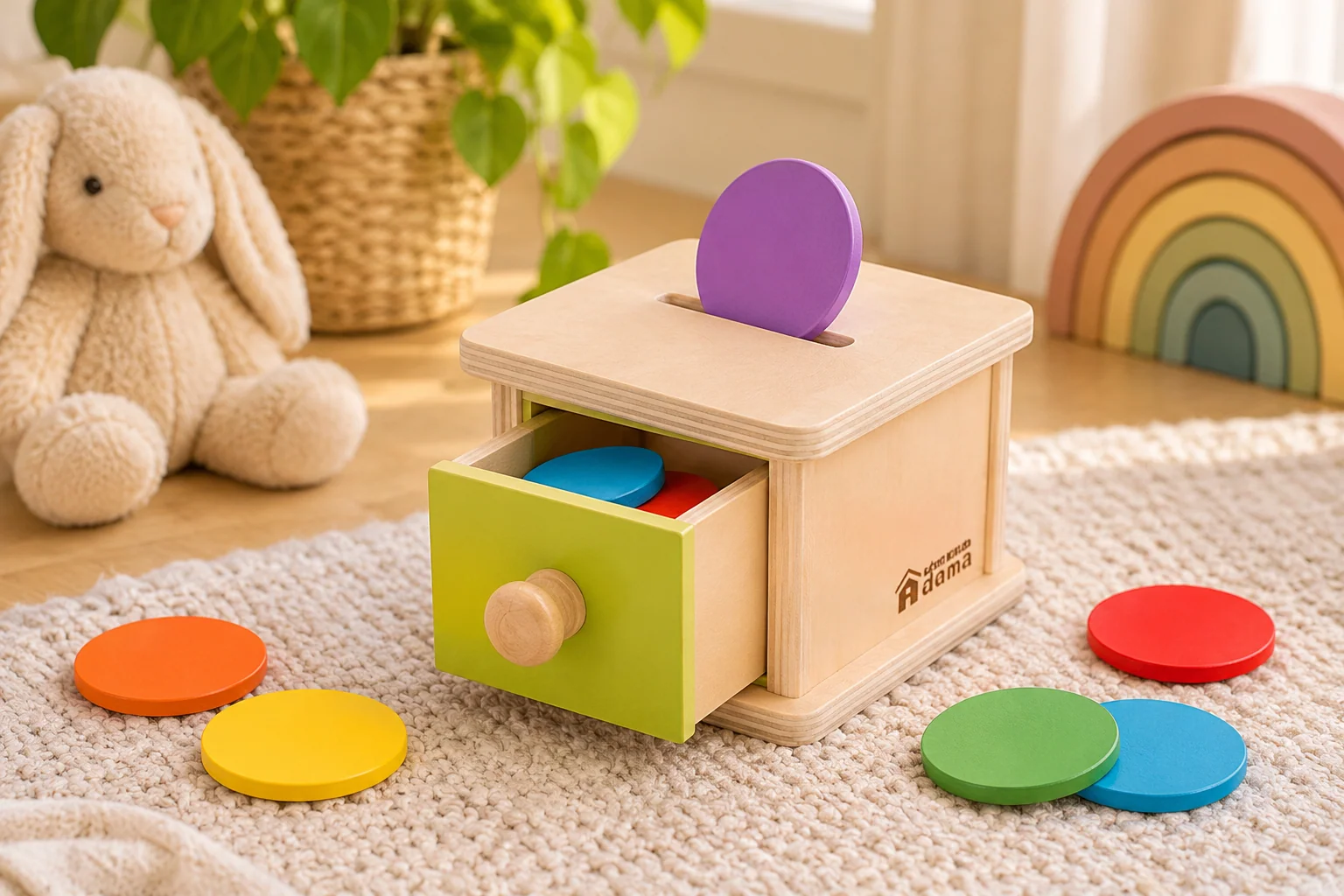
Wooden Coin Box with Drawer
Posting coins through a slot is a precise wrist-turning job, and the drawer adds a second small challenge.
Check price on AmazonCheck price →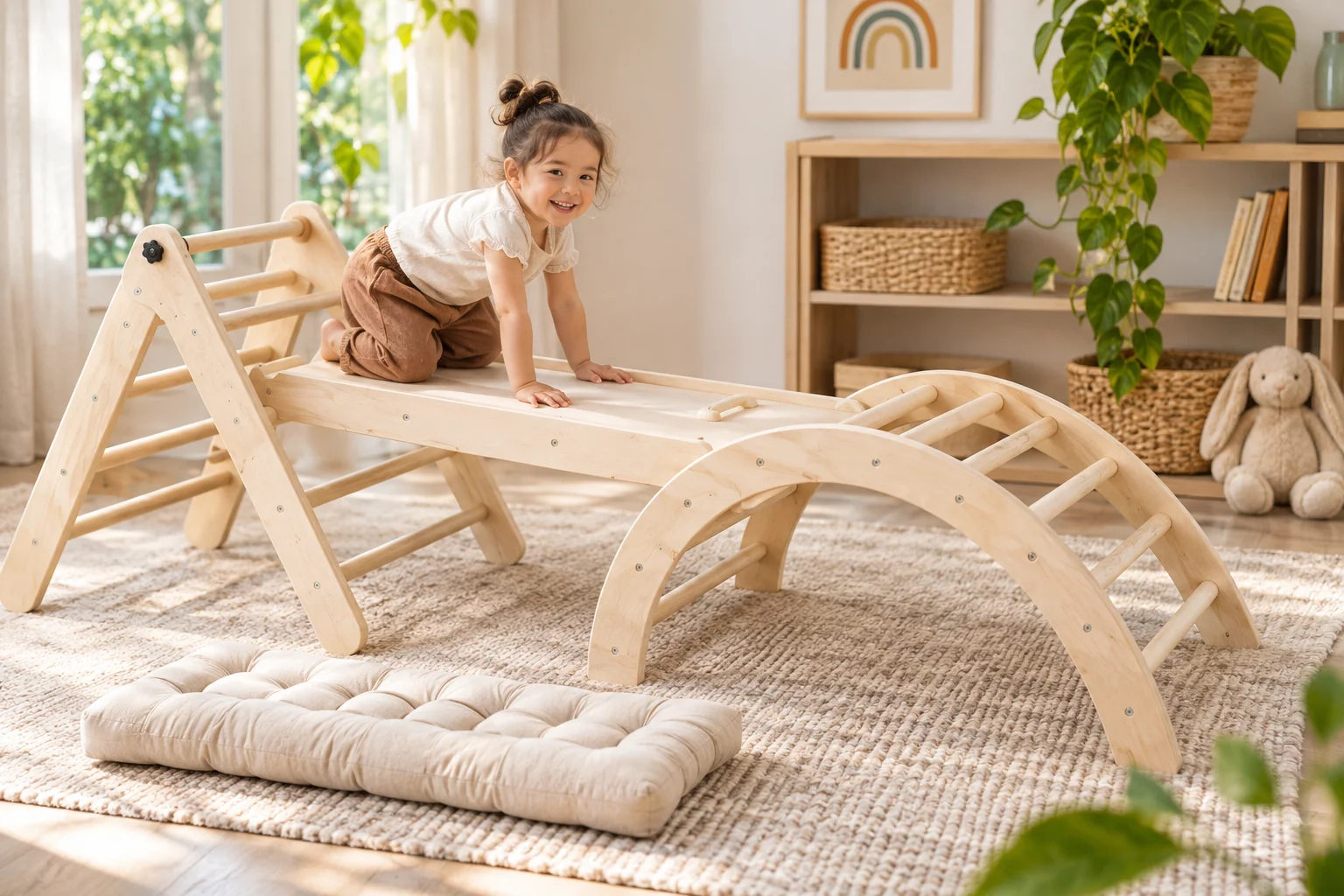
Pikler Triangle Climbing Set with Handle
A wooden climbing triangle with a ramp for kids who climb everything. This listing is labeled 3 to 6 years, so it is a pick for preschoolers, not toddlers.
Check price on AmazonCheck price →Questions moms ask
What are good learning toys for preschoolers?
Open-ended things they can count, sort, build and move with. Blocks, puzzles, playdough, crayons and a few posting or climbing toys cover most skills. You don't need a shelf full. Our guide to a Montessori toy shelf shows how to rotate a few at a time.
How do preschoolers learn through play?
They try, fail and try again in a low-stakes way. Counting real snacks or sorting real buttons makes numbers and groups feel concrete. Then they use the same ideas later with pencil and paper.
Should my 4-year-old know letters and numbers?
Kids pick these up at very different speeds, and that's normal. Play is still the main way preschoolers learn, as the AAP's guide to the power of play explains. If you have questions about your child's development, ask your pediatrician.
How long should a preschool learning activity last?
Usually 5 to 15 minutes. Follow your child. If they want to keep going, great. If they wander off, pack it away and try again another day.
Are screens good learning toys?
Hands-on play gives kids things to touch, move and talk about. If you use apps, sit with your child and keep them short. Ask your pediatrician about screen time for your family.
Know a mom who thinks she needs to buy more toys?
Send her this. Her kitchen drawer is already half a preschool.
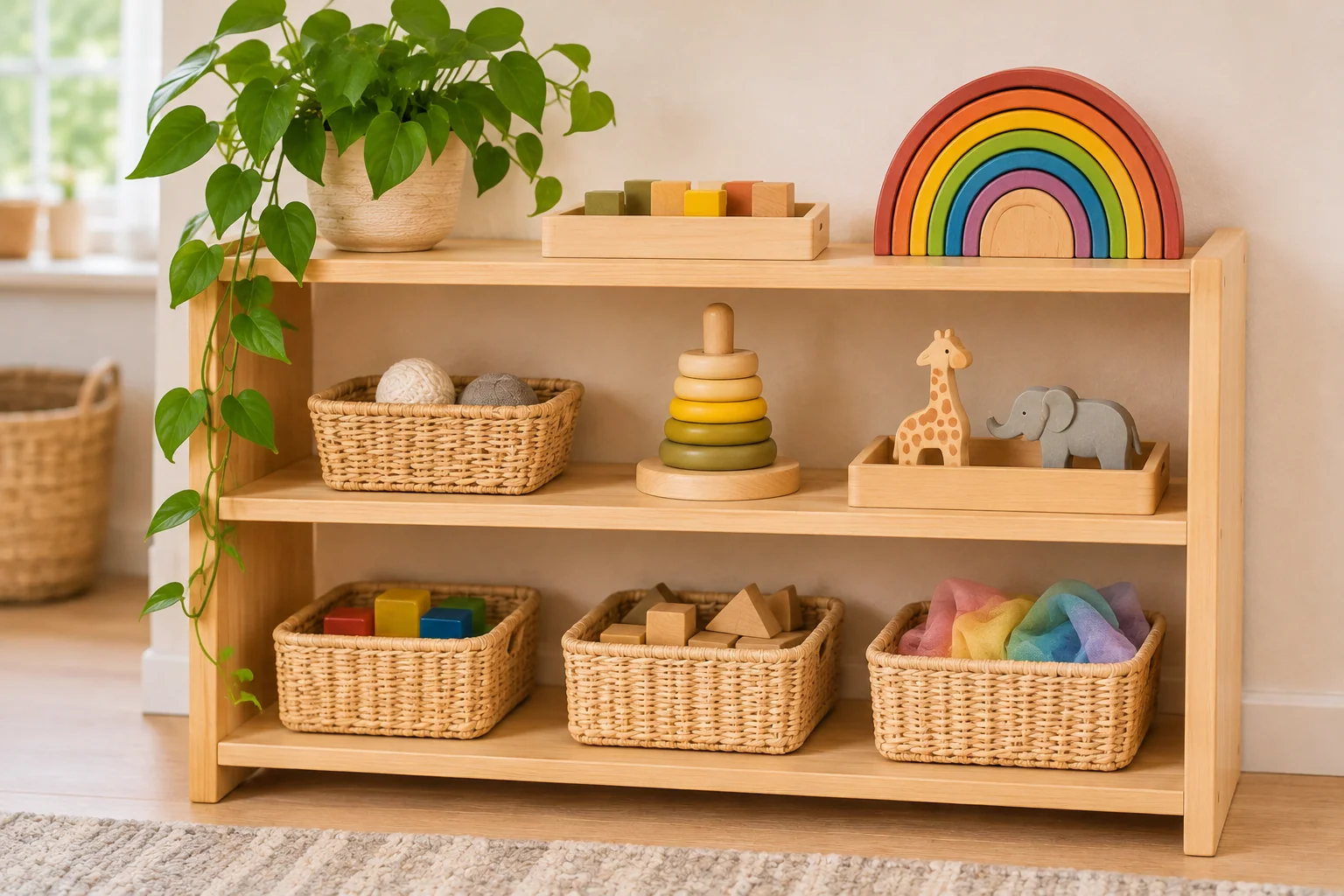
How to Set Up a Montessori Toy Shelf
A low shelf, a handful of toys and a weekly rotation: how to set up a Montessori toy shelf at home in one afternoon.
Keep reading →