Kitchen Shape Hunt (A No-Prep Shape Game)

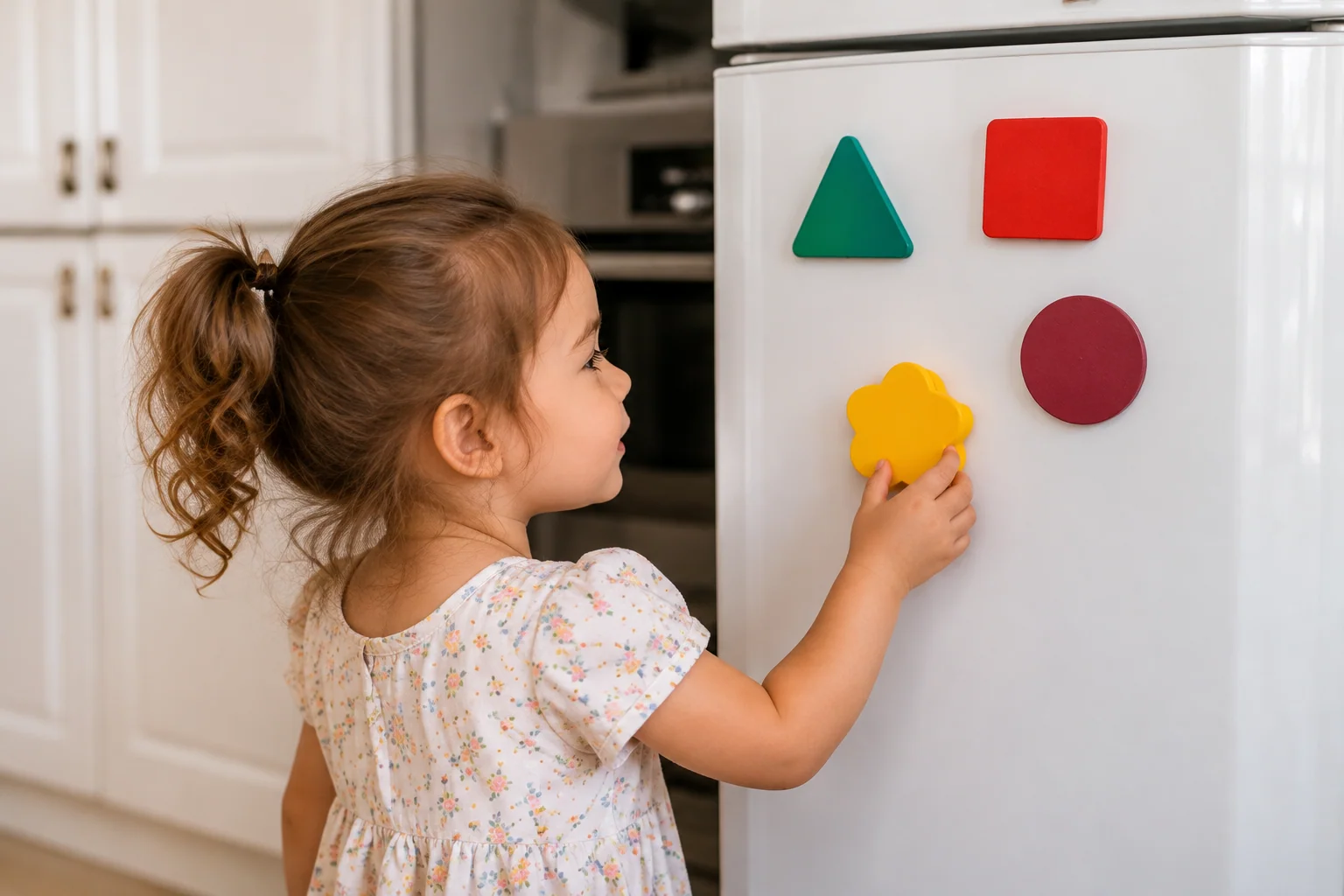
A kitchen shape hunt is a simple game: you draw a few shapes on paper, and your toddler finds them in plates, lids, crackers and cupboard doors. It takes a pencil and about ten minutes.
It's also a way to keep a two- or three-year-old busy near you while you cook. On a shape hunt they walk, look, point and talk. You stir the pot. Nobody needs glue.
Below are the steps, from drawing the checklist to sorting shapes by size, with a safety note for little hands near the stove. For more quick games by age, see our play and learning hub.
Quick answer
- What you need: paper, a pencil and a kitchen. A shape sorter or knob puzzle helps but isn't needed.
- Shapes to start with: circle, square, triangle and rectangle. Add more for older kids.
- Best time: while dinner cooks, with your child on the safe side of the kitchen.
This post contains affiliate links. As an Amazon Associate I earn from qualifying purchases.
A quick note: This is a play idea, not medical advice. Keep children away from the stove, oven and knives, stay close the whole time, and only use items too big to fit in the mouth. If you have questions about your child's development, ask your pediatrician. The CDC's milestones by 3 years page shows what most children do at that age.
Draw Your Shape Hunt Checklist
Fold a sheet of paper in half. Draw a big circle, square, triangle and rectangle down one side, with an empty box next to each. That's your checklist.
Keep the shapes large and thick, so a two-year-old can match them by eye. If your child can hold a crayon, let them color each shape first. It makes the list feel like theirs.
Tip: Tape the list to a clipboard or a cereal box so it doesn't flop.
Warm Up with Shapes in Their Hands
Before the hunt, give your child shapes to hold. Run a finger around the edge of a circle and say "round and round". Then count the corners on a square.
A jumbo knob puzzle is a good warm-up, because each shape has a big knob and its own spot. The label says 12 months to 2 years, so it suits younger toddlers best. A cracker box and a plate work too.
Tip: Name the shape every time they touch it. Repeating is the point.
Hunt for Circles First
Circles are the easiest win on any shape hunt. Point to a plate and ask, "Is that a circle?" Then let them find the next one alone: a jar lid, the bottom of a cup, a clock, the stove dial (look, don't touch).
Each time they find one, they tick the box or put a sticker on it. Then move on to the next shape.
Tip: Count the circles out loud together. One plate, two lids.
Find Squares and Rectangles in the Kitchen
Squares and rectangles hide in plain sight: cabinet doors, napkins, a cutting board, a cracker, the fridge itself. Talk about the difference. A square has four sides the same. A rectangle has two long and two short.
Don't worry if your child calls every rectangle a square. Just name it back, and keep going.
Tip: Fold a square napkin into a rectangle to show the change.
Make Triangles at Snack Time
Triangles are harder to find in a kitchen, so make some. Cut a slice of toast or a soft quesadilla corner to corner, and hand your child a triangle. Our easy toddler breakfasts have plenty you can cut this way.
This turns the shape hunt into a snack, which most toddlers think is the best part. Keep them seated while they eat.
Tip: Cut a second slice into squares and ask which plate has the triangles.
Sort Circles from Big to Small
Gather four or five round things: lids, bowls and cups. Ask your child to put them in a line, biggest to smallest. Then mix them up and try again.
Stacking cups make this easy, since each one is a slightly smaller circle. Silicone cups are also quiet on a hard floor, which matters at dinner time. The con: one buyer said a cup split at the bottom after a couple of days.
Tip: Nest them together at the end to check the order.
Play a Mystery Shape Bag
Put a lid, a square block and a cookie cutter in a tote bag. Your child reaches in without looking and guesses the shape by feel.
This works well for older kids who have finished the hunt fast. For a two-year-old, let them peek. Guessing should be fun, not a test.
Tip: Use a cookie cutter with no sharp edges, or swap it for a wooden shape.
End the Shape Hunt with a Shape Sorter
When the list is full, finish with a shape sorter. Your child matches each piece to the right hole, the same skill they used to find shapes on the counter.
The carrot harvest sorter has fruit shapes to sort and carrots to pull, and the label says 1 to 3 years. The con: it has many small pieces, so count them back into the box and stay close.
Tip: Keep the sorter for kitchen time only, so it stays special.
Toys That Go with a Kitchen Shape Hunt
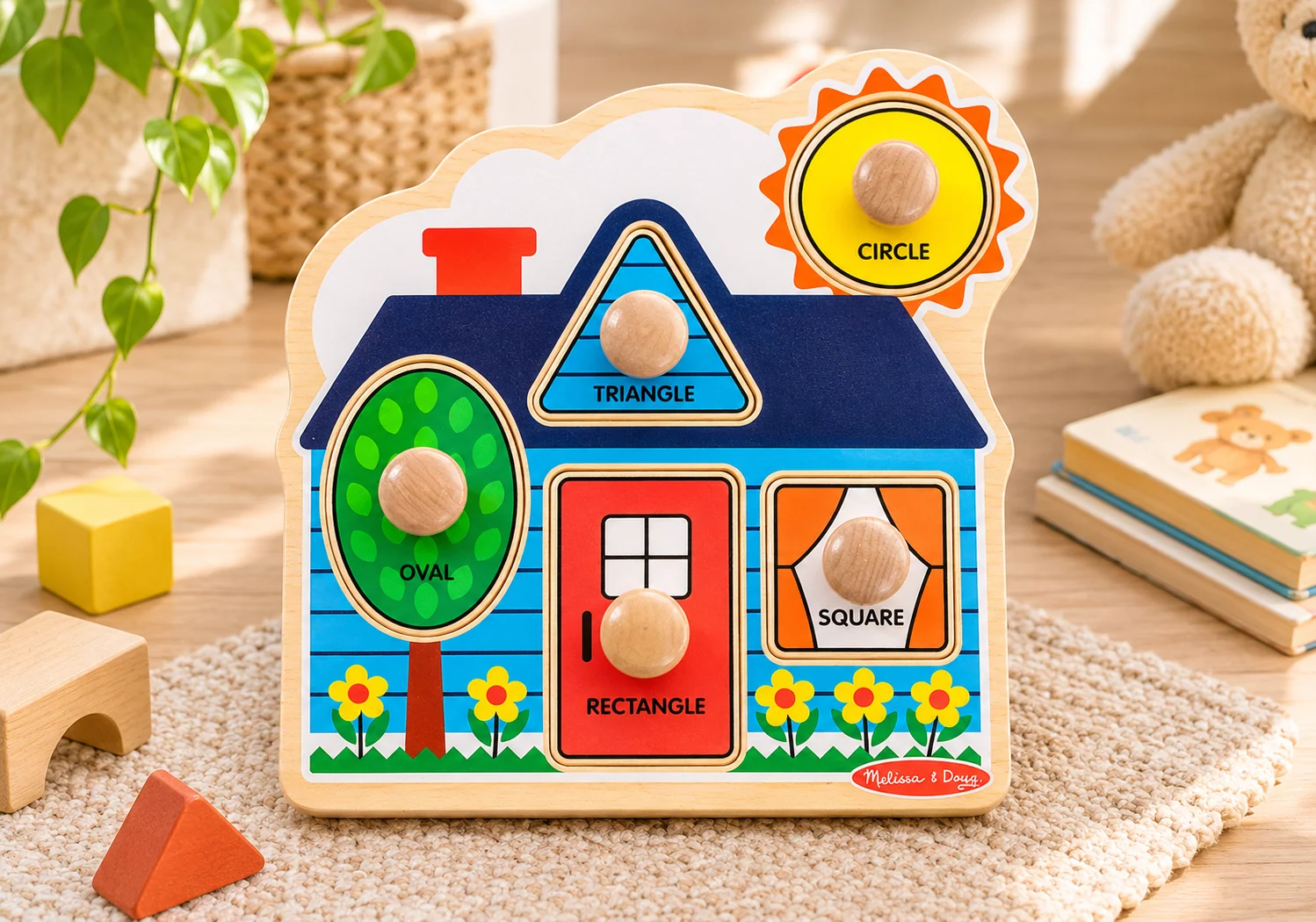
First Shapes Jumbo Knob Puzzle
Five chunky shapes with fat knobs: an easy first win that still takes some thinking.
Check price on AmazonCheck price →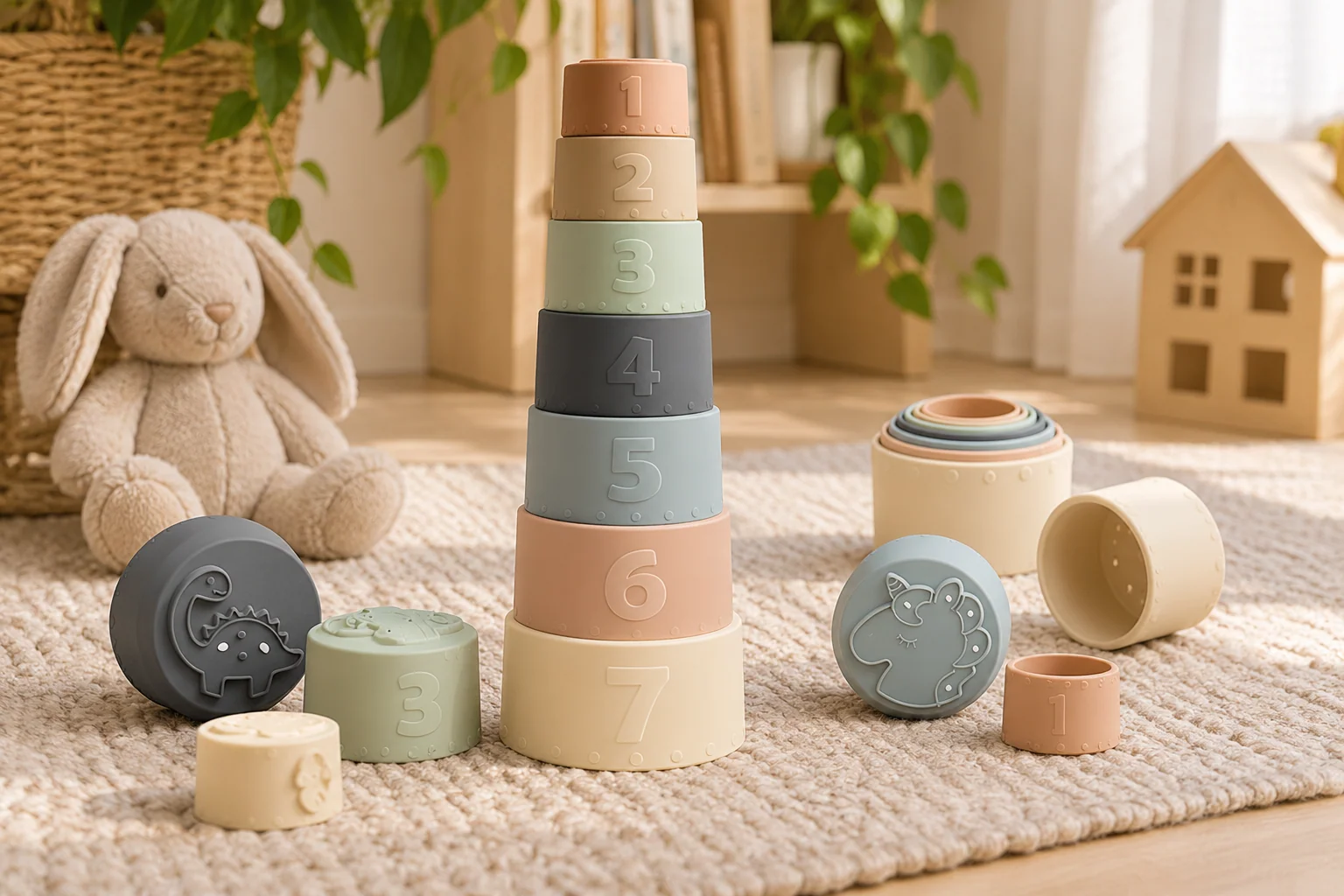
Silicone Stacking Cups (7 pcs)
Soft, quiet cups that stack, nest and double as bath toys, in calm colors that fit a Montessori shelf.
Check price on AmazonCheck price →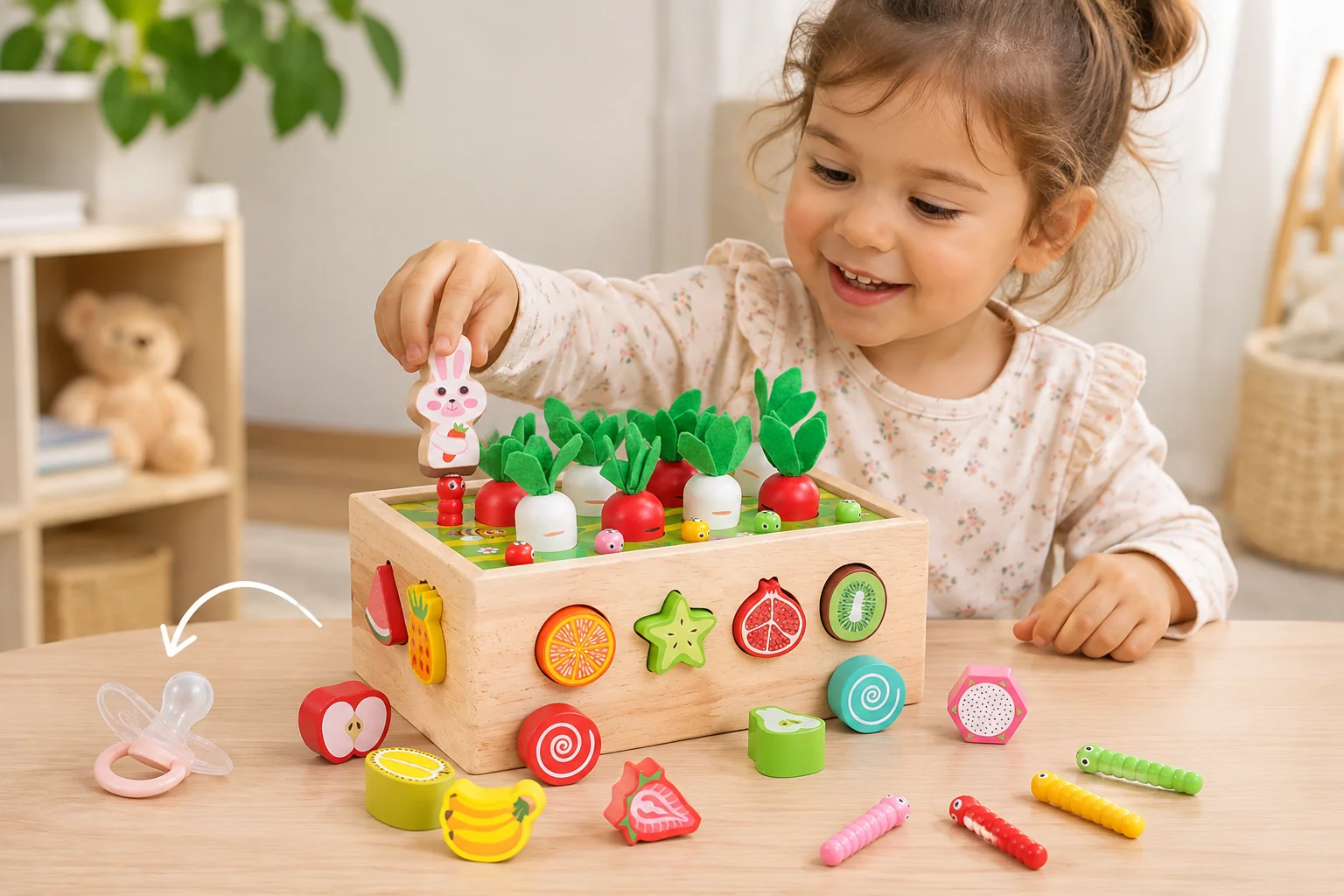
KMTJT Wooden Carrot Harvest and Shape Sorting Toy
A real "big kid" gift for the Paci Fairy to leave: carrots to pull, fruit shapes to sort and worms to feed, so the first morning without the paci starts with something to do.
Check price on AmazonCheck price →Questions moms ask
What age is a kitchen shape hunt for?
Roughly 2 to 4 years. Younger toddlers can point to circles while you name them. Four-year-olds can hunt for ovals, stars and hearts, or tick off the list on their own.
What shapes should toddlers learn first?
Circle, square and triangle are the usual first three, because they're easy to spot and easy to name. Rectangle comes next. Follow your child: if they love triangles, find more triangles.
How do I make shape hunting harder for a 4-year-old?
Ask for two of each shape, or for a shape in a color. Add ovals and diamonds. Then let them draw the checklist for you, and you do the hunt.
Is it safe to play in the kitchen with a toddler?
Yes, with a few rules. Keep the hunt away from the stove, the oven door and knives, and only use items too big to fit in the mouth. Read the CDC's list of choking hazards before you add snack time to the game.
Know a mom who needs ten quiet minutes at dinner time?
Send her this. A pencil, a list and a kitchen full of circles is all it takes.
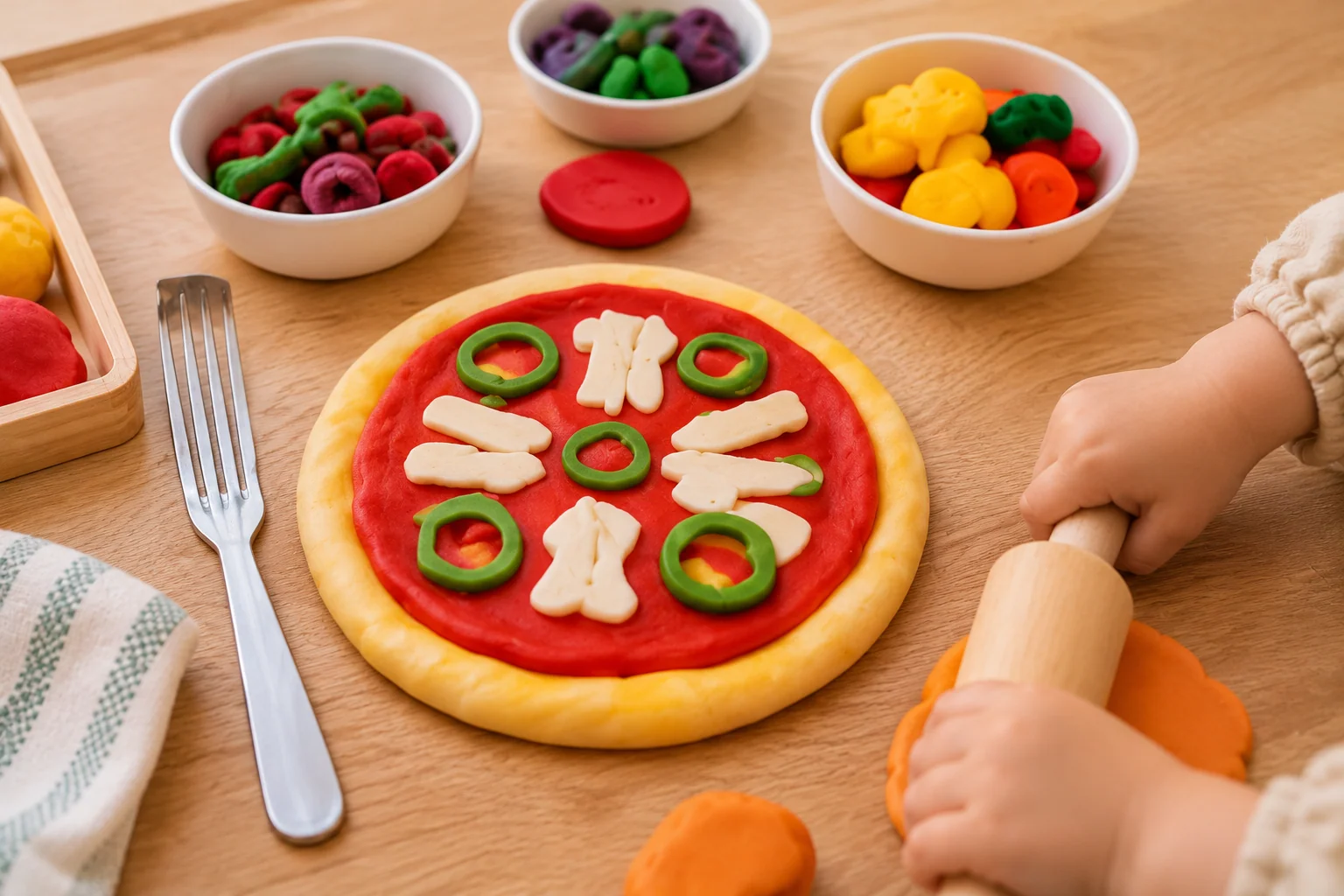
Playdough Pizza Shop
Roll, top and "bake" playdough pizzas, take orders on a hand-drawn pad and pay at the till. A pretend play game for ages 2 to 4.
Keep reading →