The best Montessori toys for babies do one thing each, and they let your baby do the work. A ball that drops and rolls back. A cup that fits inside another cup. That's it, and it's enough.
Most baby toy aisles are full of things that flash, sing and spin on their own. Your baby watches for a minute, then goes back to chewing the box. Good Montessori baby toys do the opposite, so we kept this list short on purpose. There are only three toys here, because only three in our catalog carry an age label that fits the first year.
All three start at 6 months, when many babies can sit and grab, and one has small coins we'd hold back until later. We say which is which on every card, and every toy comes with a real con.
Shopping for a child who just turned one? Our list of toys for the second year picks up where this one ends. And if you want something to do with your baby today, without buying anything, the Play & Learning hub has a five-minute activity tool sorted by age.
This post contains affiliate links. As an Amazon Associate I earn from qualifying purchases.
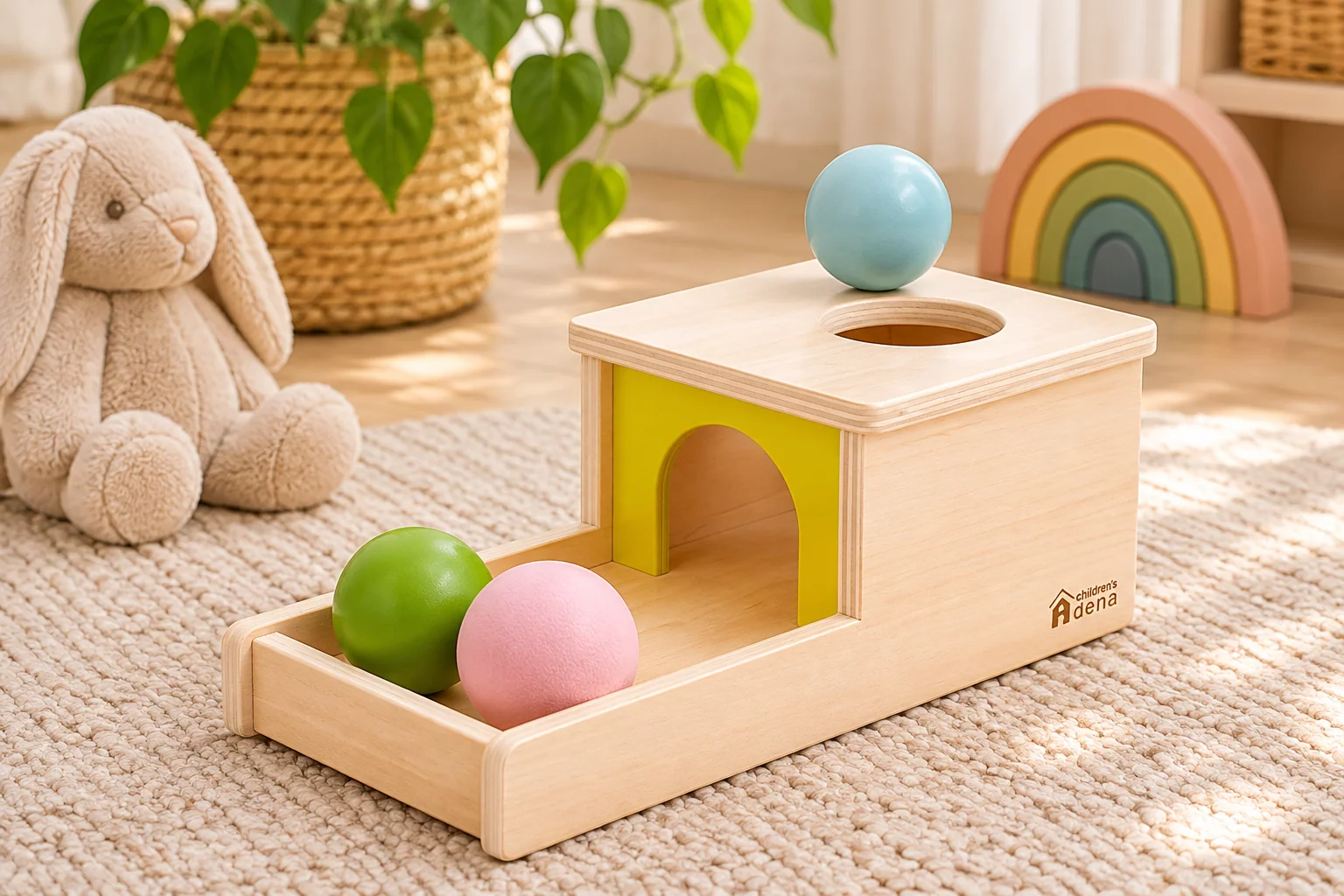
The classic first Montessori toy. Your baby drops a ball through the hole, it disappears, and then it rolls back out onto the tray. The box is labeled 6–32 months, so it stays useful well past the first birthday.
Long age label: 6–32 months
Balls are big enough for a whole-hand grip
No batteries and nothing to switch on
Wooden balls are loud on hard floors, so play on a rug
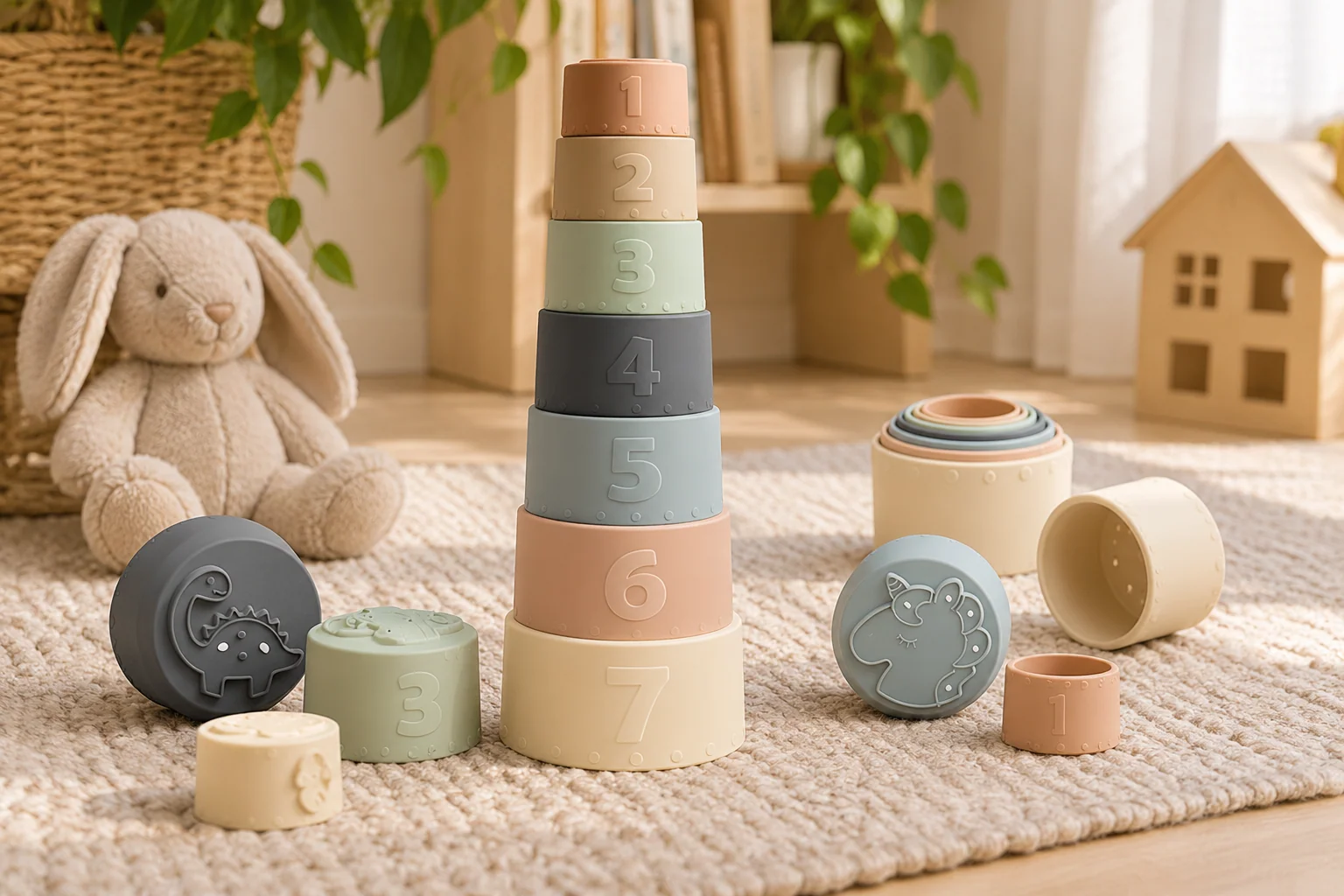
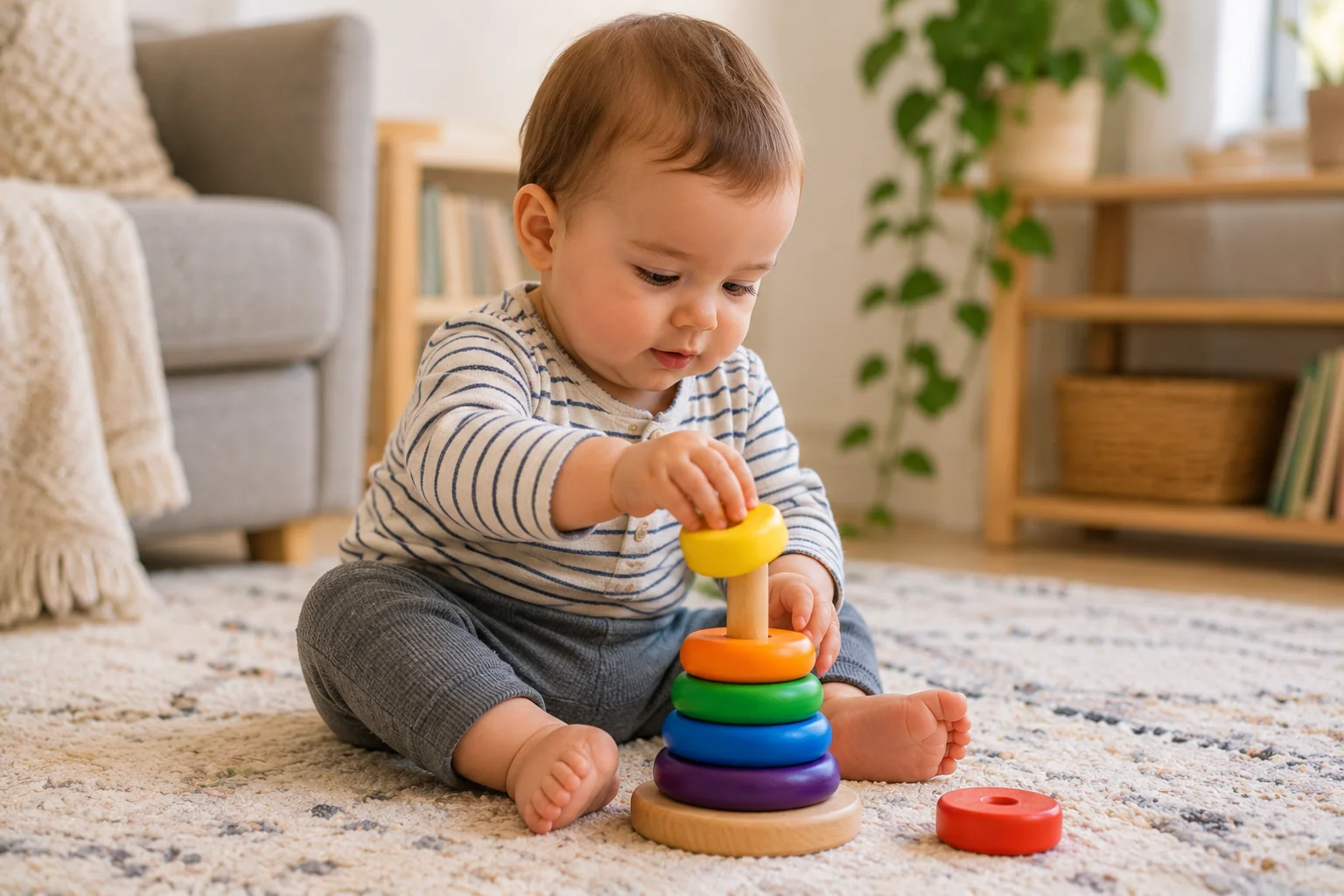
Seven soft cups that nest, stack and get chewed on. They're labeled 6 months+, and they work in the bath and at the high chair as well as on the floor.
Soft and quiet, fine to mouth
Doubles as a bath toy
Low price for a set of seven
One buyer reported a cup splitting at the base after a few days, so check each cup before play
#3 · Adena Montessori · Age label 6 months–6 years
Wooden Coin Box with Drawer
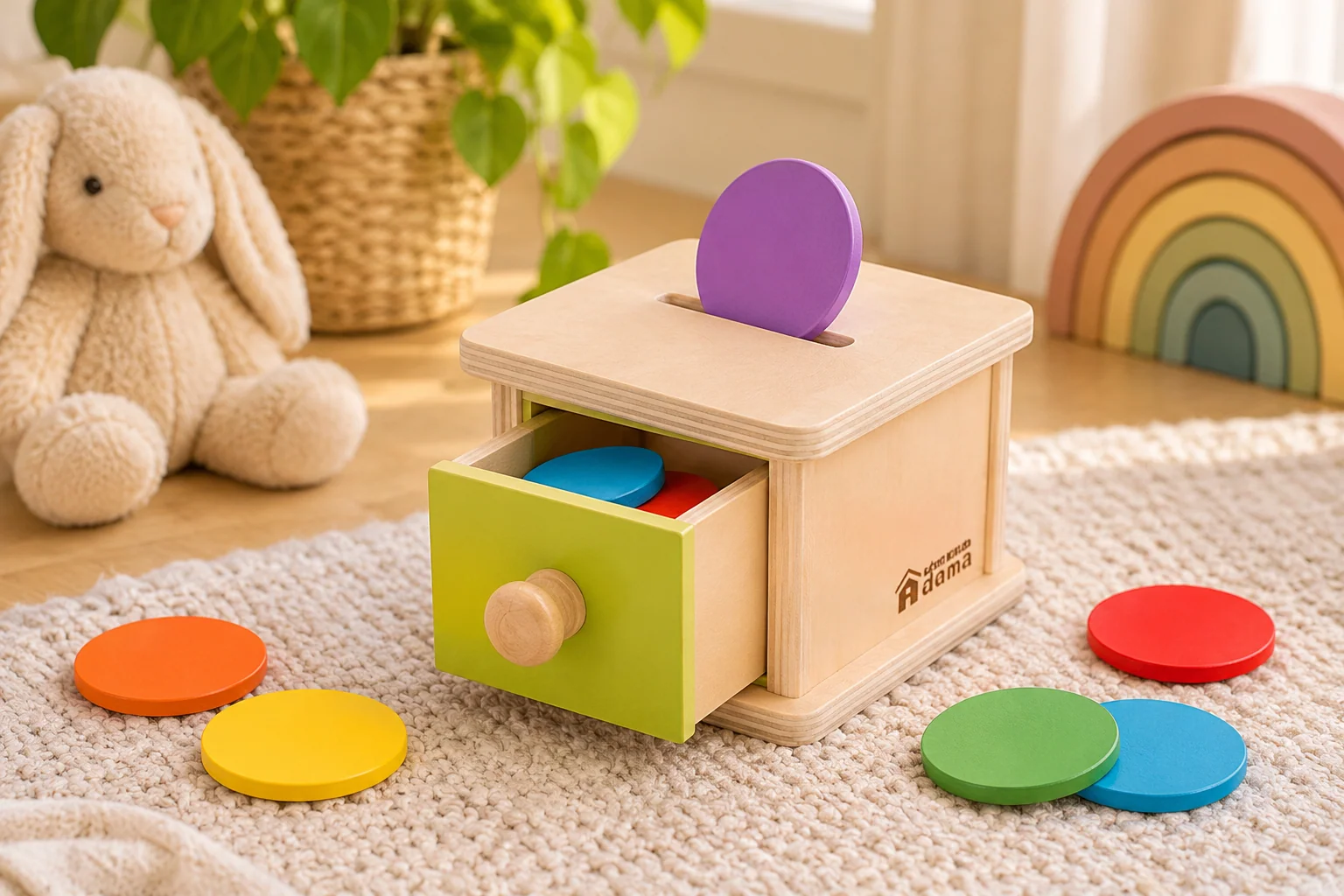
A small box with a narrow slot for posting coins and a drawer to find them again. It's labeled 6 months to 6 years, but the coins are small, so we'd save it for the end of the first year.
Lasts for years: labeled up to age 6
The drawer keeps the coins with the box
A precise slot for older babies who want a challenge
The coins are small and flat enough to fit in a baby's mouth, so supervise every single time
We started with the age label on every box and left out anything labeled for older kids, even when it's sold as a baby toy. Then we read each listing and the most common buyer complaints, so every card has a real con. You can read how we pick products, and no brand paid to be on this list.
We looked for: - An age label that fits the first year - One clear skill per toy - Wood or soft silicone, and no batteries - No pattern of safety complaints in the reviews
Those filters come from the Montessori idea itself. The American Montessori Society and the Association Montessori Internationale both describe it the same way: a calm space, simple real materials, and a child who does the work. That's why the list is short. Plenty of toys sold as Montessori toys for babies are really just wooden versions of busy toys, so they didn't make the cut.
Buying guide
Start with the age on the box
The age in a product title and the age on the box are not always the same. Read the small print. If the label says 3+ or 18 months+, the toy waits, no matter how simple it looks. On this list, all three toys start at 6 months, and we only picked toys whose label covers the first year.
What Montessori toys for babies have in common
They do one job, and your baby does all of it. A ball drops and rolls. A cup nests in a cup. Nothing lights up or talks back, so your baby's attention stays on the thing in their hands. That's also why these toys feel a bit plain in the box. Plain is the point, and plain Montessori toys for infants tend to get played with longer.
The repeat is part of it too. A baby who drops the same ball forty times isn't bored. They're checking that it works the same way every time.
Materials that are safe to mouth
Everything goes in the mouth this year, so the material matters more than the color. Solid wood and food-grade silicone are the two you'll see most. Check that paint is water-based, edges are smooth, and nothing flakes when you scratch it with a nail. Silicone is the softer choice for a teething baby, and it can go in the bath. Wood is heavier and lasts longer, but it's louder on a hard floor.
Safety checks before play
Before you hand over any toy, look for loose parts and cracks. If a piece fits inside a toilet-paper tube, keep it away from a baby who still mouths everything. That's the reason the coin box sits last on this list. Check again every few weeks, because wood can split and silicone can tear.
Food is the other half of this. If your baby is also starting solids, the CDC keeps a list of common choking hazards, and our feeding guides cover the first months at the table. Ask your pediatrician if you're unsure about a toy or a food.
How many baby Montessori toys you need
Fewer than the registry suggests. Two or three baby Montessori toys in a basket, swapped every week or two, keep things fresh. Store the rest in a closed box, and bring one back when interest fades. You'll buy less and tidy less. If you're still building the nursery list, the checklist on our baby essentials hub helps you skip the gear you won't use. And when your baby starts crawling, the start-here picker on our homepage points you to the next age.
FAQ
What are the best Montessori toys for babies?
The best Montessori toys for babies are simple toys that practice one skill each. An object permanence box for dropping, soft stacking cups for nesting and mouthing, and later a coin box for posting. Pick the one that matches what your baby already does all day, and use the quiz above if you're unsure.
Are Montessori baby toys good for newborns?
None of the Montessori baby toys on this list carry a newborn label, so we wouldn't buy any of them for the first months. Early on, the most interesting thing in the room is your face and your voice. Floor time on a clean mat goes a long way, and your pediatrician can tell you what that should look like for your baby.
When can a baby start with a Montessori toy?
Go by the age label. On this list, all three start at 6 months. A baby who sits steadily and grabs with the whole hand is often ready for the object permanence box, but the label is the rule we follow.
Is a coin box safe for a baby?
The box is labeled from 6 months, but the coins are small and flat. Some parents hold them back until the end of the first year, and we'd do the same. Hand them over one at a time, stay close, and count them back into the drawer when play is over.
Do I need a Montessori shelf for a baby?
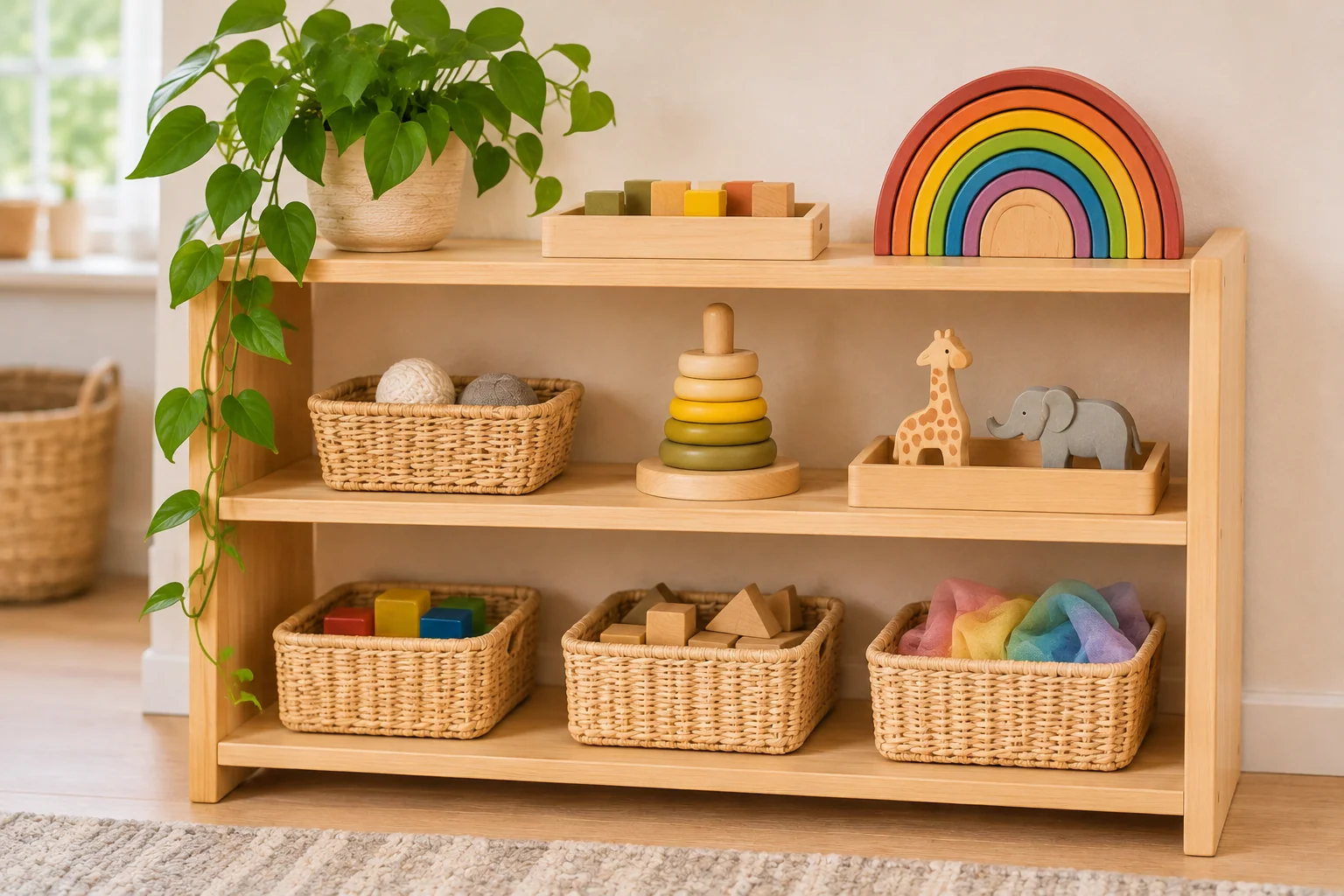
No. A low basket or a tray on the floor works fine for the first year. Once your baby crawls, a low open shelf helps them choose a toy on their own. You don't need to buy anything special, and the shelf can wait until they move.
Know a mom with a new baby?
Send her this short list of Montessori toys for babies. Three simple toys beat a closet full of noise.